 "Opinion | Why India needs to think twice before pulling out its soldiers from Siachen")
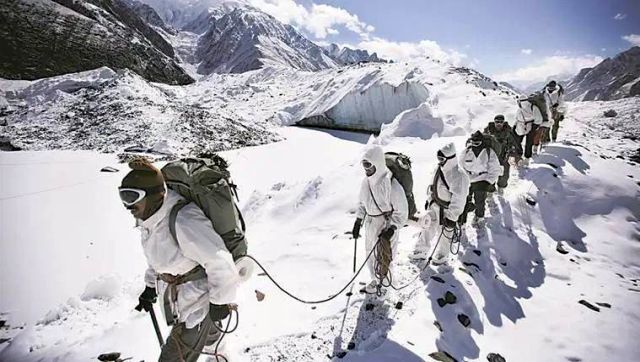
The Siachen glacier is called the highest battlefield on the earth, known for its insane levels of challenges posed by weather and combat where both India and Pakistan have deployed active troops. On the Indian side, spanning almost 38 years, more than 3,00,000 troops of the Indian Army have had Siachen tenures in these Super High Altitudes ranging from 18,000 ft to 21,000 ft above mean sea level. The glacier is approximately 70-km-long flanked by the Soltoro Ridge on the West and the Karakoram Range on the East and extends southwards into the Nubra Valley. The passes on the Soltoro Ridge were occupied by the Indian Army in April 1984 as a preemptive to the Pakistan Army planning to capture Soltoro using the passes of Sia La and Bilafond La. Gradually, the entire Soltoro ridge was occupied by the Indian Army extending to the areas referred to as the Northern, Central and the Southern glaciers. The Pakistan Army had to contend with occupying certain areas and establishing military posts opposite but at lower reaches. More military posts came up on both sides causing bloody clashes and grab actions. The famous and gallant action by Major Virender Singh and Sub (later Hony Capt) Bana Singh in capturing the Quaid post where they were decorated with the Vir Chakra and Param Vir Chakra respectively is one of the many such clashes. The entire 121-km frontline held by both sides northwards of NJ 9842 on the Soltoro Ridge is called the Actual Ground Position Line (AGPL). The Karachi agreement of 1948 and the Shimla agreement of 1972, both delineated the boundaries of divided Jammu & Kashmir up to map reference NJ 9842, north of which the lines were imagined by Pakistan and India to their own convenience. According to Pakistan, the line extended northeast up to the Karakoram (KK) Pass, while India considered the line to be running northwards along the watershed making the entire Soltoro Ridge, west of the glacier, part of Indian territory. Both India and Pakistan barely carried out any military activity in the area till the late 1970s when it came to the knowledge of Indian Army’s Col Narendra Kumar (nicknamed Bull), who was then the Commandant of HAWS and a renowned mountaineer, that Pakistan was guiding foreign expeditions across into the Siachen from the west. An American map carried by a foreign expedition which Bull Kumar chanced to see confirmed that the boundary alignment up to KK Pass, as claimed by Pakistan, is also being shown in some international maps. Intelligence reports further confirmed that Pakistan militarily was preparing to occupy Siachen in the early summers of 1984. Indian Army launched Operation Meghdoot, a quick preemptive, and inducted troops on the Soltoro that stymied the Pakistan-planned operation codenamed Ababeel.
Siachen glacier is part of the erstwhile princely state of J&K inherited by India through the instrument of accession signed by Maharaja Hari Singh. It is only the gradual militarisation of the POK and the Gilgit-Baltistan area that has caused strategic concerns for India.
Pakistan has already gifted 5,180 sq km of Shaksgam Valley that lies north of the Siachen to China in 1963 allowing access and control by the Chinese into this area. Pakistan has always attempted and demanded that the state of J&K should be vacated by the Indian troops. It has made all military and diplomatic attempts to project this area as disputed. Pakistan has deliberately facilitated the Chinese to carry out military and economic activity in the area. With the China-Pakistan Economic Corridor (CPEC) in the near vicinity, both collaborators are not comfortable with the presence of Indian troops in Ladakh, especially Siachen.
