

 "Explained: Four-year undergraduate courses, faster PhDs, and other changes in India's higher education")
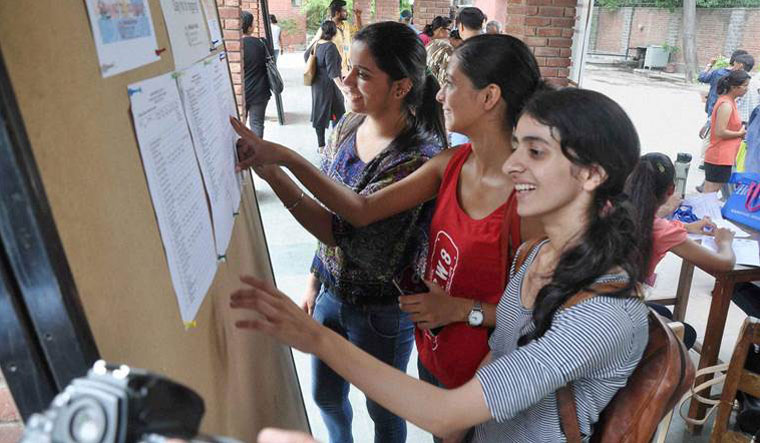
A major overhaul is underway for India’s higher education sector. The University Grants Commission has prepared draft frameworks to introduce changes to undergraduate degrees and PhDs for the next academic year, keeping in mind the National Education Policy, 2020. The frameworks were approved at the 56th meeting of the UGC chairperson and members held on 10 March. They are likely to be published in public domain for suggestions, according to a report in The Indian Express. What are the revised norms proposed by the UCG? And how it benefit students? We take a look. The draft guidelines have revised the eligibility criteria after the discontinuation of MPhil degree under NEP 2020, and the introduction of four-year undergraduate programmes with multiple entry and exit options. The “Curricular Framework and Credit System for the Four-Year Undergraduate Programme” states that the new undergraduate programmes will not have “hard separations between ‘arts’ and ‘sciences’ between ‘curricular’ and ‘extracurricular’ activities, between ‘vocational’ and ‘academic streams…” Four-year UG courses According to the new structure for four-year UCG, “common” and “introductory” courses in natural sciences, humanities and social sciences during the first three semesters are a compulsory part of the syllabus, irrespective of what a student’s specialisation is. English, a regional language, and courses on “understanding India”, environmental science, health and wellness or yoga and sports, Artificial Intelligence, and big data analysis are part of the common course during the first three semesters. In the fourth year, students will have to pick a “major”, a subject they want to specialise it. The four-year-course offers 160 credits; one credit accounts for 15 hours of classroom credits, the newspaper reports. Students can choose two “major courses”: they could be anything from political science to astronomy. They can also opt for two “minor” courses, which could be interdisciplinary in nature, allowing students a variety of subjects to choose from. For example, a science student now has the option to go for course in humanities or social sciences. According to the draft, students have to take up a research project in the seventh semester. Their eighth and final semester will focus on this project, which will be in line with the subject they are majoring in. After completing the four-year programme, students will receive honours with a research graduation degree. The Jawaharlal Nehru University and Delhi University are among the educational institutions that have decided to adopt the new programmes for this year. Revised rules for PhD The new guidelines alter the admission rules for PhD programmes with the aim to reorient them. Apart from qualification through the existing National Eligibility Test (NET) and Junior Research Fellowship (JRF), an entrance test will be held. Sixty per cent seats will be filled by students who have cleared the NET/JRF and the remaining through entrance exams which will be held by universities. Those who are qualified through NET/JRF will be selected based on an interview or viva. The selection will be evaluated in the ratio of 70 for the written test and 30 for the interview, reports The Print. A relaxation of five per cent marks, for which SC, ST, OBC students are eligible, will be extended to economically weak section candidates. According to the new norms, there will be “special focus” on selecting the area of research. “Research on socially relevant/locally need-based/ nationally important/globally significant/create value to the society or in cutting edge areas or contribute to new/additional knowledge in the areas of emerging concerns worldwide will be encouraged,” the policy document says, according to The Print report. There are also clear guidelines defining the obligations of the PhD supervisor. The draft emphasis on “a good working relationship between the student and the supervisor, in which the PhD student and the supervisor can reach an agreement on the demands and expectations placed on each other”. It is also the supervisor’s responsibility to direct the student toward courses and conferences that will help them in their research and assist them reaching out to prominent national and international centres of research, the guidelines point out. “Enhancing the research ecosystem” Talking about the new changes in the education system, UGC chairperson Jagadesh Kumar told The Hindustan Times, “The four-year undergraduate programme is beneficial to students in several ways. Those who are interested in research can do either multidisciplinary research or focus on a single discipline in their final year. Those who do well in the four-year undergraduate programme will be eligible to join in a PhD programme. “I believe that this will enhance the research ecosystem in our country,” he added. With inputs from agencies Read all the Latest News , Trending News , Cricket News , Bollywood News , India News and Entertainment News here. Follow us on Facebook, Twitter and Instagram.
The University Grants Commission has revised rules to bring about major changes in undergraduate and PhD programmes offered across the country. Here’s how they will benefit students
Advertisement
End of Article


 "Russian drones over Poland: Trump’s tepid reaction a wake-up call for Nato?")
 "As Russia pushes east, Ukraine faces mounting pressure to defend its heartland")
 "Why Mossad was not on board with Israel’s strike on Hamas in Qatar")
 "Turkey: Erdogan's police arrest opposition mayor Hasan Mutlu, dozens officials in corruption probe")
 "Russian drones over Poland: Trump’s tepid reaction a wake-up call for Nato?")
 "As Russia pushes east, Ukraine faces mounting pressure to defend its heartland")
 "Why Mossad was not on board with Israel’s strike on Hamas in Qatar")
 "Turkey: Erdogan's police arrest opposition mayor Hasan Mutlu, dozens officials in corruption probe")



