

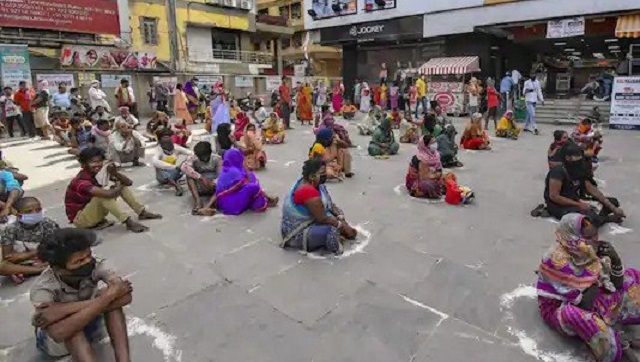
 "COVID-19 cases spike in July with rising test positivity rate in Bihar: Govt needs long-term surveillance, containment plan")
The Nitish Kumar government has announced the (re)imposition of a strict statewide lockdown in Bihar from Thursday, citing the rising number of cases as the reason for the step. The number of active cases in the state stands at 5791 as on 14th July. The absolute numbers do not seem very high at first, but there has been a very steep rise in the last week. This piece looks at the data related to COVID-19 to analyse and evaluate the situation in Bihar. The aim is to look at the situation as it is unfolding — while considering the advantages and disadvantages of the state in relation to the outbreak — and suggest optimum non-pharmaceutical intervention strategies. How reasonable is the state-wide lockdown? Is Bihar testing enough? What else can the JD(U)-BJP government do? Looking at the curve of active cases, we see that the cases grew steadily throughout the lockdown period. A popular perception is that cases have suddenly spiked as a result of unlock. We see that the trend remains almost the same as the lockdown period even after a month of the ‘unlock’ since 1 June. Bihar, according to reports, has conducted the lowest number of tests per million in India — 2,637. As of 16 July, at least 3,47,457 had been tested, 21,558 people were confirmed COVID-19 positive and 14,101 have recovered so far. As of 15 July, the total number of cases in the state reached 18,853 with a record 1,432 new cases. It, however, must be noted that the average incubation period for COVID-19 is about a week; it could take as long as 14 days for symptoms to appear. Hence, there is an expected lag between the time the lockdown was relaxed (1 June, 2020) and the rise in the number of cases, as most people get tested only after symptoms. Yet, the lag is roughly a month, suggesting that the infection started spreading weeks after the first unlock was announced (1 June).
Which brings us to an important, but a controversial question — are we testing enough? Bihar, infamously, has been one of the lowest among the states touted as the next hospot, in terms of number of tests; testing in the state is lowest in terms of tests per million of the population. The question of whether we are testing enough does not have a definitive answer because the more we test, the better. However, given the practical constraints of resources and infrastructure, we must have some reasonable metrics to probe how adequate is our level of testing.
One of the most common measures is the Test Positivity Rate (TPR), which is the percentage of positive results of the total tests conducted. The TPR in Bihar was largely stable and has been relatively low for a long duration.
This usually suggests that there is not a dramatically high level of infectiousness which is being missed due to low testing (a TPR higher than 10 percent is usually considered a clear sign of inadequate testing). However, it does not necessarily hold true when the testing is extremely low.
The author has compared the changes in TPR with increasing testing — to check if the TPR increases or decreases as testing goes up. Despite low testing if there is no widespread infection, there should be some reduction in test positivity rate as testing goes up. As evident in the plot below, that does not seem to be the case for most of the period in Bihar; yet TPR is reasonably low for the initial period. Between, mid-April and late May, the TPR rose from roughly 0.80 percent to 4 percent. It suggests that the infection spread steadily during the period; although a lot cannot be made out it as the number of tests were abysmally low during the period — in the range of 1,000-2,000 tests per day for most of the period.
As testing increased from 1,000-2,000 tests per day to 5,000-6,000 tests per day between late May and mid-June, the TPR continued to rise and reached more than 5 percent. The rise is quite sharp after 25 June, suggesting that the increase in testing was not keeping pace with the increase in spread.
After mid-June, as the number of tests increase sharply from roughly 3,500 tests per day to 7,000-8,000 tests per day by the end of the month, the TPR starts coming down, . However, alarmingly, the trend has reversed from the start of July: the TPR has again started increasing — it is now close to approaching 6 percent — even as the number of tests have continued to increase, except a brief decline in testing between 4-8 July. This raises concerns about inadequate scaling up of testing with increase in spread, and the trend needs to be observed over a longer period of time. The TPR could also get significantly affected due to change in testing strategy; however, that does not seem to be the case as there does not seem to be any significant changes in the testing strategy (based on information in the public domain).
Following the long nationwide lockdown, we realised the perils of acting on unsubstantiated belief that we can completely break transmission chains and “get rid of the crisis” once for all. The fact is that the virus is here to stay for long — hence, we need a sustainable, long-term mitigation strategy. (The author uses the word mitigation here in the colloquial sense of the word; it has a specific meaning in epidemiology.) The economic impact of the lockdown eventually forced the Union and State governments to consider a localised and calibrated approach. With the return of a large number of migrant workers, Bihar is particularly in an economically vulnerable situation; being one of the poorest states it is not in a position to offer adequate income support to a large population without generous support from the Union government. Moreover, the state has one of the poorest health infrastructure in the country. The state, however, also has some ‘advantages’ to tackle the situation. More than 85 percent of the state population lives in small villages in rural areas. From the point of view of Covid-19 transmission, that means small clusters with relatively low inter-cluster physical interaction; hence, this can slow the spread. Second, even with the cities, the state has a few big cities; except Patna, all important cities in the state — like Gaya, Bhagalpur, Muzaffarpur, Purnia, etc. — are actually relatively small when compared to main cities of many other states. These ‘advantages’ come with obvious caveats. First, a large proportion of population in rural areas typically also means poor reach of healthcare infrastructure. Therefore, unless the government rapidly ramps up testing to cover remotest areas, the spread could go undetected for a long time, rendering the advantages largely useless or even turning it into disadvantage. It is not only the quantum of testing that needs to go up, but an effective targeting is imperative. Second, the government needs a long-term comprehensive containment strategy to quickly isolate and contain infection in these small clusters before it starts spreading elsewhere rapidly. If done effectively, this could allow the government to avoid statewide lockdowns. Lockdowns in themselves are not the ultimate solution, they must be accompanied with comprehensive measures to test and isolate. Some imaginative thinking — and resisting the tendency to immediately fall back to state-wide lockdowns — is required on the part of policy makers. The author studies political science at Ashoka University and is currently doing a certificate course on COVID-19 from Imperial College, London.


 "Charlie Kirk, shot dead in Utah, once said gun deaths are 'worth it' to save Second Amendment")
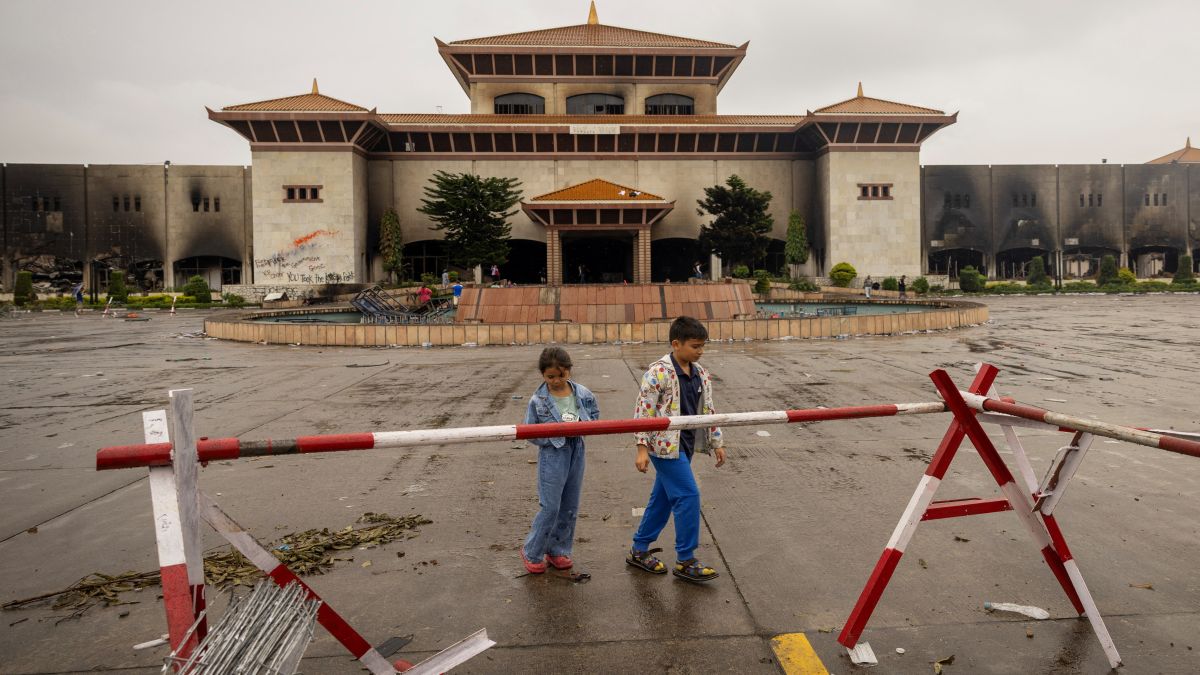 "From governance to tourism, how Gen-Z protests have damaged Nepal")
 "Did Russia deliberately send drones into Poland’s airspace?")
 "Netanyahu ‘killed any hope’ for Israeli hostages: Qatar PM after Doha strike")
 "Charlie Kirk, shot dead in Utah, once said gun deaths are 'worth it' to save Second Amendment")
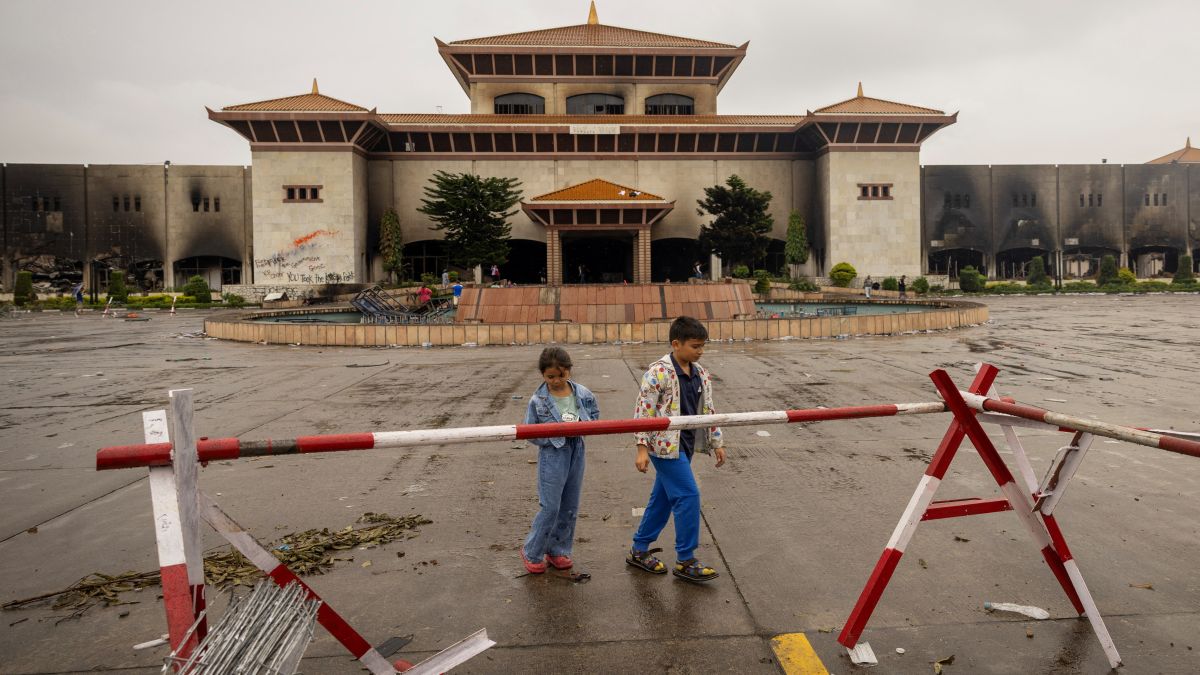 "From governance to tourism, how Gen-Z protests have damaged Nepal")
 "Did Russia deliberately send drones into Poland’s airspace?")
 "Netanyahu ‘killed any hope’ for Israeli hostages: Qatar PM after Doha strike")



