Firstpost
  • Video Shows
    Vantage Firstpost America Firstpost Africa First Sports
  • World
    US News
  • Explainers
  • News
    India Opinion Cricket Tech Entertainment Sports Health Photostories
  • Lifestyle
Trending Donald Trump Narendra Modi Elon Musk United States Joe Biden

Sections

  • Home
  • Live TV
  • Videos
  • Shows
  • World
  • Entertainment
  • India
  • Explainers
  • Opinion
  • Sports
  • Cricket
  • Lifestyle
  • Health
  • Tech/Auto
  • Web Stories
  • Business
  • Impact Shorts

Shows

  • Vantage
  • Firstpost America
  • Firstpost Africa
  • First Sports
  • Fast and Factual
  • Between The Lines
  • Flashback
  • Live TV

Events

  • Putin in India
  • Bihar Election
  • Raisina Dialogue
  • Independence Day
  • Champions Trophy
  • Delhi Elections 2025
  • Budget 2025
  • Firstpost Defence Summit
Trending:
  • Trump at Davos
  • Bangladesh drops out of T20 WC
  • Board of Peace
  • Greenland standoff
  • Beckham family feud
fp-logo
No more fillings or implants? Why world’s first lab-grown teeth are a big deal
Whatsapp Facebook Twitter
Trending

Sections

  • Home
  • Live TV
  • Videos
  • Shows
  • World
  • Entertainment
  • India
  • Explainers
  • Opinion
  • Sports
  • Cricket
  • Lifestyle
  • Health
  • Tech/Auto
  • Web Stories
  • Business
  • Impact Shorts

Shows

  • Vantage
  • Firstpost America
  • Firstpost Africa
  • First Sports
  • Fast and Factual
  • Between The Lines
  • Flashback
  • Live TV

Events

  • Putin in India
  • Bihar Election
  • Raisina Dialogue
  • Independence Day
  • Champions Trophy
  • Delhi Elections 2025
  • Budget 2025
  • Firstpost Defence Summit

No more fillings or implants? Why world’s first lab-grown teeth are a big deal

FP Explainers • April 14, 2025, 18:40:00 IST
Whatsapp Facebook Twitter

Scientists at King’s College London have successfully developed a human tooth in a lab for the first time. The major development could someday lead to patients getting back their lost teeth, offering an alternative to fillings or dental implants

Advertisement
Subscribe Join Us
+ Follow us On Google
Choose
Firstpost on Google
No more fillings or implants? Why world’s first lab-grown teeth are a big deal
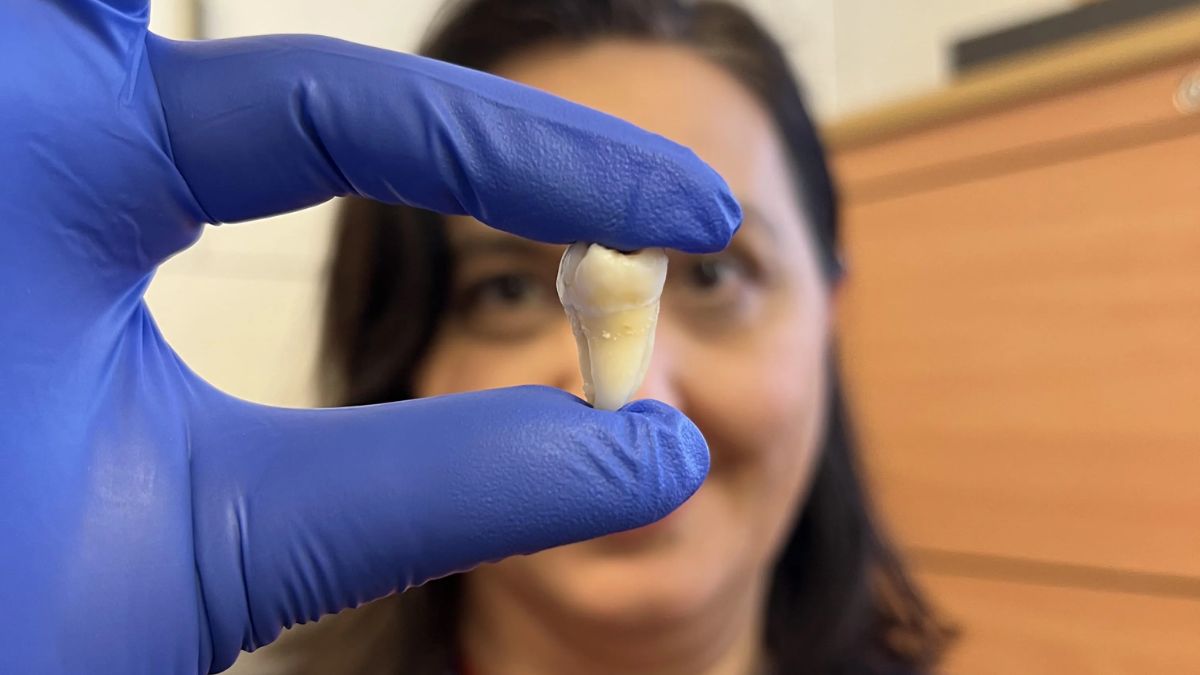
Unlike fillings and implants, which are fixed and unable to adjust to changes over time, a bioengineered tooth made from a person’s own cells could integrate seamlessly into the jaw and repair itself like a natural tooth. Image courtesy: King's College London

While many animals can regrow their teeth throughout life, humans typically get just one full adult set, and once it’s damaged or lost, that’s usually the end of the road.

But that might be about to change.

In a major breakthrough, scientists at King’s College London have successfully grown a human tooth in a lab for the first time, according to a BBC report.

The development could open up entirely new options for those who’ve lost teeth, offering a more natural alternative to fillings or dental implants.

STORY CONTINUES BELOW THIS AD

Dr Ana Angelova-Volponi, director of regenerative dentistry at King’s College London, believes the discovery could “revolutionise dental care.”

Unlike fillings and implants, which are fixed and unable to adjust to changes over time, a bioengineered tooth made from a person’s own cells could integrate seamlessly into the jaw and repair itself like a natural tooth.

More from Health
Doctors say thyroid imbalance may affect fertility but pregnancy remains possible Doctors say thyroid imbalance may affect fertility but pregnancy remains possible Doctor explains: How missed heart warning signs and delayed screening fuel sudden cardiac deaths Doctor explains: How missed heart warning signs and delayed screening fuel sudden cardiac deaths

But how exactly does this process work? And what hurdles must scientists overcome before it becomes an everyday treatment at clinics? Let’s take a closer look.

The science behind lab-grown natural teeth

The team of researchers at King’s College, in collaboration with Imperial College London, managed to develop a material that enables cells to communicate with each other.

This new material essentially allows one cell to signal another to begin turning into a tooth-forming cell. That’s how scientists are now able to mimic the natural environment of tooth development and recreate it outside the body.

Editor’s Picks
1
How smoking is increasing your chances of having a oral disease
2
Are your teeth misaligned? Ultra-processed foods are to blame

“We developed this material in collaboration with Imperial College to replicate the environment around the cells in the body, known as the matrix,” said Xuechen Zhang, a final-year PhD student at the Faculty of Dentistry, Oral & Craniofacial Sciences.

The team of researchers at King’s College, in collaboration with Imperial College London, managed to develop a material that enables cells to communicate with each other. Image for Representation. Pixabay

“This meant that when we introduced the cultured cells, they were able to send signals to each other to start the tooth formation process,” he explained. “Previous attempts had failed, as all the signals were sent in one go. This new material releases signals slowly over time, replicating what happens in the body.”

STORY CONTINUES BELOW THIS AD

Also read: In Graphics | The four-step guide to acing white teeth and the perfect smile

A goodbye to fillings and implants?

The possibility of regrowing teeth could change the way dentists treat tooth loss and decay.

“This new technology of regrowing teeth is very exciting and could be a game-changer for dentists,” said Saoirse O’Toole, a clinical lecturer in prosthodontics at King’s College, speaking to the BBC.

Zhang also pointed out the downsides of current solutions. Fillings, for example, aren’t as long-term as people might hope.

“Over time, they will weaken tooth structure, have a limited lifespan, and can lead to further decay or sensitivity,” he said. “Implants require invasive surgery and a good combination of implants and alveolar bone. Both solutions are artificial and don’t fully restore natural tooth function, potentially leading to long-term complications.”

Lab-grown teeth, on the other hand, would be an entirely different story.

“Lab-grown teeth would naturally regenerate, integrating into the jaw as real teeth,” Zhang added. “They would be stronger, longer lasting, and free from rejection risks, offering a more durable and biologically compatible solution than fillings or implants.”

STORY CONTINUES BELOW THIS AD

Also read: Does toothpaste kill good bacteria in your mouth?

Challenges ahead

One of the primary challenges is figuring out how to place these lab-grown teeth into a patient’s mouth. There are a few potential approaches.

“We have different ideas to put the teeth inside the mouth,” researchers explained. “We could transplant the young tooth cells at the location of the missing tooth and let them grow inside the mouth. Alternatively, we could create the entire tooth in the lab before placing it in the patient’s mouth.”

For both approaches, it’s essential to start the tooth development process in the lab at a very early stage.

Whatever method is ultimately chosen, scientists expect it could take years before lab-grown teeth become a reality in dental clinics. Despite this, the breakthrough marks a significant step forward in dental care.

With input from agencies

Tags
United Kingdom
  • Home
  • Health
  • No more fillings or implants? Why world’s first lab-grown teeth are a big deal
End of Article
Latest News
Find us on YouTube
Subscribe
  • Home
  • Health
  • No more fillings or implants? Why world’s first lab-grown teeth are a big deal
End of Article

Quick Reads

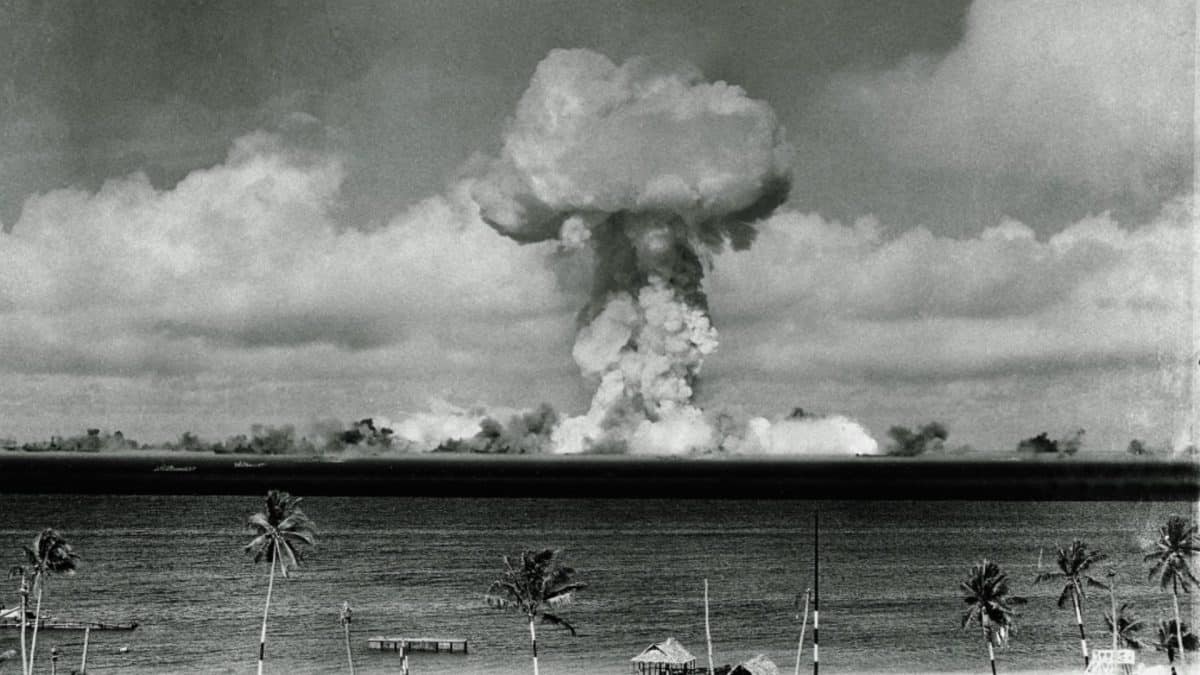
Decades of nuclear tests linked to 4 mn premature deaths globally, report says

Decades of nuclear tests linked to 4 mn premature deaths globally, report says

A new report by Norwegian People’s Aid links over four million premature deaths to radioactive fallout from more than 2,400 nuclear tests conducted between 1945 and 2017. Radioactive contamination from nuclear testing continues to affect people worldwide, with survivors reporting cancers and other illnesses decades after exposure. The report urges greater transparency, support for affected communities, and stronger global action to prevent future nuclear testing.

More Quick Reads

Top Stories

UAE to host first 'trilateral' talks between Ukraine, US and Russia, says Zelenskyy

UAE to host first 'trilateral' talks between Ukraine, US and Russia, says Zelenskyy

Trump finds new raid target? Report says US actively seeking regime change in Cuba by 2026-end

Trump finds new raid target? Report says US actively seeking regime change in Cuba by 2026-end

Power shift in Hanoi: Vietnam party list hints PM and president losing clout

Power shift in Hanoi: Vietnam party list hints PM and president losing clout

Can Trump’s Board of Peace replace the United Nations?

Can Trump’s Board of Peace replace the United Nations?

UAE to host first 'trilateral' talks between Ukraine, US and Russia, says Zelenskyy

UAE to host first 'trilateral' talks between Ukraine, US and Russia, says Zelenskyy

Trump finds new raid target? Report says US actively seeking regime change in Cuba by 2026-end

Trump finds new raid target? Report says US actively seeking regime change in Cuba by 2026-end

Power shift in Hanoi: Vietnam party list hints PM and president losing clout

Power shift in Hanoi: Vietnam party list hints PM and president losing clout

Can Trump’s Board of Peace replace the United Nations?

Can Trump’s Board of Peace replace the United Nations?

Top Shows

Vantage Firstpost America Firstpost Africa First Sports
Enjoying the news?

Get the latest stories delivered straight to your inbox.

Subscribe
Latest News About Firstpost
Most Searched Categories
  • Web Stories
  • World
  • India
  • Explainers
  • Opinion
  • Sports
  • Cricket
  • Tech/Auto
  • Entertainment
  • Photostories
  • Lifestyle
NETWORK18 SITES
  • News18
  • Money Control
  • CNBC TV18
  • Forbes India
  • Advertise with us
  • Sitemap
Firstpost Logo

is on YouTube

Subscribe Now

Copyright @ 2024. Firstpost - All Rights Reserved

About Us Contact Us Privacy Policy Cookie Policy Terms Of Use
Home Video Quick Reads Shorts Live TV