Firstpost
  • Video Shows
    Vantage Firstpost America Firstpost Africa First Sports
  • World
    US News
  • Explainers
  • News
    India Opinion Cricket Tech Entertainment Sports Health Photostories
  • Lifestyle
Trending Donald Trump Narendra Modi Elon Musk United States Joe Biden

Sections

  • Home
  • Live TV
  • Videos
  • Shows
  • World
  • Entertainment
  • India
  • Explainers
  • Opinion
  • Sports
  • Cricket
  • Lifestyle
  • Health
  • Tech/Auto
  • Web Stories
  • Business
  • Impact Shorts

Shows

  • Vantage
  • Firstpost America
  • Firstpost Africa
  • First Sports
  • Fast and Factual
  • Between The Lines
  • Flashback
  • Live TV

Events

  • Putin in India
  • Bihar Election
  • Raisina Dialogue
  • Independence Day
  • Champions Trophy
  • Delhi Elections 2025
  • Budget 2025
  • Firstpost Defence Summit
Trending:
  • Trump at Davos
  • Bangladesh drops out of T20 WC
  • Board of Peace
  • Greenland standoff
  • Beckham family feud
fp-logo
Pee power: How scientists have used urine to make dental implants
Whatsapp Facebook Twitter
Trending

Sections

  • Home
  • Live TV
  • Videos
  • Shows
  • World
  • Entertainment
  • India
  • Explainers
  • Opinion
  • Sports
  • Cricket
  • Lifestyle
  • Health
  • Tech/Auto
  • Web Stories
  • Business
  • Impact Shorts

Shows

  • Vantage
  • Firstpost America
  • Firstpost Africa
  • First Sports
  • Fast and Factual
  • Between The Lines
  • Flashback
  • Live TV

Events

  • Putin in India
  • Bihar Election
  • Raisina Dialogue
  • Independence Day
  • Champions Trophy
  • Delhi Elections 2025
  • Budget 2025
  • Firstpost Defence Summit

Pee power: How scientists have used urine to make dental implants

FP Explainers • June 22, 2025, 13:31:03 IST
Whatsapp Facebook Twitter

A team of scientists at the University of California, Irvine, have figured out a way to turn human urine into a key material used in dental and bone implants. The discovery will not only help turn this everyday waste into a valuable medical resource, but also help clean wastewater and mitigate environmental pollution

Advertisement
Subscribe Join Us
+ Follow us On Google
Choose
Firstpost on Google
Pee power: How scientists have used urine to make dental implants
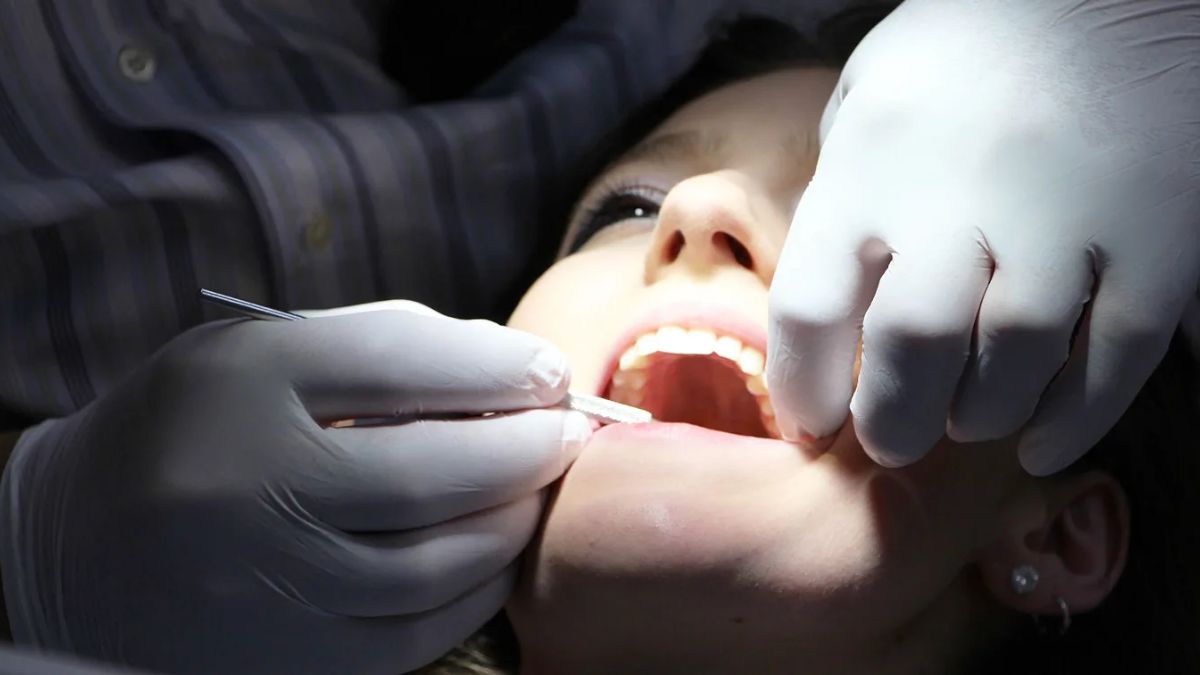
Called “osteoyeast,” this specially designed system can convert urine into hydroxyapatite (HAp)—the same mineral that gives our bones and teeth their strength and structure. Image for Representation. Pixabay

It might sound bizarre, but your morning bathroom trip could someday help fix a broken tooth.

A team of scientists at the University of California, Irvine, have figured out a way to turn human urine into a key material used in dental and bone implants.

Human urine is usually flushed away without a second thought. But in large amounts, it can actually harm the environment by overwhelming water systems with excess nitrogen and phosphorus. But now, researchers are flipping the script and turning this everyday waste into a valuable medical resource.

STORY CONTINUES BELOW THIS AD

Here’s how they’re doing it.

Waste to wonder

At the heart of this breakthrough is a genetically engineered yeast developed by scientists at UC Irvine, in collaboration with researchers from institutions in the US and Japan.

More from Health
Doctors say thyroid imbalance may affect fertility but pregnancy remains possible Doctors say thyroid imbalance may affect fertility but pregnancy remains possible Doctor explains: How missed heart warning signs and delayed screening fuel sudden cardiac deaths Doctor explains: How missed heart warning signs and delayed screening fuel sudden cardiac deaths

Called “osteoyeast,” this specially designed system can convert urine into hydroxyapatite (HAp)—the same mineral that gives our bones and teeth their strength and structure.

In the human body, it’s the job of bone-forming cells, known as osteoblasts, to pull calcium phosphate from body fluids and produce HAp. But osteoblasts aren’t suited for mass production. So, the researchers built a synthetic version of these cells using yeast.

HAp, a biocompatible calcium phosphate mineral, is widely used in bone and dental implants, archaeological restoration and biodegradable materials. Image for Representation.

The modified yeast mimics osteoblasts by breaking down urea from urine, which raises the pH levels inside the cell. This shift triggers the formation of small compartments that gather calcium and phosphate.

Editor’s Picks
1
No more fillings or implants? Why world’s first lab-grown teeth are a big deal
2
Does toothpaste kill good bacteria in your mouth?

Inside these compartments, the materials begin to crystallise into hydroxyapatite, which is then pushed out of the cell. The result? Up to 1 gram of HAp can be produced from just a litre of urine.

Notably, this biocompatible calcium phosphate mineral is widely used in bone and dental implants, archaeological restoration and biodegradable materials.

STORY CONTINUES BELOW THIS AD

The market for HAp is projected to exceed USD 3.5 billion by 2030, with sales price (over USD 80 per kg) enhancing the monetary attractiveness of UD processes, the study revealed.

A dual purpose

Scientists behind the innovation say the process offers a win-win solution.

“On the one hand, it helps remove human urine from wastewater streams, mitigating environmental pollution and the buildup of unwanted nutrients; and on the other hand, it produces a material that can be commercially marketed for use in a variety of settings,” David Kisailus, co-author of the study and professor of materials science and engineering at UC Irvine, told Interesting Engineering.

Kisailus explained that the entire process of creating hydroxyapatite takes less than a day.

“The fact that it uses yeast as a chassis, which is inexpensive and can be placed in large vats at relatively low temperatures—think about beer that’s made via fermentation processes and is well scaled—shows that this can be done easily without major infrastructural needs, and that has the added benefit of making it accessible to developing economies,” he said.

STORY CONTINUES BELOW THIS AD

Because the system relies on yeast, it could be especially useful in areas without access to high-tech manufacturing, opening the door for more widespread production of advanced medical materials.

The entire process of creating hydroxyapatite takes less than a day; hence, it could be especially useful in areas without access to high-tech manufacturing. Image for Representation.

Looking ahead, the team is also exploring the structural potential of hydroxyapatite. “We are currently developing strategies to leverage this yeast platform with our 3D printing and structural knowledge to make multifunctional architected materials,” Kisailus added.

The project was supported by major US agencies, including the Department of Energy, DARPA, and the Air Force Office of Scientific Research. Their findings were recently published in Nature Communications under the title: Cost-effective urine recycling enabled by a synthetic osteoyeast platform for production of hydroxyapatite.

With input from agencies

  • Home
  • Health
  • Pee power: How scientists have used urine to make dental implants
End of Article
Latest News
Find us on YouTube
Subscribe
  • Home
  • Health
  • Pee power: How scientists have used urine to make dental implants
End of Article

Quick Reads

Decades of nuclear tests linked to 4 mn premature deaths globally, report says

Decades of nuclear tests linked to 4 mn premature deaths globally, report says

A new report by Norwegian People’s Aid links over four million premature deaths to radioactive fallout from more than 2,400 nuclear tests conducted between 1945 and 2017. Radioactive contamination from nuclear testing continues to affect people worldwide, with survivors reporting cancers and other illnesses decades after exposure. The report urges greater transparency, support for affected communities, and stronger global action to prevent future nuclear testing.

More Quick Reads

Top Stories

Zelensky suggests 'trilateral' talks between Russia, US, Ukraine in UAE

Zelensky suggests 'trilateral' talks between Russia, US, Ukraine in UAE

Trump finds new raid target? Report says US actively seeking regime change in Cuba by 2026-end

Trump finds new raid target? Report says US actively seeking regime change in Cuba by 2026-end

Power shift in Hanoi: Vietnam party list hints PM and president losing clout

Power shift in Hanoi: Vietnam party list hints PM and president losing clout

Can Trump’s Board of Peace replace the United Nations?

Can Trump’s Board of Peace replace the United Nations?

Zelensky suggests 'trilateral' talks between Russia, US, Ukraine in UAE

Zelensky suggests 'trilateral' talks between Russia, US, Ukraine in UAE

Trump finds new raid target? Report says US actively seeking regime change in Cuba by 2026-end

Trump finds new raid target? Report says US actively seeking regime change in Cuba by 2026-end

Power shift in Hanoi: Vietnam party list hints PM and president losing clout

Power shift in Hanoi: Vietnam party list hints PM and president losing clout

Can Trump’s Board of Peace replace the United Nations?

Can Trump’s Board of Peace replace the United Nations?

Top Shows

Vantage Firstpost America Firstpost Africa First Sports
Enjoying the news?

Get the latest stories delivered straight to your inbox.

Subscribe
Latest News About Firstpost
Most Searched Categories
  • Web Stories
  • World
  • India
  • Explainers
  • Opinion
  • Sports
  • Cricket
  • Tech/Auto
  • Entertainment
  • Photostories
  • Lifestyle
NETWORK18 SITES
  • News18
  • Money Control
  • CNBC TV18
  • Forbes India
  • Advertise with us
  • Sitemap
Firstpost Logo

is on YouTube

Subscribe Now

Copyright @ 2024. Firstpost - All Rights Reserved

About Us Contact Us Privacy Policy Cookie Policy Terms Of Use
Home Video Quick Reads Shorts Live TV