

 "Why Putin can travel to India without worrying about the ICC arrest warrant")
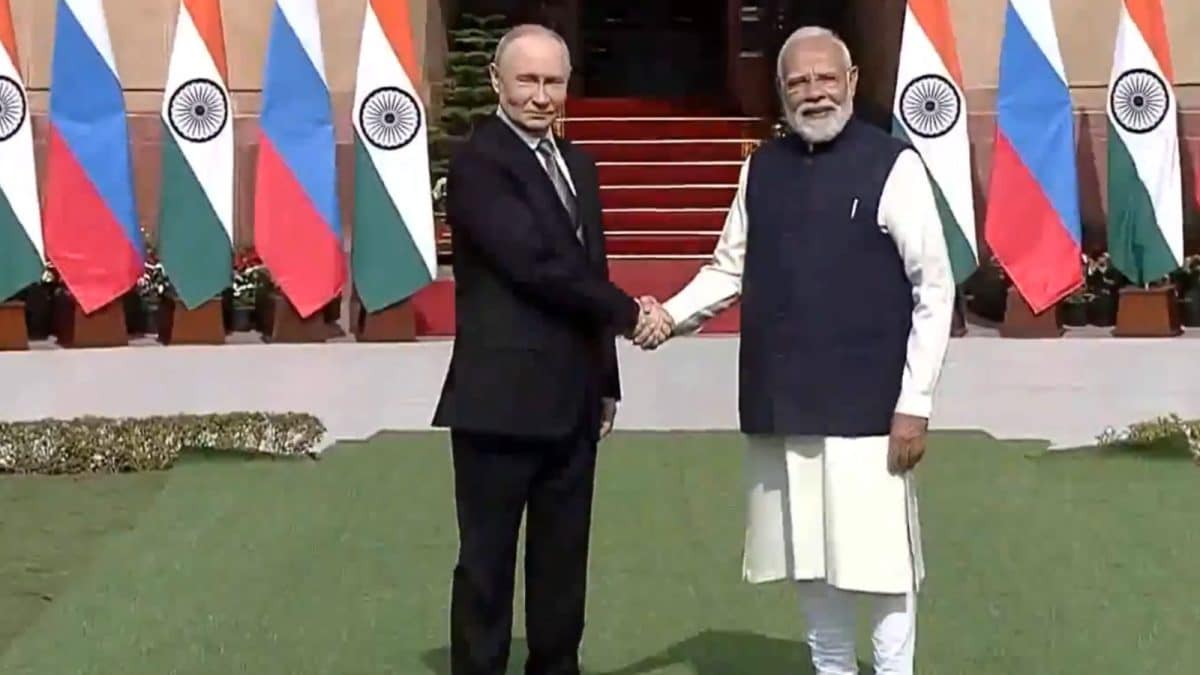
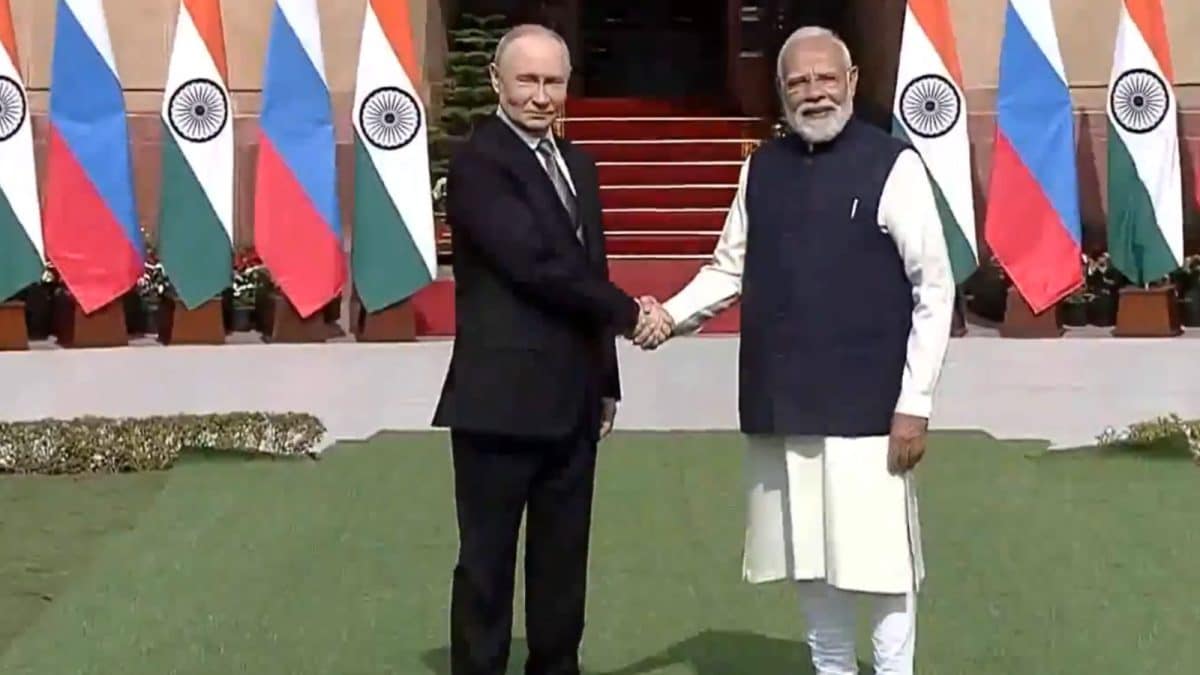
Russian President Vladimir Putin will be arriving in New Delhi on Thursday for the 23rd India-Russia Annual Summit with Prime Minister Narendra Modi.
This will be one of the Russian leader’s most significant international trips since the International Criminal Court (ICC) issued an arrest warrant against him in March 2023.
The visit inevitably raises a fundamental question of international law: Is India obligated to execute the ICC warrant and detain a sitting head of state?
The unambiguous answer, rooted in India’s sovereign legal structure and its long-standing foreign policy, is no.
Why has an ICC arrest warrant been issued against Putin?
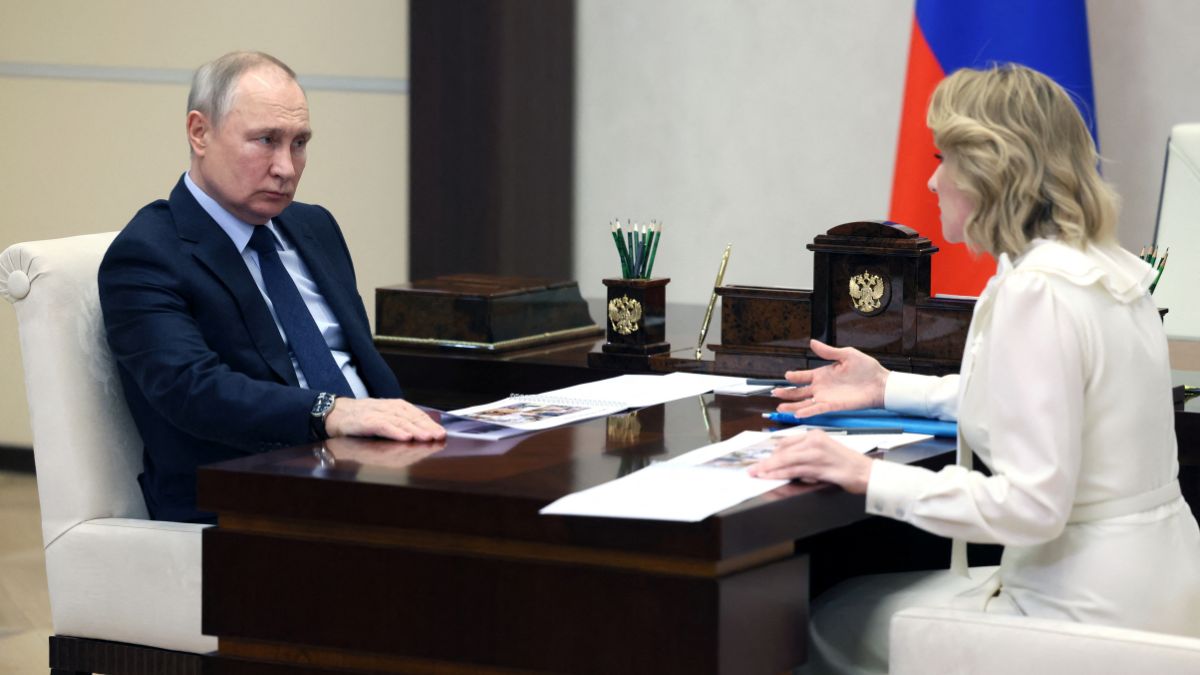
The arrest warrant issued by the Pre-Trial Chamber II of the ICC on March 17, 2023, names Russian President Vladimir Putin and his Commissioner for Children's Rights, Maria Lvova-Belova, as suspects.
The warrants allege that both individuals bear individual criminal responsibility for the war crime of unlawful deportation of population (children) and the unlawful transfer of population (children) from Russian-occupied areas of Ukraine to the Russian Federation.
The ICC Prosecutor, Karim AA Khan, stated that there are reasonable grounds to believe these acts were committed in Ukrainian occupied territory starting from at least February 24, 2022, the date of Russia’s full-scale invasion.
The allegations centre on the forced removal of thousands of Ukrainian children, including those from orphanages and care homes, with evidence suggesting that presidential decrees issued by Putin streamlined the process of granting Russian citizenship and facilitating their adoption by Russian families.
The ICC alleges this demonstrates an intent to permanently remove these children from their own country, constituting a violation of the Fourth Geneva Convention and a serious war crime under Article 8(2)(a)(vii) and 8(2)(b)(viii) of the Rome Statute.
The ICC’s jurisdiction over a non-member state like Russia is established because Ukraine, while not a state party, has twice formally accepted the Court’s jurisdiction over alleged crimes committed on its territory since 2014.
Despite the legal basis, Russia rejects the authority of the Hague-based court, dismissing the warrants as legally irrelevant.
This dynamic immediately limits the practical effect of the warrant to the 125 nations that are signatories to the Rome Statute, as these alone are legally bound to cooperate with the ICC.
Why is India not obligated to detain Putin?
The key legal shield allowing Putin to travel freely to India rests entirely on the principle of pacta sunt servanda — agreements must be kept — or, in this case, the opposite: a treaty is binding only upon the parties to it.
India has never signed or ratified the Rome Statute of the International Criminal Court.
As a result, the entire architecture of reciprocal obligations, duties of cooperation, and mandates for arrest and surrender under the Statute do not apply to the Republic of India.
This position is grounded in specific, long-held reservations that New Delhi articulated during the Statute’s drafting process in 1998, issues which were ultimately not addressed to India’s satisfaction,
Politicisation by the UNSC
India strongly opposed the provision that grants the United Nations Security Council (UNSC) the power to refer or defer cases to the ICC.
New Delhi argued that this mechanism politicised the Court, allowing the five permanent members to shield allies or use the Court as a diplomatic weapon against others.
India maintains that a judicial body must operate independently of political organs.
Exclusion of terrorism and WMDs
India, a nation that has grappled with cross-border terrorism for decades, insisted that the Statute must explicitly include terrorism and the use of nuclear weapons and other weapons of mass destruction as crimes within the ICC’s jurisdiction.
The final draft of the Rome Statute did not adopt these crimes, leading India to view the Court’s scope as incomplete and strategically imbalanced.
Protection of national sovereignty
Fundamentally, India holds that its domestic judicial system is robust and capable of prosecuting any serious international crimes that might occur on its territory or involve its citizens.
Joining the ICC, in this view, could potentially infringe upon its national sovereignty and the jurisdiction of its own courts.
Because India never legislatively incorporated the Rome Statute into its domestic law, there is no enabling legislation that would empower an Indian court or law enforcement agency to recognise or act upon an ICC arrest warrant.
Legally, the warrant remains an external document from a foreign court that carries no compulsory weight within India’s jurisdiction.
What does ICC’s history with arrest warrants tell us?
The diplomatic dilemma currently faced by India is not unprecedented, and New Delhi’s approach aligns with other nations not bound by the ICC.
The most famous parallel involves Omar al-Bashir, the former president of Sudan, who was indicted by the ICC in 2009 for genocide, war crimes, and crimes against humanity in Darfur, making him the first sitting head of state to face such a warrant.
Al-Bashir’s subsequent travel put into spotlight the enforcement challenges of the ICC. He visited several countries that were ICC State Parties, such as South Africa in 2015 for an African Union summit, which was legally obligated to arrest him.
South Africa’s failure to detain him — despite a domestic court order for his arrest — led to a finding of non-compliance by the ICC and a significant political controversy.
Al-Bashir also visited India in 2015 for the India-Africa Forum Summit. Just as with the upcoming Putin visit, civil society groups called for his arrest. India again reiterated that as a non-signatory to the Rome Statute, it was not legally bound to act on the warrant.
This established a clear precedent for New Delhi’s policy of prioritising its own strategic relationships over the enforcement demands of a treaty it chose not to join.
More recently, in 2023, the question of arrest became acute for the Brics summit (Brazil, Russia, India, China, South Africa) in Johannesburg.
South Africa, an ICC State Party, faced a direct legal crisis over its obligation to arrest Putin.
The crisis was ultimately averted when Putin chose not to attend the summit in person, opting instead to participate virtually and sending Russian Foreign Minister Sergei Lavrov as the in-person representative.
The ICC’s ongoing legal pursuits against leaders, including the recent issuance of warrants against Israeli Prime Minister Benjamin Netanyahu and former Israeli Defence Minister Yoav Gallant, along with senior Hamas leaders, shows the politicised selective nature of the enforcement challenge which in turn reinforcing the position of powerful non-member states like the United States, China, and India to maintain their distance.
What does this say about Indo-Russian partnership?
The India-Russia relationship is built on decades of close partnership, often referred to as a “Special and Privileged Strategic Partnership,” which remains indispensable to India’s national security and defence preparedness.
Russia has historically been, and remains, India’s primary supplier of critical defence equipment, providing everything from frontline fighter jets (like the Su-30MKI), main battle tanks, submarines, and strategic air defence systems such as the S-400 Triumf.
Maintaining the readiness of this massive military inventory requires a steady supply of spares, upgrades, and technical support that only Moscow can provide.
Disrupting this relationship for the sake of an external legal mandate would severely compromise India’s security posture, particularly given regional tensions.
In the wake of Western sanctions on Russia following the Ukraine conflict, India significantly ramped up its imports of discounted Russian crude oil. Russia has become India’s largest crude oil supplier, a development vital for managing India’s energy security and inflation.
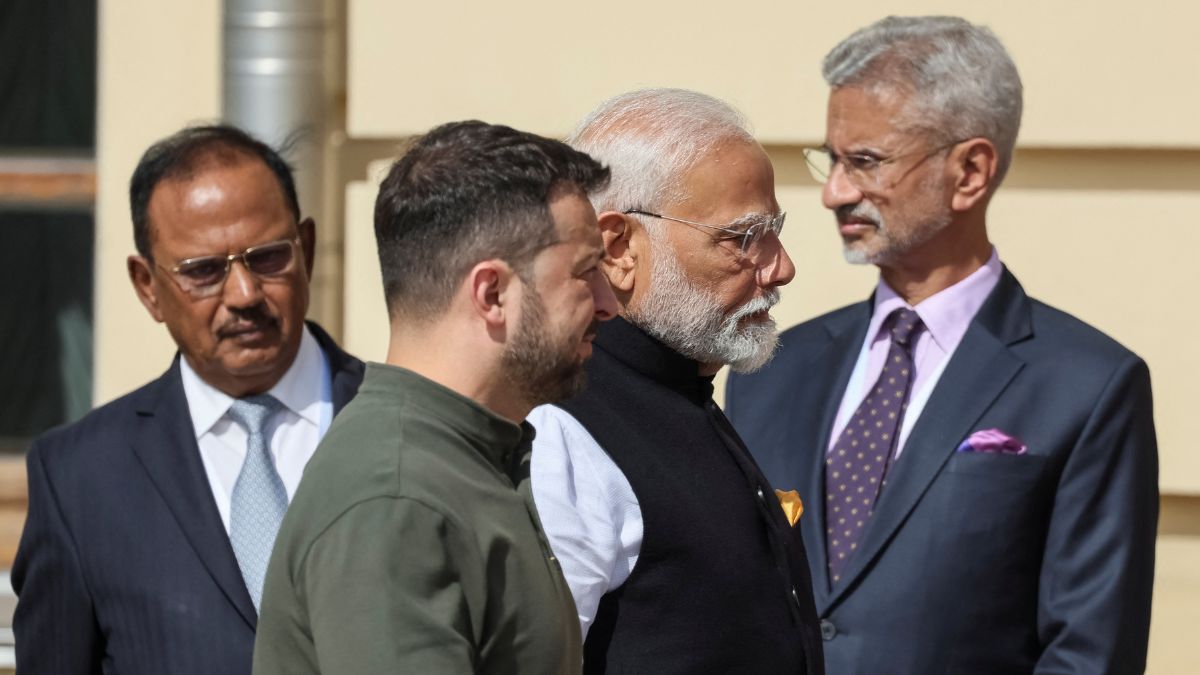
India has consistently adopted a neutral, non-aligned diplomatic position on the Ukraine conflict, abstaining on key votes at the UN and stressing the need for dialogue and diplomacy, rather than joining the Western chorus of condemnation and sanctions.
For India, the obligation to maintain its bond with a time-tested friend and strategic partner fundamentally outweighs the non-existent legal duty imposed by the ICC.
With inputs from agencies

 "Putin India Visit LIVE Updates: India and Russia sign Vision 2030 to boost economic cooperation, explore FTA with EEU, says PM Modi")
 "India, Russia agree to boost trade, investments after Modi-Putin talks")
 "DGCA puts new pilot rest rule behind IndiGo flight cancellations on hold")
 "'India is not neutral...': How Modi's diplomacy has triumphed amid the Russia-Ukraine war")
 "Putin India Visit LIVE Updates: India and Russia sign Vision 2030 to boost economic cooperation, explore FTA with EEU, says PM Modi")
 "India, Russia agree to boost trade, investments after Modi-Putin talks")
 "DGCA puts new pilot rest rule behind IndiGo flight cancellations on hold")
 "'India is not neutral...': How Modi's diplomacy has triumphed amid the Russia-Ukraine war")



