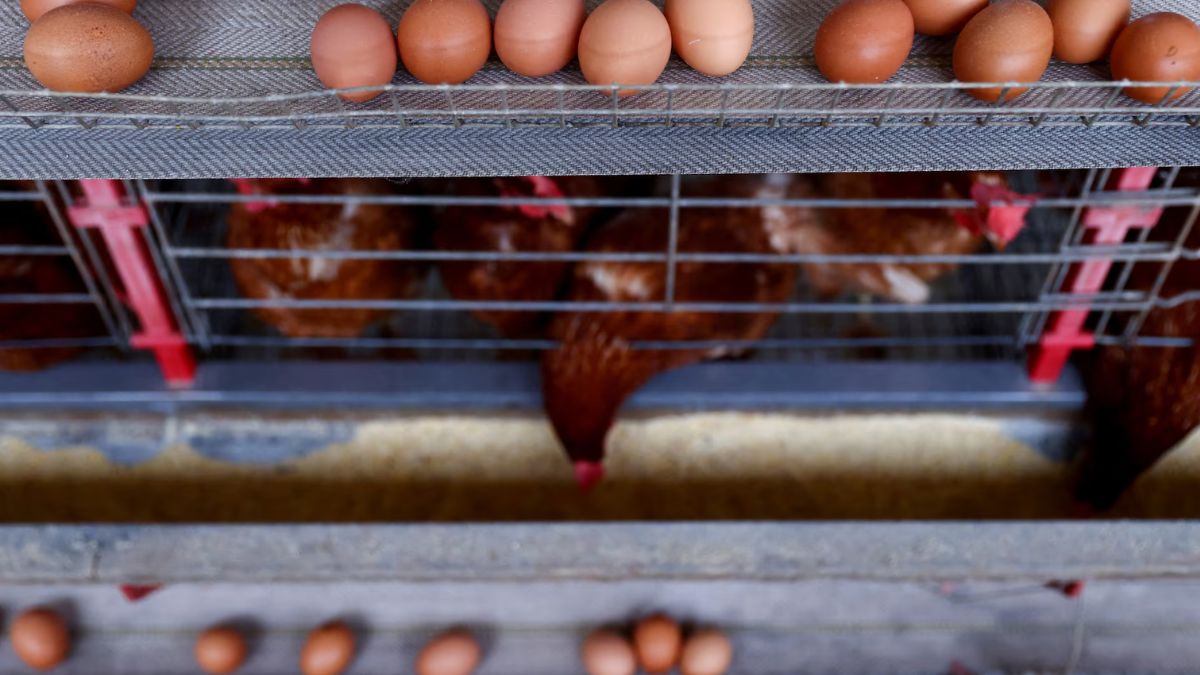
 "Saudi Arabia has imposed a ban on the import of poultry and table eggs from 40 countries, including India. File image/Reuters")
Saudi Arabia has taken a firm step to protect its public health by tightening controls on poultry and table eggs. The nation has banned these imports from 40 countries, including India. In addition to the full ban, partial restrictions apply in specific states or cities across 16 countries, including Australia, the United States, Italy, Belgium, Bhutan, and others.
Saudi poultry, egg ban hits 40 nations
A full ban on imports applies India and the following places: Afghanistan, Azerbaijan, Germany, Indonesia, Iran, Bosnia and Herzegovina, Bulgaria, Bangladesh, Taiwan, Djibouti, South Africa, China, Iraq, Ghana, Palestine, Vietnam, Cambodia, Kazakhstan, Cameroon, South Korea, North Korea, Laos, Libya, Myanmar, the United Kingdom, Egypt, Mexico, Mongolia, Nepal, Niger, Nigeria, Hong Kong, Japan, Burkina Faso, Sudan, Serbia, Slovenia, Côte d’Ivoire and Montenegro.
The Saudi Food and Drug Authority (SFDA) announced the ban decision as a part of precautionary measures aimed at safeguarding public health and protecting its domestic food supply chain.
“The decision aims to protect public health and ensure food safety in the local market,” the authority said, as quoted by Moneycontrol.
According to SFDA, the move aligns with the Kingdom’s strict biosecurity protocols designed to intercept the entry of infectious animal diseases into Saudi Arabia.
Officials added that the countries on the banned list were selected based on international disease surveillance reports and risk assessments, primarily regarding outbreaks of highly pathogenic avian influenza, also known as bird flu . They also emphasised that the ban applies to imports of table eggs and poultry products from nations considered to pose potential animal health risks, Mathrubhumi reported.
According to authorities, certain bans have been in effect since 2004, while other countries have been gradually added over the years, based on updated risk assessments and international reports concerning animal disease.
Clarification on exempted products
Saudi Arabia further clarified that heat-treated and fully processed poultry products may remain eligible for import and be exempted from the ban. Shipments with valid veterinary health certificates will be thoroughly inspected.
The products must comply with all health requirements, including carrying official certification from the exporting nation, and should originate from facilities approved by Saudi regulators. It should also be confirmed that the applied heat treatment or processing is enough to eliminate the bird flu or Newcastle disease virus.
SFDA, in a statement, said, “Saudi Arabia prioritises consumer safety, and the integrity of its food supply. Import suspensions are implemented whenever necessary to mitigate potential risks,” according to a media report.
Impact on India
Now, the Indian exporters and trade authorities are expected to evaluate the impact of the ban and review shipments. The step will ensure compliance with the updated Saudi regulations.
Industry experts say the ban could temporarily disrupt regional trade flows, especially for exporters who rely heavily on the Saudi market.
16 nations under partial restrictions
A partial ban has also been imposed, specifically targeting provinces and cities in 16 countries. These include Australia, the United States, Italy, Belgium, Bhutan, Poland, Togo, Denmark, Romania, Zimbabwe, France, the Philippines, Canada, Malaysia, Austria and the Democratic Republic of Congo.
The SFDA clarified that restrictions in these nations apply only to designated states and cities rather than a nationwide ban.
Bird flu concerns across the globe
Saudi Arabia’s new import restrictions come amid global concerns over bird flu, prompting tighter monitoring of import checks and updated regulations.
According to the National Library of Medicine, Avian influenza, or “bird flu,” is increasingly concerning worldwide, as experts prepare for the potential emergence of the next human influenza pandemic. Only influenza A has been proven capable of triggering pandemics so far.
Since 2003, outbreaks of this disease in birds, especially domestic poultry, have been reported regularly across Southeast Asia and have now affected parts of Africa and Europe.
Many countries that are not affected are preparing for the possible arrival of HPAI A/H5N1 in wild birds and poultry within their territories, the National Library of Medicine noted_._
With inputs from agencies