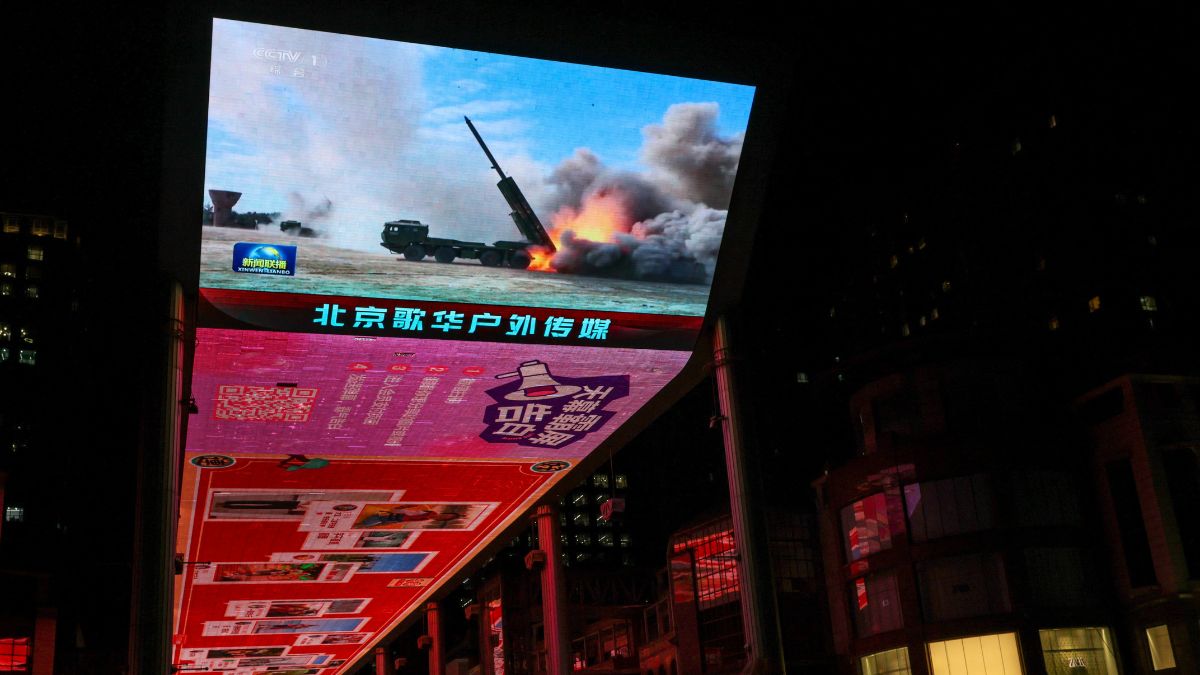
 "Why is China calling Trump’s Venezuela strike a strategic gift?")
The dramatic seizure of Venezuelan President Nicolas Maduro by US forces is being most keenly analysed in China, where officials have interpreted the move as simultaneously damaging to US global standing and advantageous to Beijing’s long-standing geopolitical narratives.
In Chinese eyes, US President Donald Trump’s decision to capture Maduro — an “all-weather” strategic partner of Beijing — has produced what many see as a strategic paradox: an action intended to demonstrate US resolve that instead strengthens China’s diplomatic messaging, and offers Beijing fresh rhetorical leverage in disputes ranging from Taiwan to the South China Sea.
How China reacted to US capture of Maduro
Trump’s audacious operation, carried out on January 3 became a trending topic on China-based social media platforms such as Weibo.
Some online commentators argued that the operation demonstrated how a major power could act decisively beyond its borders, while others framed it as evidence of unchecked US unilateralism.
For the Chinese government, the episode provided a ready-made contrast between Washington’s actions and Beijing’s repeated calls for respect for sovereignty and international law.
Chinese officials and state media outlets moved swiftly to condemn the seizure, arguing that it violated established norms and threatened regional stability in Latin America.
“The US invasion has made everyone see more and more the fact that the so-called ‘rules-based international order’ in the mouth of the United States is actually just a ‘predatory order based on US interests’,” China’s official Xinhua news agency said.
Chinese President Xi Jinping reinforced this broader message without naming the United States directly.
“The world today is undergoing changes and turbulence not seen in a century, with unilateral acts of hegemony severely undermining the international order,” Xi Jinping said, according to Xinhua.
Beijing said the US move violated international law and endangered peace and security in Latin America. It demanded the immediate release of Maduro and his wife, who are being detained in New York and are awaiting trial.
The timing of the operation added to Beijing’s frustration. Just hours before his capture, Maduro had met in Caracas with a high-level Chinese delegation, including China’s special representative for Latin American and Caribbean affairs, Qiu Xiaoqi.
Photographs of the meeting were posted by Maduro on his Instagram account. The Chinese foreign ministry did not immediately comment on the whereabouts of the delegation following the seizure.
How the Venezuelan episode aids China’s Taiwan narrative
Analysts broadly agree that Trump’s move does not alter China’s immediate military calculus vis-à-vis Taiwan, but it does complicate the diplomatic terrain in which those disputes are contested.
China claims democratically governed Taiwan as its own territory, a claim rejected by the island’s government. Beijing also asserts sovereignty over nearly all of the South China Sea, placing it at odds with multiple Southeast Asian states that contest parts of the strategically vital waterway.
In recent years, Washington has repeatedly criticised Chinese actions in these areas as violations of international law.
According to analysts, Trump’s seizure of Maduro weakens Washington’s ability to sustain that criticism without facing accusations of hypocrisy.
“Washington’s consistent, long-standing arguments are always that the Chinese actions are violating international law but they are now damaging that,” William Yang, an analyst at the International Crisis Group, told Reuters.
“It’s really creating a lot of openings and cheap ammunition for the Chinese to push back against the US in the future.”
At the same time, experts point out that Beijing is unlikely to use the Venezuelan operation as a direct justification for military escalation around Taiwan. China’s considerations regarding the island are shaped more by internal political priorities and military readiness than by US actions in Latin America.
“Taking over Taiwan depends on China’s developing but still insufficient capability rather than what Trump did in a distant continent,” Shi Yinhong, a professor of international relations at Renmin University in Beijing, told Reuters.
Neil Thomas, a fellow on Chinese politics at the Asia Society, noted that Beijing views Taiwan as an internal issue, making it unlikely to cite Venezuela as a formal parallel. “Beijing will want a clear contrast with Washington to trumpet its claims to stand for peace, development and moral leadership,” Thomas said.
“Xi does not care about Venezuela more than he cares about China. He’ll be hoping that it turns into a quagmire for the United States.”
Taiwan itself has been facing increasing military pressure from China. In the days preceding the Venezuelan operation, Beijing conducted its most extensive war games around the island to date, encircling Taiwan and demonstrating its ability to cut off external support in a conflict scenario.
Despite this backdrop, analysts said there was no expectation that China would immediately exploit the Venezuelan situation to launch an attack.
From Taipei, senior Taiwanese lawmaker Wang Ting-yu dismissed any suggestion that China could replicate US tactics.
“China has never lacked hostility toward Taiwan, but it genuinely lacks the feasible means,” Wang wrote in a Facebook post. “China is not the United States, and Taiwan is certainly not Venezuela. If China could actually pull it off, it would have done so long ago!”
Nevertheless, observers noted that the situation could increase diplomatic pressure on Taiwan. Some analysts suggested that Taipei might seek to strengthen ties with the Trump administration.
Lev Nachman, a political science professor at National Taiwan University, said Taiwan’s government was likely to issue a carefully worded response.
“What I do think Trump’s actions could do is to help Xi Jinping’s narrative in the future to create more justification for action against Taiwan,” he told Reuters.
How China is pushing the UN push to challenge US legitimacy
The UN Security Council is scheduled to convene at Colombia’s request, supported by China and Russia, to debate the legality of Trump’s decision.
The meeting will take place as Maduro prepares to appear in a New York court to face drug charges.
China’s top diplomat framed the issue as one of principle rather than alignment with Caracas.
“We have never believed that any country can act as the world’s police, nor do we accept that any nation can claim to be the world’s judge,” Wang said during a meeting with his Pakistani counterpart in Beijing, referring to the “sudden developments in Venezuela.”
“The sovereignty and security of all countries should be fully protected under international law,” he added.
The UN debate comes amid warnings from UN Secretary-General Antonio Guterres, who said the seizure of a sitting head of state could establish “a dangerous precedent.” Analysts say China’s role will be critical in shaping how developing countries respond.
“There isn’t much in the way of material support that China can offer Venezuela at this time, but rhetorically, Beijing will be very important when it leads the effort at the UN and with other developing countries to rally opinion against the US,” said Eric Olander, co-founder of the China-Global South Project.
Olander noted that China has demonstrated a pattern of maintaining economic ties with sanctioned states.
“What we’ve seen in the cases of Zimbabwe and Iran, both sanctioned by the West, is that China demonstrates its commitment to these relationships through trade and investment, even under difficult circumstances,” he told Reuters.
How the Venezuela episode was still a big blow to China
The episode also raises questions about China’s credibility among Latin American countries that have signed on to Xi Jinping’s Global Security Initiative.
Trump has not only threatened further military action against Venezuela but has also warned of possible interventions against Colombia and Mexico, while suggesting that Cuba’s communist government is weakening.
These developments may prompt regional governments to reassess how much protection Beijing’s security pledges can offer in practice.
China has invested heavily in Latin America over the past two decades, persuading several countries — including Costa Rica, Panama, the Dominican Republic, El Salvador, Nicaragua, and Honduras — to switch diplomatic recognition from Taiwan to Beijing.
Venezuela, which made the switch in 1974, became China’s closest ally in the region under Hugo Chavez, who deepened ties with Beijing after taking power in 1998.
That relationship continued after Chavez’s death in 2013, when Maduro assumed leadership. Under Maduro, cooperation expanded further, including educational exchanges such as enrolling his son at Peking University in 2016.
In return, China invested heavily in Venezuelan oil infrastructure, providing economic support as US and allied sanctions intensified from 2017 onward.
Chinese customs data show that China purchased about $1.6 billion worth of goods from Venezuela in 2024, with oil accounting for roughly half of the total.
The sudden removal of Maduro therefore represents not just a diplomatic setback but a symbolic blow to Beijing’s image as a dependable long-term partner.
“It was a big blow to China, we wanted to look like a dependable friend to Venezuela,” said a Chinese government official briefed on discussions between Maduro and Qiu Xiaoqi shortly before the capture.
How oil markets are holding up
On January 5, oil prices fell as investors weighed the implications of the US operation against broader market fundamentals.
Brent crude futures declined by 50 cents, or 0.8 per cent, to $60.26 a barrel, while US West Texas Intermediate fell 53 cents, or 0.9 per cent, to $56.79 a barrel. Prices were volatile during early Asian trading hours as markets assessed developments in Venezuela, an OPEC member.
Trump said Washington would take control of Venezuela and confirmed that a US embargo on Venezuelan oil remained in effect following Maduro’s detention. However, analysts noted that US strikes had not damaged the country’s oil infrastructure, limiting immediate supply risks.
“Even if Venezuelan exports are temporarily disrupted, over 80% are destined for China, which has built up ample reserves, and alternative sourcing is unlikely to strain the market,” said Kazuhiko Fuji, a consulting fellow at Japan’s Research Institute of Economy, Trade and Industry.
Officials within Maduro’s government, who have described the detention of Maduro and his wife as a kidnapping, remain in charge and have pledged unity.
Analysts said a prolonged political transition could suppress prices, while any meaningful recovery in Venezuelan production would require significant investment.
Raymond James analysts projected that output could rise by a few hundred thousand barrels per day by the end of 2026, but UBS strategist Giovanni Staunovo cautioned that “any meaningful recovery in Venezuelan output is likely to take considerable time.”
Trump has warned that further military action remains possible if Venezuelan officials do not cooperate. “All bets are off in a chaotic change of power scenario like what occurred in Libya or Iraq,” said Helima Croft, head of commodities research at RBC Capital.
OPEC and its allies, known collectively as OPEC+, decided to maintain output levels, further dampening fears of supply shocks.
Meanwhile, analysts are monitoring Iran’s response after Trump threatened intervention in an unrelated crackdown on protests there.
With inputs from agencies

 "US-Venezuela tensions LIVE: Maduro due in NY court soon, loyalists send mixed signals from Caracas")
 "From Iran to Panama and Venezuela: When the US pushed for regime change")
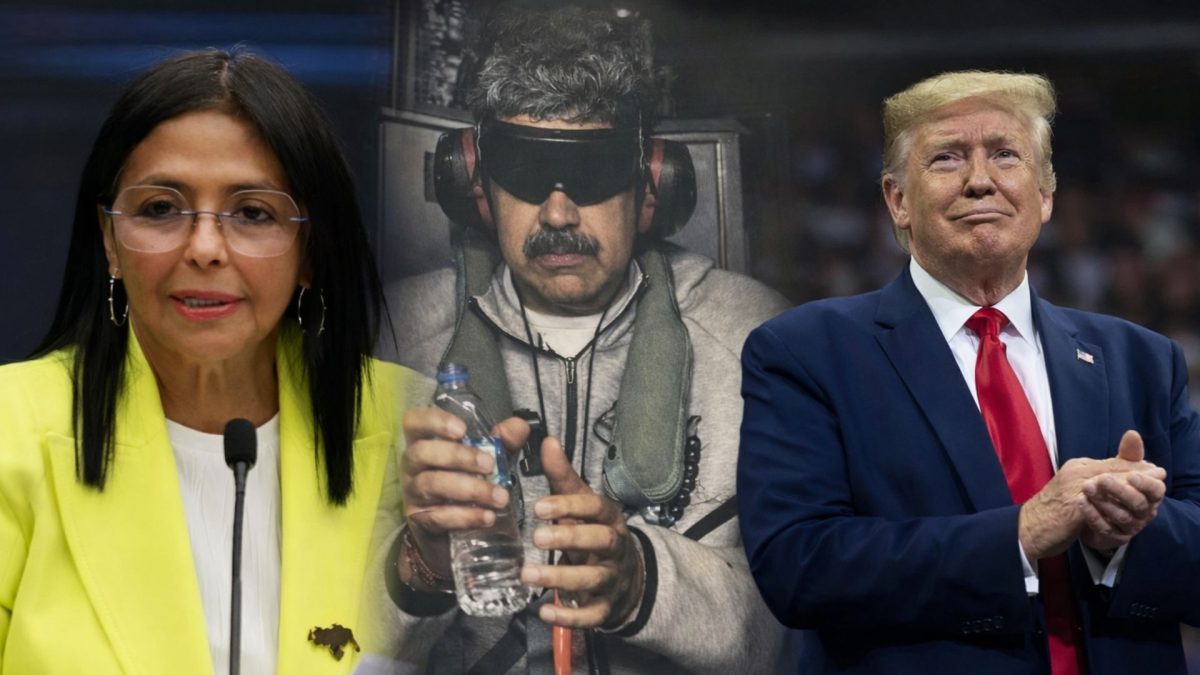 "Is Trump handing over Venezuela to ‘anti-American socialists’ he loathes?")
 "Paris court convicts 10 for cyber harassment of France's First Lady Brigitte Macron")
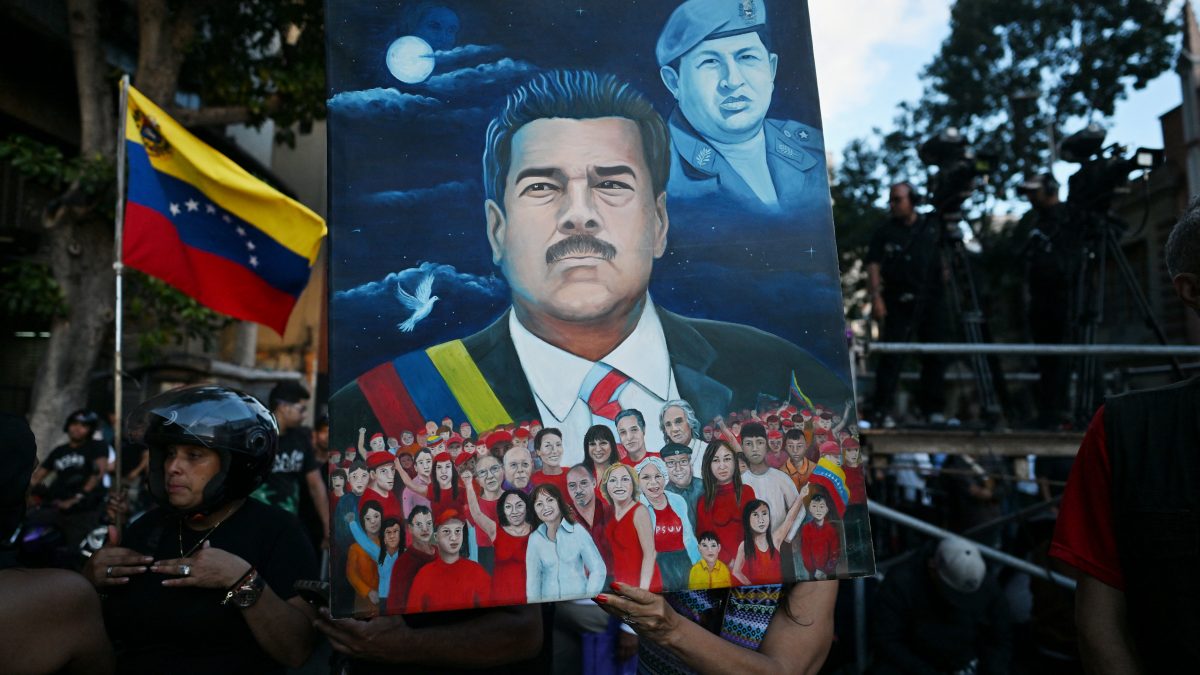 "US-Venezuela tensions LIVE: Maduro due in NY court soon, loyalists send mixed signals from Caracas")
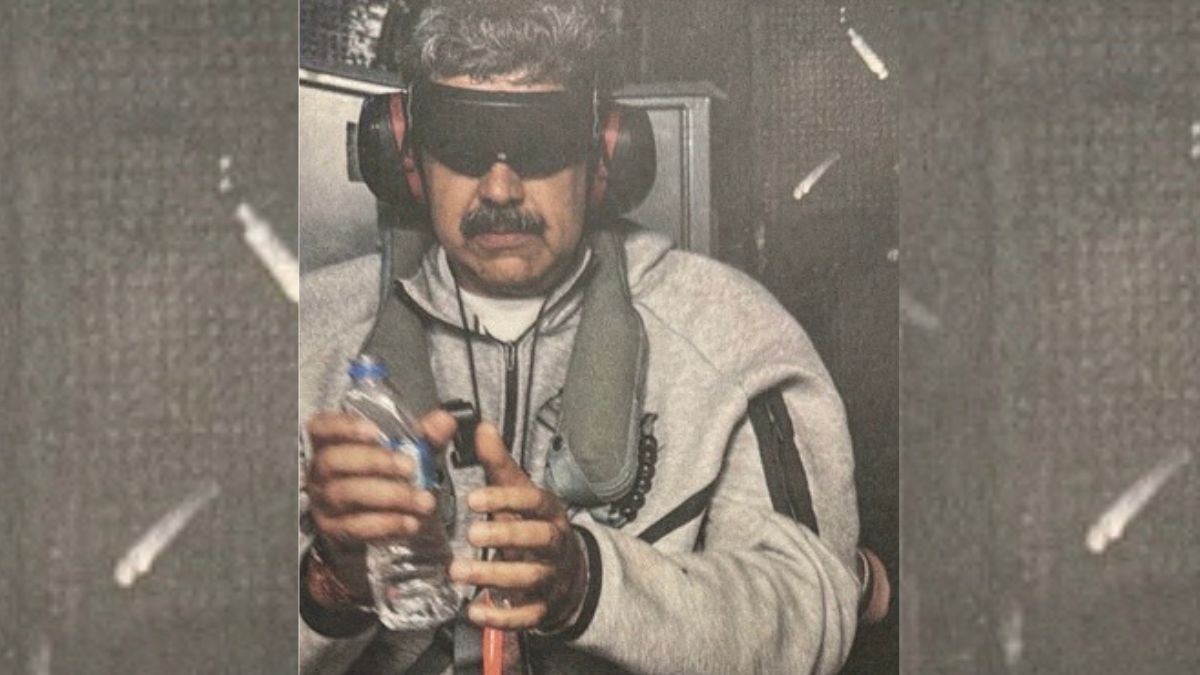 "From Iran to Panama and Venezuela: When the US pushed for regime change")
 "Is Trump handing over Venezuela to ‘anti-American socialists’ he loathes?")
 "Paris court convicts 10 for cyber harassment of France's First Lady Brigitte Macron")