 "What is India’s orange economy that Budget 2026 puts the spotlight on?")
Finance Minister Nirmala Sitharaman’s Union Budget for 2026-27 placed India’s creative industries firmly at the centre of the government’s services-led growth strategy, marking one of the most explicit policy endorsements yet of what is increasingly referred to as the “Orange Economy”.
Anchored in the analytical framework of the Economic Survey 2025-26, the Budget outlined how creativity-driven sectors — ranging from animation and gaming to live entertainment, design and intellectual property — can evolve into large-scale sources of employment, and tourism-led growth.
Rather than being viewed primarily as soft power or discretionary consumption, these sectors are now being positioned as labour-intensive, high-multiplier industries capable of absorbing young workers, supporting startups, and strengthening city economies.
What is the ‘Orange Economy’?
The Orange Economy, often described as the creative economy, refers to a wide range of knowledge-based activities that integrate culture, creativity, technology and intellectual property to produce economic, social and cultural value.
Unlike traditional manufacturing-led growth, these sectors derive their primary value from ideas, artistic expression and cultural capital rather than physical goods.
According to the Economic Survey 2025-26, creativity-led domains — including culture, media, entertainment and intellectual property — have the potential to become major drivers of employment, urban services and tourism in India.
The Survey situates these activities within a global context, noting that creative industries contribute anywhere between 0.5 per cent and over 7 per cent of gross domestic product across countries, based on estimates from the United Nations Conference on Trade and Development (UNCTAD).
The relevance of the Orange Economy in India is amplified by structural factors highlighted in the Survey: a young population, increasing urbanisation, rising disposable incomes, widespread digital adoption and improving physical infrastructure in cities.
Together, these conditions create an ecosystem where creativity-led services can scale rapidly, provided regulatory and capacity constraints are addressed.
The broader creator economy in India is already witnessing rapid expansion. According to estimates by Ernst & Young, India’s creator economy is projected to grow at an 18 per cent compound annual growth rate, increasing in value from Rs 19 billion in 2023 to Rs 34 billion by 2026.
What did the FM announce in her Budget 2026 speech?
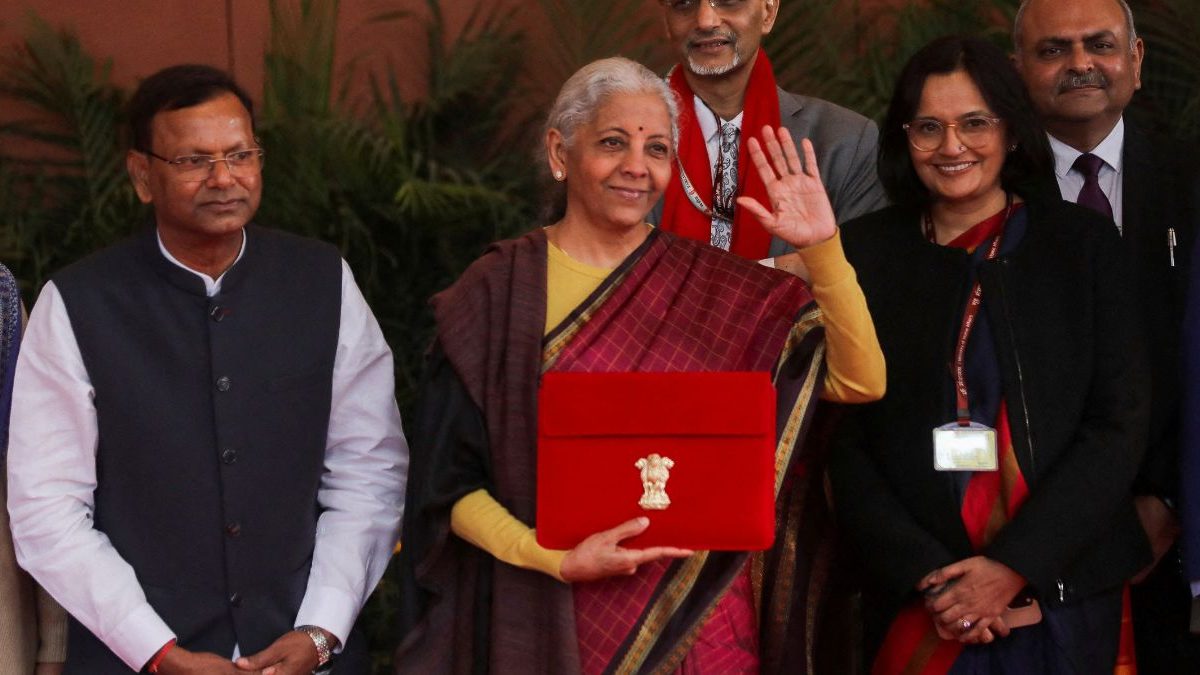
Presenting her ninth consecutive Union Budget on Sunday, Sitharaman signalled a strategic shift towards these sectors, framing them as a new engine of jobs and services-led expansion.
During her speech, Sitharaman highlighted the growth potential of India’s Animation, Visual Effects, Gaming and Comics (AVGC) sector, describing it as one of the fastest-expanding creative industries in the country.
“India’s animation, visual effects, gaming and comics sector is a growing industry, projected to require 2 million professionals by 2030,” Sitharaman said.
“I propose to support the Indian Institute of Creative Technologies, Mumbai, in setting up AVGC content creator labs in 15,000 secondary schools all over the country and 500 colleges.”
The proposed initiative will be implemented through the Indian Institute of Creative Technologies (IICT), Mumbai, and is designed to create a nationwide network of AVGC content creator laboratories across educational institutions.
By targeting both secondary schools and higher education colleges, the government aims to embed creative and digital skills early in the education pipeline, thereby expanding the future workforce for content creation, gaming, animation, visual effects and related digital services.
The government estimates that the AVGC sector alone could require approximately two million trained professionals by the end of the decade, underscoring the scale of the workforce challenge and the economic opportunity involved.
The AVGC lab initiative is expected to play a foundational role in strengthening India’s next-generation creator ecosystem.
By providing access to specialised infrastructure, tools and training, the programme is intended to support not only employment but also entrepreneurship and startup formation in creative domains.
How will India address shortage of trained professionals?
While acknowledging the rapid expansion of the design industry, Sitharaman pointed to a persistent shortage of trained designers across sectors.
To address this, the Finance Minister proposed the establishment of a new National Institute of Design (NID) in the eastern region of India. The initiative aims to strengthen design education and expand regional access to specialised training.
India currently has seven National Institutes of Design, all recognised as institutes of national importance.
The proposed addition reflects the government’s intent to deepen the talent pool for design-led industries, which play a critical role across manufacturing, services, branding, product development and digital interfaces.
What about the concert economy?
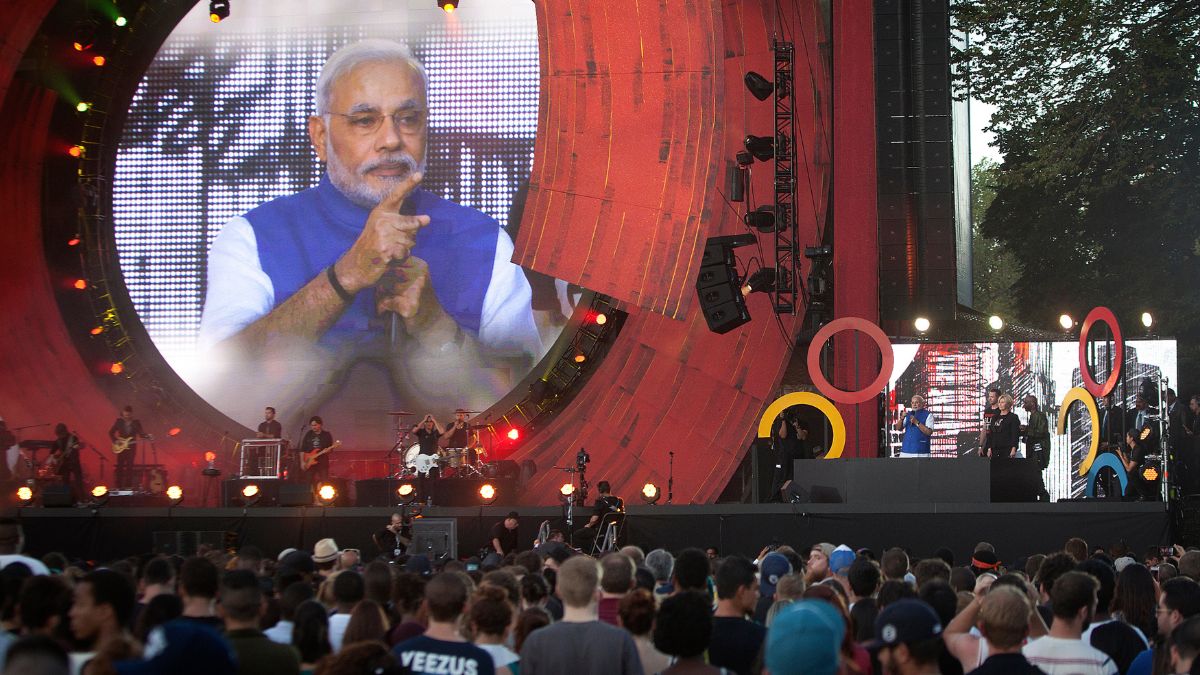
One of the most detailed segments of the Economic Survey 2025-26 focuses on the concert economy, which it identifies as a high-impact yet underdeveloped component of India’s services landscape. Live entertainment, the Survey argues, generates economic value that extends far beyond ticket revenues.
Drawing on international evidence, the Survey notes that live music accounts for roughly one-third of global music revenues. In the United States, live music generated over USD 130 billion in economic output and supported more than 900,000 jobs in 2019.
In the United Kingdom, music tourism contributed £6.6 billion — around 0.3 per cent of GDP — in 2022.
These figures are cited to illustrate the scale of economic spillovers associated with live entertainment. Concerts and large events stimulate demand across a wide range of sectors, including hospitality, travel, logistics, advertising, security, food services and local transport.
The Survey describes concerts as “short-duration tourism multipliers”, noting that they increase spending on accommodation, food, transport and city services over brief periods.
Their labour-intensive nature is also emphasised, with employment generated across event operations, stage management, logistics, hospitality, security and media — sectors that tend to absorb younger workers and creative professionals.
How is India’s concert economy faring?
In the Indian context, the concert economy is still at an early stage but expanding steadily.
The Economic Survey attributes this growth to several enabling factors, including a youthful population, rising discretionary incomes, the spread of digital ticketing platforms and gradual improvements in urban infrastructure.
However, the Survey is explicit that growth alone will not automatically translate into economic gains. It identifies several structural bottlenecks that limit scale and efficiency.
Among the most significant challenges is the shortage of large-format live-event venues capable of hosting international-scale performances.
Regulatory complexity also remains a major hurdle. Event organisers often need between 10 and 15 separate approvals to stage large concerts, creating uncertainty, delays and additional costs.
Constraints around foreign exchange and payments to international performers further complicate the organisation of global events.
The Survey stresses that “international experience underscores that economic gains depend on urban readiness and facilitative governance,” pointing to the importance of streamlined permissions, predictable regulations, effective crowd management and reliable last-mile connectivity.
As potential solutions, the Survey suggests that “opening up heritage monuments for such events and facilitating the visa and foreign exchange permissions for foreign performers” could significantly enhance India’s attractiveness as a global concert destination.
What is being done to boost the concert economy?
To address regulatory fragmentation, the Economic Survey notes that the Ministry of Information and Broadcasting is working on a Single Window Mechanism for Live Entertainment Permissions.
This proposed system would integrate approvals from multiple agencies, including state governments, with the aim of reducing administrative complexity for event organisers.
While the Survey does not provide implementation timelines, it implicitly frames regulatory simplification as a critical enabler for scaling the concert economy and unlocking its employment and tourism potential.
The broader argument advanced in the Survey is that live entertainment should not be treated as niche or episodic activity, but as part of an integrated urban development and tourism strategy.
With coordinated planning and facilitative governance, concerts and cultural events can contribute meaningfully to city branding, visitor inflows and service-sector employment.
How does the creative industry boost urban growth?
Beyond live entertainment, the Economic Survey positions the Orange Economy as a key component of urban economic growth. Creativity-led sectors tend to cluster in cities, where they benefit from dense networks of talent, infrastructure, audiences and complementary services.
The Survey argues that aligning creative industries with city-level planning, tourism promotion and infrastructure development can amplify their economic impact.
This approach also supports employment generation in labour-intensive services at a time when traditional manufacturing may not absorb the scale of India’s growing workforce.
Also Watch:
The government’s focus on the creative economy is also reflected in initiatives beyond the Budget. WAVES 2025, the World Audio Visual & Entertainment Summit, was held at the Jio World Convention Centre in Mumbai and hosted by the Government of India.
The summit aims to position India as a global hub for media and entertainment, intellectual property and technological innovation.
It showcases India’s strengths across broadcasting, films, animation, gaming, digital media, artificial intelligence and related domains, highlighting the convergence of content creation and technology.
Events such as WAVES underline the government’s intent to project India’s creative industries on the global stage while attracting investment, partnerships and market access.
With inputs from agencies

 "Budget 2026 Live Updates: PM Modi hails 'historic' Budget, says India will be the '3rd largest economy'")
 "No income tax changes, capex up, NRIs gain… The big takeaways from Union Budget 2026")
 "Union Budget 2026: What is the rare earth corridor? Why is India betting big on it now?")
 "FM Sitharaman’s Budget 2026 puts the humble coconut at the centre of farm reforms")
 "Budget 2026 Live Updates: PM Modi hails 'historic' Budget, says India will be the '3rd largest economy'")
 "No income tax changes, capex up, NRIs gain… The big takeaways from Union Budget 2026")
 "Union Budget 2026: What is the rare earth corridor? Why is India betting big on it now?")
 "FM Sitharaman’s Budget 2026 puts the humble coconut at the centre of farm reforms")