 "Union Budget 2026: What is the rare earth corridor? Why is India betting big on it now?")
India has formally entered the high-stakes arena of rare earth elements as Finance Minister Nirmala Sitharaman announced the creation of dedicated rare earth corridors across four mineral-rich Indian states during her Union Budget 2026-27 speech on on Sunday (February 1, 2026).
The announcement is not an isolated measure.
Instead, it builds on policy decisions taken late last year, aligning with broader manufacturing and technology initiatives unveiled in the Budget while also reflecting the global scramble to reduce dependence on a supply chain overwhelmingly dominated by China.
At its core, the rare earth corridor proposal aims to restructure India’s approach to the manufacturing of materials that are increasingly being viewed as the backbone of 21st-century industrial power.
Which states have been selected and why?
Presenting her ninth consecutive Budget in Parliament, Sitharaman singled out the government’s intention to provide targeted support to Odisha, Kerala, Andhra Pradesh, and Tamil Nadu for the establishment of dedicated rare earth corridors.
These four states are recognised for their mineral wealth, particularly in coastal and mineral belt regions, and are seen as suitable locations for building an integrated ecosystem around rare earth elements.
Addressing the Lok Sabha, Sitharaman said, “A scheme for rare earth permanent magnets was launched in 2025. We now propose to support the mineral-rich states of Odisha, Kerala, Andhra Pradesh, and Tamil Nadu in establishing dedicated rare-earth corridors to promote mining, processing, research and manufacturing.”
Two of the four states — Tamil Nadu and Kerala — are also scheduled to hold Assembly elections later in 2026.
In hindsight, the rare earth corridors are designed to function as more than transport routes. They represent a planning framework that links mineral extraction sites with processing plants, research institutions, and manufacturing clusters.
By creating this integrated structure, the government aims to streamline logistics, reduce delays, and make domestic production more competitive.
Odisha, Kerala, Andhra Pradesh, and Tamil Nadu not only have known mineral deposits but also possess ports, industrial zones, and supporting infrastructure. These factors can facilitate the movement of materials and the establishment of processing and manufacturing facilities.
Focused government support to these regions is expected to help build a domestic ecosystem for rare earth minerals, one that extends beyond mining to include higher-value activities.
Over time, this approach is intended to help Indian firms move up the value chain rather than remaining suppliers of raw materials.
What are rare earth elements and why do they matter?
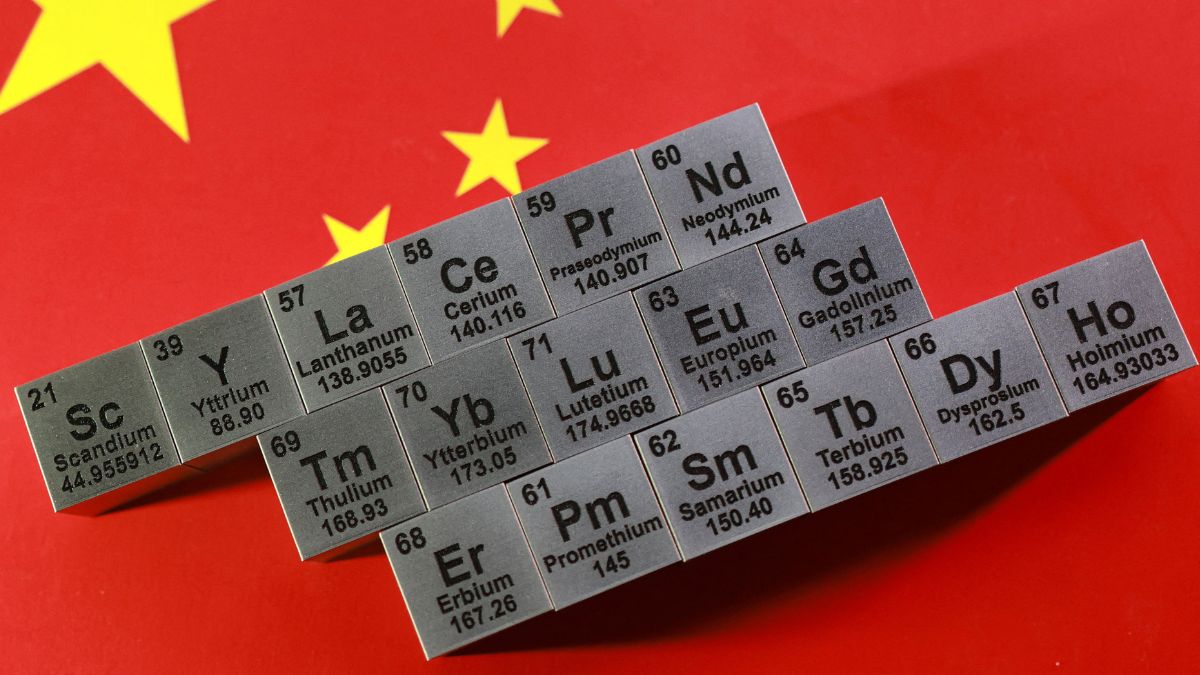
Rare earth elements comprise a group of 17 metals that are critical to a wide range of modern technologies.
Their applications span consumer electronics, electric vehicles, renewable energy systems, advanced defence equipment, semiconductors, and high-end industrial manufacturing.
Permanent magnets made from rare earth minerals are particularly crucial, as they are used in electric vehicle motors, wind turbines, and precision-guided defence systems.
Despite their name, rare earth elements are not especially scarce in the Earth’s crust. Some, such as cerium, are more abundant than commonly used industrial metals like copper.
Their strategic importance arises from the difficulty of extracting and separating them into usable forms, a process that is both technologically complex and environmentally challenging.
The elements possess unique magnetic, luminescent, and electrochemical properties that cannot be easily substituted, making them indispensable for cutting-edge technologies.
The 17 elements include both light and heavy rare earths, each serving specific industrial functions.
Light rare earths such as lanthanum, cerium, praseodymium, and neodymium are widely used in hybrid vehicle batteries, catalytic converters, optical equipment, and high-strength permanent magnets.
Heavy rare earths, including dysprosium and terbium, are far less abundant and are particularly valuable because they allow magnets to function efficiently at high temperatures, a requirement for advanced electric vehicles and defence applications.
Because these materials underpin sectors ranging from clean energy to military hardware, control over rare earth supply chains has become a strategic priority for industrialised economies.
What is the govt’s plan to promote rare earth metals?
A key pillar supporting the corridor initiative is the government’s earlier decision to promote domestic production of rare earth permanent magnets.
In November 2025, the Union government approved the Scheme to Promote Manufacturing of Sintered Rare Earth Permanent Magnets, describing it as a first-of-its-kind effort in India.
The scheme carries a total financial outlay of ₹7,280 crore and aims to establish 6,000 metric tonnes per annum of integrated rare earth permanent magnet manufacturing capacity in the country.
The initiative is designed to cover the entire value chain, starting from rare earth oxides and extending to finished magnets.
Of the total allocation, ₹6,450 crore has been earmarked as sales-linked incentives to be disbursed over a five-year period, while ₹750 crore has been set aside as capital subsidy for setting up manufacturing facilities capable of producing the targeted output.
Permanent magnets are a critical input for sectors such as electric mobility, renewable energy, and electronics. However, magnet manufacturing cannot scale without reliable access to raw rare earth materials.
The proposed corridors are intended to ensure that mining and processing activities are aligned with manufacturing needs, creating a steady domestic supply chain. The corridor model is also designed to attract private investment and international partnerships.
Who holds dominance over rare earth metals?
For decades, China has emerged as the central player in the global rare earth ecosystem. It accounts for about 60 per cent of global rare earth mine production and controls nearly 90 per cent of refined output and rare earth magnet manufacturing.
This dominance has given Beijing significant influence over industries worldwide that depend on these materials. Countries reliant on Chinese rare earth supplies have repeatedly faced disruptions when export policies are adjusted.
In late 2025, China imposed export licensing requirements on certain heavy rare earths, highlighting how quickly access to critical inputs can be constrained.
Although Beijing later announced a temporary pause on some restrictions through much of 2026, the episode reinforced concerns about over-dependence on a single supplier.
Export restrictions, even when temporary, can disrupt industries ranging from electric vehicles to defence manufacturing.
These developments unfolded amid rising geopolitical tensions, particularly between China and the United States, and against a backdrop of trade restrictions on electric vehicles and semiconductors.
As a result, rare earth elements have increasingly been described as strategic resources comparable to energy commodities in earlier decades.
The United States has expanded domestic processing capacity to ensure that minerals mined within its borders do not have to be sent abroad for refining. Other countries have pursued “friend-shoring” strategies, seeking to build supply networks with politically aligned partners.
New discoveries and expanded processing capacity in countries like Australia and Sweden have provided some diversification, but concerns remain.
What challenges has India faced in the rare earth sector?
India is not new to rare earth minerals. The country possesses significant reserves, particularly in the form of monazite sands found along coastal regions.
These sands contain valuable elements such as lanthanum, cerium, and neodymium. However, despite this resource base, India has historically struggled to build a competitive rare earth industry.
Past assessments have pointed to several structural weaknesses. These include limited domestic processing capacity, inconsistent policy support over the years, and relatively low participation from the private sector.
As a result, India largely remained focused on extracting raw materials rather than developing the ability to refine and convert them into high-value products such as permanent magnets.
The new corridor-based approach aims to address these shortcomings by creating integrated hubs that connect extraction with processing, manufacturing, and applied research.
What next in India’s rare earth strategy?
The corridor announcement is part of a wider industrial strategy outlined in the Union Budget 2026-27. Sitharaman identified self-reliance, or “atmanirbhar”, as a central objective of the Budget, particularly in sectors linked to advanced technology.
As part of this push, she announced a ₹40,000 crore outlay for semiconductors under the India Semiconductor Mission 2.0.
The mission will support industry-led research and training centres and will focus on producing equipment and materials designed around full-stack Indian intellectual property.
Additional measures include a proposed allocation of ₹40,000 crore for electronics components manufacturing and the introduction of a scheme aimed at strengthening domestic production of construction and infrastructure equipment.
To support advanced manufacturing capabilities, Sitharaman also proposed the establishment of high-tech tool rooms by central public sector enterprises at two locations.
These facilities are intended to operate as digitally enabled automation service bureaus, offering local design, testing, and large-scale manufacturing of high-precision components at reduced cost.
Even though financial markets largely recorded a crash on Sunday, shares of several mineral-focused public sector companies saw notable gains.
Gujarat Mineral Development Corporation shares rose by around 7 per cent to trade at approximately ₹617.8 per share. Orissa Minerals Development Company shares also climbed by about 7 per cent, trading near ₹4,776 per share.
NMDC, which had been trading lower earlier in the session, reversed losses and gained nearly 2 per cent.
With inputs from agencies


 "India, Israel elevate ties to special strategic partnership; PM Modi calls it ‘reflection of aspirations of both nations’")
 "India vs Zimbabwe LIVE Score, T20 World Cup 2026: Kishan falls for 38 after Abhishek completes fifty")
 "Who is Borge Brende, World Economic Forum chief who quit over Epstein files?")
 "US-Iran tension: Third round of nuclear talks begin in Geneva — can it avoid war?")
 "India, Israel elevate ties to special strategic partnership; PM Modi calls it ‘reflection of aspirations of both nations’")
 "India vs Zimbabwe LIVE Score, T20 World Cup 2026: Kishan falls for 38 after Abhishek completes fifty")
 "Who is Borge Brende, World Economic Forum chief who quit over Epstein files?")
 "US-Iran tension: Third round of nuclear talks begin in Geneva — can it avoid war?")