

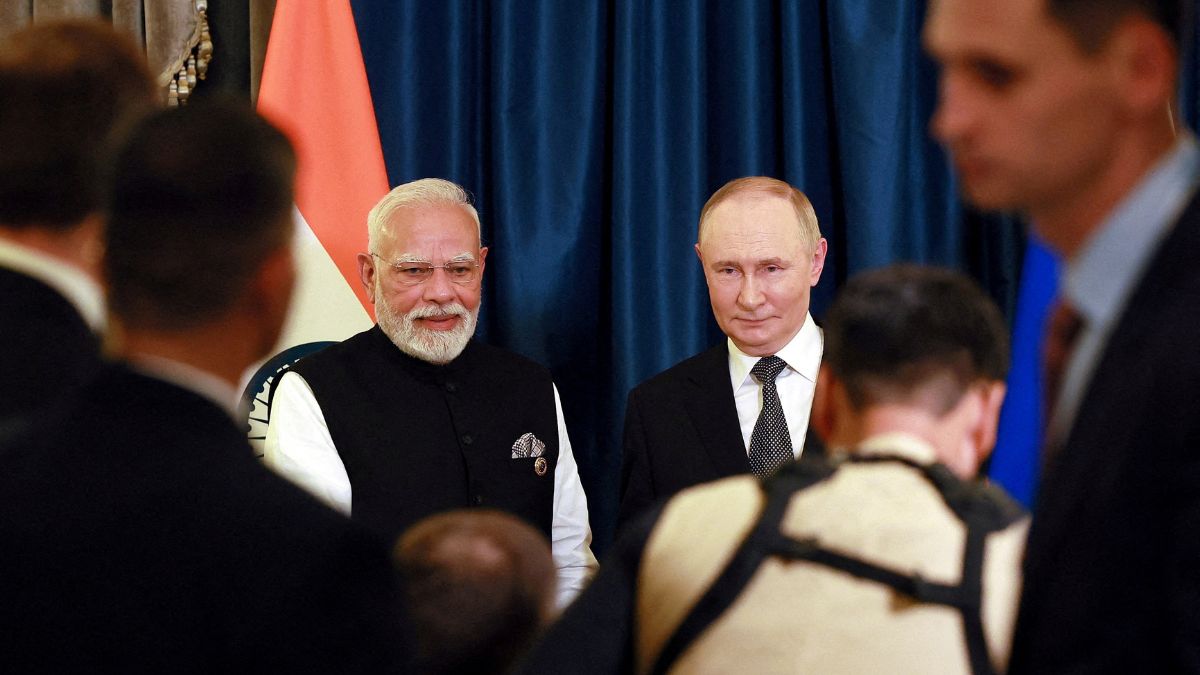
 "Ukraine, crude oil, tariffs: Why Putin’s visit to India is being closely tracked by the US")
Russian President Vladimir Putin is set to arrive in India today (December 4).
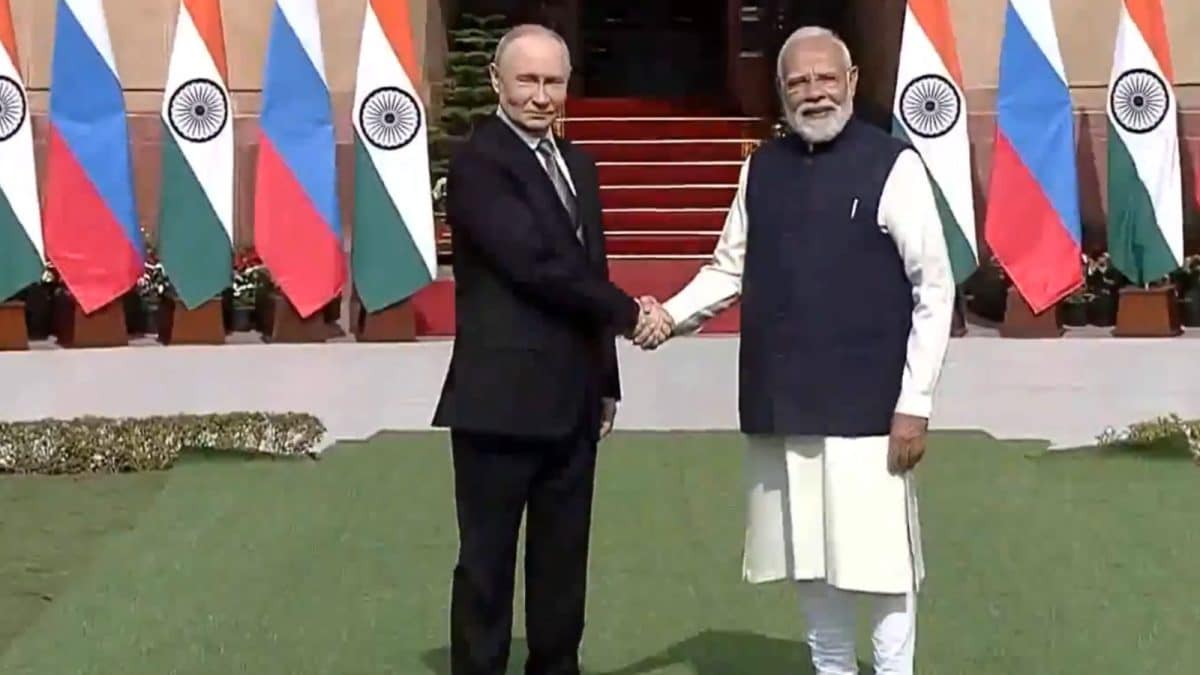
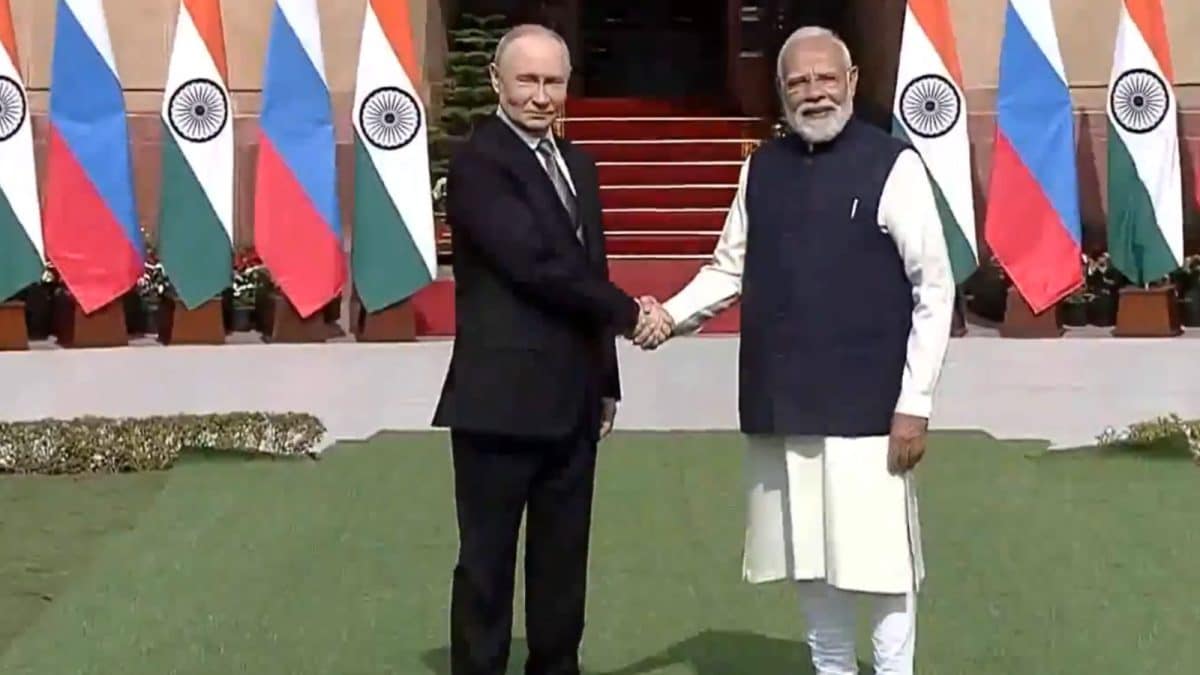
Putin is making a two-day visit to India, his first trip to the country since 2021. Putin is set to hold formal talks with Prime Minister Narendra Modi and have a state dinner with President Droupadi Murmu.
Putin is set to address the plenary session of the Russia–India Forum and attend the 23rd India–Russia annual summit. As Putin and Prime Minister Narendra Modi continue to strengthen the decades-long relationship between the two countries, events in India will be closely watched by the United States.
Let’s take a closer look.
The shadow of Ukraine
Putin’s trip to India comes as the shadow of Ukraine continues to hang over the world. It also comes after high-level talks between the United States and Russia over Ukraine failed to deliver a breakthrough. Trump, remember, had vowed to end Ukraine within 24 hours of returning to the White House.
_Find the complete coverage of Vladimir Putin's India visit here_Trump had put forth a 28-point peace plan last month which was rejected by both Ukraine and its allies in Europe. The US President in recent months has grown increasingly frustrated with Putin, whom he once praised as a ‘strong and tough leader’ and even compared his predecessors Joe Biden and Barack Obama to unfavourably.
Despite US President Donald Trump’s special envoy Steve Witkoff and son-in-law Jared Kushner meeting with Putin and the Kremlin on Tuesday, there was no forward progress on bringing peace to Ukraine.
Russian foreign policy adviser and Putin aide Yuri Ushakov was quoted as saying by CNN that the talks were “very useful, constructive, and highly substantive,” but a “compromise option was not found”.
“Some of the American proposals look more or less acceptable, though they need to be discussed,” Ushakov said. Other points “do not suit us,” he added. “The work will continue.” A prospective meeting between Trump and Putin remains unscheduled for now. Ushakov said a one-on-one meeting depends “on the progress we’re able to achieve.”
India, since the beginning of the Ukraine war, has consistently taken the position that a breakthrough can only be achieved via dialogue and diplomacy. India has consistently abstained from voting on resolutions at the United Nations that condemn Russia. Despite Modi memorably telling Putin “this is not the era of war”, New Delhi has put itself forward as a potential mediator and a bridge between Russia and the West.
US pressuring India to cut down on Russian oil
The United States has also been putting pressure on India to cut back on Russian oil. New Delhi, a massive consumer of oil, requires around five million barrels of oil per day to meet domestic requirements. It imports 85 per cent of its daily needs.
Prior to 2022, New Delhi bought just a fraction of its crude oil from Russia, a figure under 1 per cent. Instead, India would rely on more traditional suppliers in West Asia such as Kuwait, Iraq, Saudi Arabia and the United Arab Emirates. However, after the US-led West imposed sanctions on Russia in the aftermath of the invasion of Ukraine, Moscow looked for new buyers for its crude.
It did so by heavily discounting its oil, which countries such as India and China bought in large quantities. A key point is that the US-led West did not ban Russia from selling its crude oil. Instead, it placed a cap on the price at which the oil could be sold – thereby limiting the flow into Moscow’s coffers. It also, at the time, encouraged New Delhi to purchase Russian oil in order to keep the crude market stable. As India benefitted by saving billions of dollars on its import bill, this was a win-win situation for everyone.
Today, India buys nearly 40 per cent of its crude oil from Russia. Until August, India had purchased 88 million metric tonnes of oil from Russia in 2025 alone. However, Trump’s return to the White House changed things. Members of his administration slammed India and accused New Delhi of ‘funding’ Russia’s war in Ukraine. Trump earlier this year imposed a 25 per cent tariff on India plus another 25 per cent levy as a penalty for continuing to buy Russian crude.
The United States–India relationship
The relationship between the United States and India is also under the scanner.
While the two countries had announced that they wanted to boost bilateral trade to $500 billion ( Rs 44.98 lakh crore) by 2030 during Modi’s trip to the United States earlier this year, it hasn’t been smooth sailing of late.
Trump not only wants India to stop buying Russian oil, he is also eager for the two countries to conclude a bilateral trade agreement. White House economic adviser Kevin Hassett last month claimed that the deal between the United States and India is “close to the finish line.”
This came months after Trump said that a “very big deal” with India could be concluded soon. Trump earlier had launched a blistering attack on India and Russia, calling them “dead economies”. The outburst surprised many in Delhi and gave an indication of the growing frustration within the Trump White House, including several top officials, when it comes to closing the trade deal.
India, led by Chief Negotiator Rajesh Aggarwal in talks with US officials including those from the Office of the United States Trade Representative (USTR), has laid down red lines when it comes to its dairy and agriculture sectors. New Delhi has insisted that it will protect India’s farmers and that the national interest will come above all other considerations.
What do experts say?
They say the United States will be closely monitoring the optics of the visit to see how India balances its relationship with Russia.
“As the US under Trump has become more isolationist and transactional, and relations with China remain poor, India is ensuring that its ties with middle powers like Russia – or Japan, the UAE and the EU – are deepened,” Pramit Pal Chaudhuri, head of Eurasia Group’s South Asia practice, told Bloomberg. “It helps India that President Trump has already ended Putin’s pariah status by holding his Alaska Summit.”
“Putin’s visit offers an opportunity for Delhi to reassert the strength of its special relationship with Moscow, despite recent developments, and make headway in new arms deals,” Michael Kugelman of the Atlantic Council think tank in Washington added.
A piece in Chatham House noted that India and Russia will likely seek to increase the trade relationship.
They were, among other things, likely to sign a labour mobility agreement, increase cooperation in civilian nuclear energy and announce new defence deals. It noted that Russia remains by far India’s biggest supplier when it comes to arms and ammunition, though the numbers have shrunk by nearly half – from 70 per cent to 36 per cent over the past decade.
Russian Sukhoi-30 jets make up the majority of India’s 29 fighter squadrons and Moscow has also offered its most advanced fighter, the Su-57, which is likely to figure in this week’s talks, said two Indian officials familiar with the matter.
“India is navigating a difficult path in trying to maintain close relations with both Moscow and the West,” the piece stated. “…strategic autonomy only works when all the poles get along. As Russia–US relations soured, New Delhi’s links with Moscow came under growing scrutiny in Washington, making strategic autonomy more difficult to sustain.”
Recent US–Russia talks to end the Ukraine war could help make it easier for Indian officials to engage with Moscow, Harsh Pant, head of foreign policy studies at India’s Observer Research Foundation think tank, said.
“A large part of the trading relationship was based on energy, which is now losing traction under the threat of sanctions from the United States,” he added. “And at the end of the day, only defence remains, which continues to bind the two together.”
With inputs from agencies

 "Putin India Visit LIVE Updates: India and Russia sign Vision 2030 to boost economic cooperation, explore FTA with EEU, says PM Modi")
 "India, Russia agree to boost trade, investments after Modi-Putin talks")
 "DGCA puts new pilot rest rule behind IndiGo flight cancellations on hold")
 "'India is not neutral...': How Modi's diplomacy has triumphed amid the Russia-Ukraine war")
 "Putin India Visit LIVE Updates: India and Russia sign Vision 2030 to boost economic cooperation, explore FTA with EEU, says PM Modi")
 "India, Russia agree to boost trade, investments after Modi-Putin talks")
 "DGCA puts new pilot rest rule behind IndiGo flight cancellations on hold")
 "'India is not neutral...': How Modi's diplomacy has triumphed amid the Russia-Ukraine war")



