As Pakistan gets ready for elections, big players are gearing up for a tough fight. With 44 political parties vying for 266 seats in the National Assembly, the stage is set for a dynamic contest that will shape the country’s trajectory for years to come. At the forefront of this electoral battleground are a handful of key players, each with their own political legacies, ambitions, and challenges. Leading the charge is former Prime Minister Nawaz Sharif, a stalwart of Pakistani politics whose career has been marked by both triumphs and tribulations. Standing in Opposition to Sharif’s resurgence is General Asim Munir, the enigmatic army chief whose influence looms large over Pakistan’s political landscape. Meanwhile, the image of Imran Khan, the former cricket star turned politician, still looms large despite his incarceration. As the countdown to polling day begins, all eyes are on the key players who will shape the course of Pakistan’s political destiny. Former PM Nawaz Sharif, Pakistan Muslim League Business mogul, multi-millionaire and three-time premier, Nawaz Sharif hails from one of the top two families that have dominated Pakistani politics for decades. His Pakistan Muslim League party won landslide victories in 2007 and 2013. But 74-year-old Sharif has never completed a term in office and was ousted from power each time: once by the military, once by the Supreme Court, and once by the president. Like other Pakistani former prime ministers, Sharif has been dogged by legal cases and prison sentences. A Pakistani court in 2020 issued an arrest warrant and threatened to declare him a fugitive from justice if he didn’t return from self-imposed exile in the United Kingdom to face corruption charges. Despite the years of controversies, he enjoys immense popularity and musters thousands of supporters at party rallies. He has a clear path to a fourth term in office after courts overturned his convictions and prison sentences after his return to the country last October. With his arch-rival and nemesis Imran Khan now in prison, the stage appears set for a reversal of fortunes from the 2018 election, when Sharif was battling legal cases and Khan became prime minister. With Khan behind bars, analysts predict another victory for Sharif. [caption id=“attachment_13698442” align=“alignnone” width=“640”]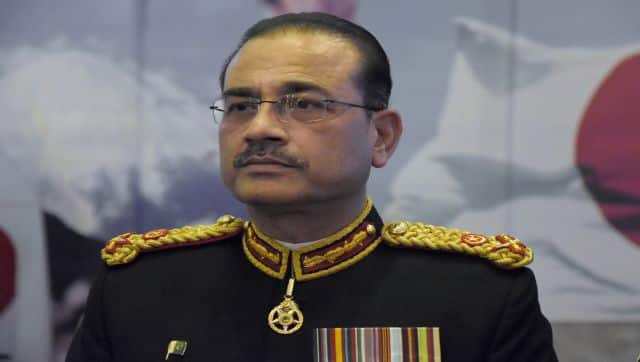 The current army chief, General Asim Munir, a fitness fanatic and former spymaster, is not on the ballot but as the head of military, he still wields huge influence. File image/AP[/caption] General Asim Munir, the powerful army chief Pakistan’s military has always cast itself as the ultimate arbiter in key government decisions, though often one behind the scenes. The current army chief, General Asim Munir, a fitness fanatic and former spymaster, is not on the ballot but as the head of military, he still wields huge influence.
Also Read: Pakistan elections: Who are the key players? What’s at stake?
Munir has kept a lower profile than his predecessors but has orchestrated military trials for civilians and a crackdown on foreign nationals living in the country illegally. The move, denounced by international and local rights groups, has mainly targeted 1.7 million Afghans living in Pakistan. Munir, who is in his 50s, was also behind a retaliatory airstrike inside Iran in a tit-for-tat series earlier this month that sharply escalated tensions between Tehran and Islamabad. His uncompromising stance has a profound impact on bilateral relations, political stability and regional security. He also has a personal stake in keeping imprisoned Imran Khan out of the picture. Munir ran the country’s spy agency during Khan’s term in office but was fired without an explanation by the then-premier. Former PM Imran Khan, Pakistan Tehreek-e-Insaf Party A former cricket star turned Islamist politician, Imran Khan triumphed on an anti-corruption, anti-establishment platform in the 2018 election to form a coalition government. But his premiership was problematic as his administration cracked down on Opposition figures. Some said that religious minorities came under attack because of his concessions to radical clerics; his critics and rights groups said he failed to protect freedom of speech.
Also Read: Pakistan elections 2024: Can Imran Khan, Prisoner No 804, win the elections from jail?
Khan, 71, also drew nationwide condemnation after seemingly blaming a rise in sexual violence on women “wearing very few clothes.” On the international stage, he berated the United States as ungrateful for Pakistan’s help in fighting global terror, and called al-Qaida chief Osama bin Laden, killed in a 2011 US raid in Pakistan, a “martyr” — an honourable term for someone slain in battle. Khan was ultimately ousted by parliament in April 2022, a move he tried to fight with street protests and claimed it was engineered by Washington and his opponents. He now has more than 150 legal cases against him and has been imprisoned since August, with four convictions for graft, revealing state secrets and breaking marriage laws.
Also Read: Pakistan elections 2024: How the military has bowled a bouncer to Imran Khan
He has been sentenced to three, 10, 14 and seven years, to be served concurrently. His legal convictions have barred him from contesting the elections but his party is running and he still has a mass grassroots following. Former PM Shehbaz Sharif, Pakistan Muslim League Shehbaz Sharif, 72, the younger brother of Nawaz Sharif, succeeded Imran Khan as prime minister in April 2022. He was previously three times the chief minister of Punjab, the largest and most influential province that is also home to half of the country’s population of 240 million. He led their party while his brother was in self-exile in London and became premier when a no-confidence vote in parliament ousted Khan from power. [caption id=“attachment_13698432” align=“alignnone” width=“640”]
The current army chief, General Asim Munir, a fitness fanatic and former spymaster, is not on the ballot but as the head of military, he still wields huge influence. File image/AP[/caption] General Asim Munir, the powerful army chief Pakistan’s military has always cast itself as the ultimate arbiter in key government decisions, though often one behind the scenes. The current army chief, General Asim Munir, a fitness fanatic and former spymaster, is not on the ballot but as the head of military, he still wields huge influence.
Also Read: Pakistan elections: Who are the key players? What’s at stake?
Munir has kept a lower profile than his predecessors but has orchestrated military trials for civilians and a crackdown on foreign nationals living in the country illegally. The move, denounced by international and local rights groups, has mainly targeted 1.7 million Afghans living in Pakistan. Munir, who is in his 50s, was also behind a retaliatory airstrike inside Iran in a tit-for-tat series earlier this month that sharply escalated tensions between Tehran and Islamabad. His uncompromising stance has a profound impact on bilateral relations, political stability and regional security. He also has a personal stake in keeping imprisoned Imran Khan out of the picture. Munir ran the country’s spy agency during Khan’s term in office but was fired without an explanation by the then-premier. Former PM Imran Khan, Pakistan Tehreek-e-Insaf Party A former cricket star turned Islamist politician, Imran Khan triumphed on an anti-corruption, anti-establishment platform in the 2018 election to form a coalition government. But his premiership was problematic as his administration cracked down on Opposition figures. Some said that religious minorities came under attack because of his concessions to radical clerics; his critics and rights groups said he failed to protect freedom of speech.
Also Read: Pakistan elections 2024: Can Imran Khan, Prisoner No 804, win the elections from jail?
Khan, 71, also drew nationwide condemnation after seemingly blaming a rise in sexual violence on women “wearing very few clothes.” On the international stage, he berated the United States as ungrateful for Pakistan’s help in fighting global terror, and called al-Qaida chief Osama bin Laden, killed in a 2011 US raid in Pakistan, a “martyr” — an honourable term for someone slain in battle. Khan was ultimately ousted by parliament in April 2022, a move he tried to fight with street protests and claimed it was engineered by Washington and his opponents. He now has more than 150 legal cases against him and has been imprisoned since August, with four convictions for graft, revealing state secrets and breaking marriage laws.
Also Read: Pakistan elections 2024: How the military has bowled a bouncer to Imran Khan
He has been sentenced to three, 10, 14 and seven years, to be served concurrently. His legal convictions have barred him from contesting the elections but his party is running and he still has a mass grassroots following. Former PM Shehbaz Sharif, Pakistan Muslim League Shehbaz Sharif, 72, the younger brother of Nawaz Sharif, succeeded Imran Khan as prime minister in April 2022. He was previously three times the chief minister of Punjab, the largest and most influential province that is also home to half of the country’s population of 240 million. He led their party while his brother was in self-exile in London and became premier when a no-confidence vote in parliament ousted Khan from power. [caption id=“attachment_13698432” align=“alignnone” width=“640”]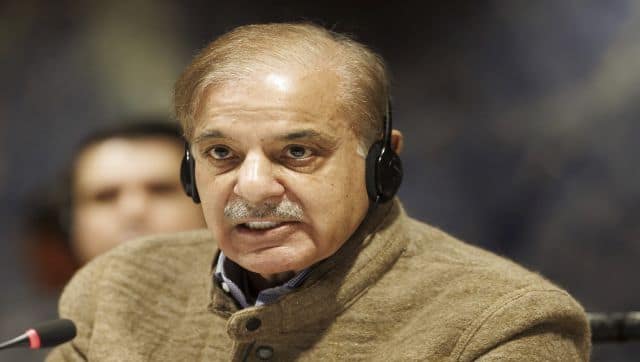 If Pakistan Muslim League wins on Thursday, Shehbaz Sharif will likely play a key role in the Cabinet. File image/AP[/caption] During Sharif’s term in office, Pakistan was struck by unprecedented rainfall and flash floods in the summer of 2022 that killed 1,700 people and devastated the nation, at one point submerging a third of the country. However, he did not declare a national emergency until late August, when the death toll was in the hundreds.
Also Read: Pakistan elections: How Nawaz Sharif is preparing for a comeback
He also struggled to manage the worst economic crisis in Pakistan’s history and only secured a bailout from the International Monetary Fund by agreeing to a substantial increase in energy tariffs that led to price hikes on everyday goods. That made both him and the party unpopular. Under Pakistan’s constitution, Sharif stepped down when parliament was dissolved last August and a caretaker prime minister took over until the election. If their party wins on Thursday, Sharif will likely play a key role in his brother’s Cabinet. Bilawal Bhutto-Zardari, Pakistan People’s Party The youngest hopeful for Pakistan’s next prime minister is Bilawal Bhutto-Zardari, the son of the assassinated former Premier Benazir Bhutto and grandson of the country’s first democratically elected prime minister, Zulfikar Ali Bhutto, who led the nation in the 1970s and was overthrown and executed by the military.
Also Read: Can Bilawal Bhutto Zardari revive his family’s legacy?
Both Bhutto-Zardari’s mother and grandfather still command huge reverence among party supporters, handing him a captive audience. He became chairman of his family’s political party days after his mother was killed in 2007 during her third bid for premiership. Bhutto-Zardari’s life in politics was also shaped by his father, Asif Ali Zardari, who served as Pakistan’s president, a mostly ceremonial post, from 2008 to 2013. He won his first parliamentary seat in 2018 and became foreign minister after Imran Khan was ousted as prime minister. The Bhutto power base is in southern Sindh province, an agricultural and commercial hub, but his party is unlikely to get enough votes to get him the premiership. It could still be part of a Sharif-led coalition government. Bhutto-Zardari, 35, has vowed to end the personal vendettas that characterise Pakistan’s politics and has also urged for investment in climate resilience as a key to the nation’s survival. With inputs from AP
If Pakistan Muslim League wins on Thursday, Shehbaz Sharif will likely play a key role in the Cabinet. File image/AP[/caption] During Sharif’s term in office, Pakistan was struck by unprecedented rainfall and flash floods in the summer of 2022 that killed 1,700 people and devastated the nation, at one point submerging a third of the country. However, he did not declare a national emergency until late August, when the death toll was in the hundreds.
Also Read: Pakistan elections: How Nawaz Sharif is preparing for a comeback
He also struggled to manage the worst economic crisis in Pakistan’s history and only secured a bailout from the International Monetary Fund by agreeing to a substantial increase in energy tariffs that led to price hikes on everyday goods. That made both him and the party unpopular. Under Pakistan’s constitution, Sharif stepped down when parliament was dissolved last August and a caretaker prime minister took over until the election. If their party wins on Thursday, Sharif will likely play a key role in his brother’s Cabinet. Bilawal Bhutto-Zardari, Pakistan People’s Party The youngest hopeful for Pakistan’s next prime minister is Bilawal Bhutto-Zardari, the son of the assassinated former Premier Benazir Bhutto and grandson of the country’s first democratically elected prime minister, Zulfikar Ali Bhutto, who led the nation in the 1970s and was overthrown and executed by the military.
Also Read: Can Bilawal Bhutto Zardari revive his family’s legacy?
Both Bhutto-Zardari’s mother and grandfather still command huge reverence among party supporters, handing him a captive audience. He became chairman of his family’s political party days after his mother was killed in 2007 during her third bid for premiership. Bhutto-Zardari’s life in politics was also shaped by his father, Asif Ali Zardari, who served as Pakistan’s president, a mostly ceremonial post, from 2008 to 2013. He won his first parliamentary seat in 2018 and became foreign minister after Imran Khan was ousted as prime minister. The Bhutto power base is in southern Sindh province, an agricultural and commercial hub, but his party is unlikely to get enough votes to get him the premiership. It could still be part of a Sharif-led coalition government. Bhutto-Zardari, 35, has vowed to end the personal vendettas that characterise Pakistan’s politics and has also urged for investment in climate resilience as a key to the nation’s survival. With inputs from AP
Pakistan elections: The key players who will shape the country's political landscape
FP Explainers
• February 7, 2024, 10:52:59 IST
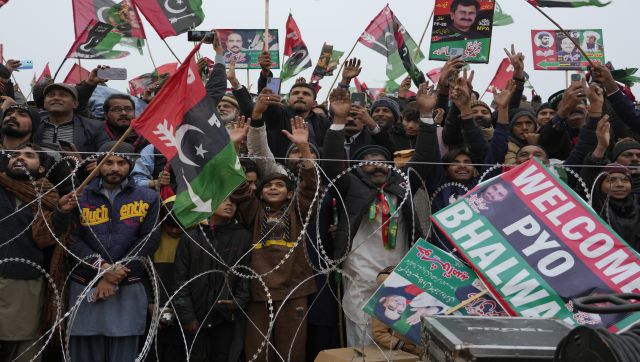
Pakistan is holding elections for a new parliament tomorrow (8 February). But in a country where civilian governments have been upended by military takeovers and where the army has ruled the nation for half of its 76 years of independence, it’s often the traditional elites that have called the shots
Advertisement
 "Pakistan elections: The key players who will shape the country's political landscape")
End of Article