

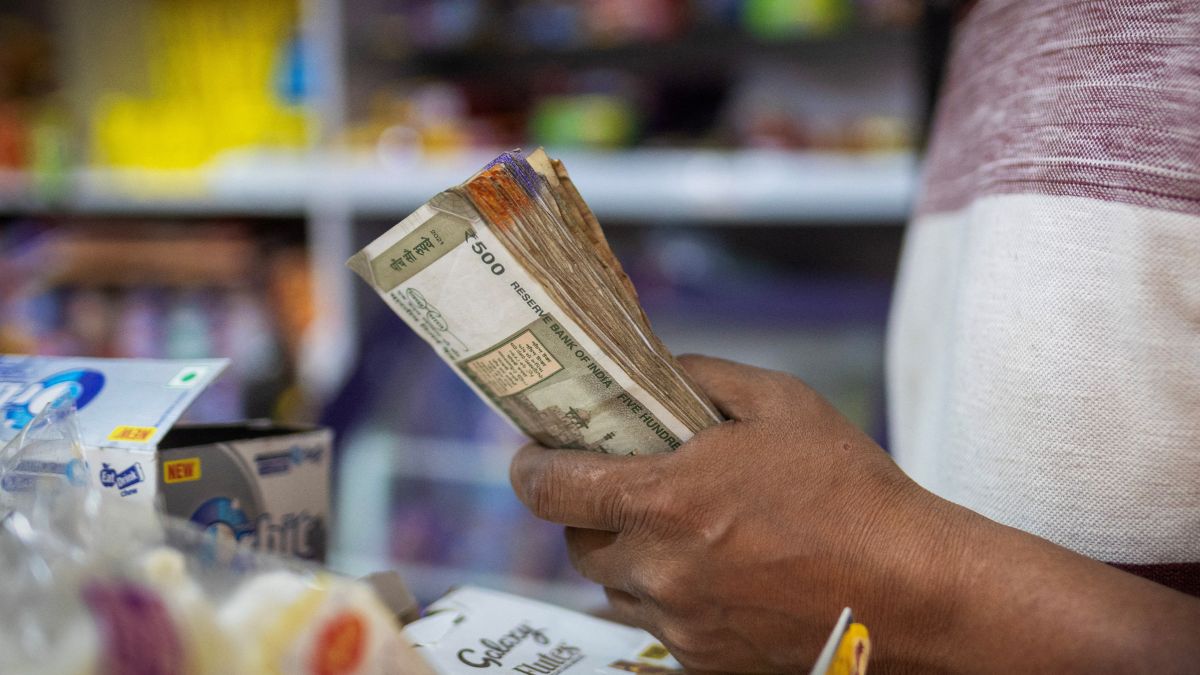
 "India is the world’s 4th-largest economy, but what does this milestone mean?")
India has reached a major economic milestone by emerging as the world’s fourth-largest economy in nominal gross domestic product (GDP) terms, overtaking Japan and placing itself behind only the United States, China and Germany.
The achievement marks a dramatic shift in India’s global economic standing over the past decade, but it also highlights persistent structural challenges that continue to shape the lived economic reality of its 1.4 billion citizens.
According to the Indian government’s end-of-year economic review, India’s economy is currently valued at approximately $4.18 trillion, pushing it past Japan and positioning it for a potential climb to third place within the next few years.
While final confirmation will depend on the release of revised annual GDP data in 2026, international agencies including the International Monetary Fund (IMF) broadly support the government’s assessment.
The IMF’s projections suggest that by 2026, India’s nominal GDP will reach $4.51 trillion, marginally higher than Japan’s projected $4.46 trillion. If these estimates hold, India’s fourth-place ranking will be formally cemented when final data is released.
This rise is the latest step in a rapid ascent. In 2014, India ranked as the world’s 10th-largest economy. By 2022, it overtook the United Kingdom to become fifth.
Just three years later, it has climbed another rung.
In just over a decade, India has moved up six positions in global economic rankings.
How India became the fastest-growing global economy
In 2014, the country’s GDP stood at roughly $2 trillion, nearly seven decades after Independence. By 2021, it had crossed $3 trillion.
In the four years that followed, India added another trillion dollars to its economy, pushing it past the $4 trillion mark.
This pace of expansion has been underpinned by consistently high growth rates. Between 1990 and 2023, India recorded an average annual growth rate of 6.7 per cent, outperforming several advanced economies over the same period, including the United States, Germany and Japan.
Despite global slowdowns, trade disruptions and geopolitical tensions, India has retained its status as the fastest-growing major economy.
In the current fiscal cycle, growth has again surprised on the upside. India’s real GDP expanded 8.2 per cent in the second quarter of 2025-26, rising from 7.8 per cent in the first quarter and 7.4 per cent in the final quarter of the previous fiscal year.
This marked a six-quarter high and signalled renewed momentum after a period of moderation.
Domestic factors have played a central role in sustaining growth. Strong private consumption, supported by improving urban demand and resilient household spending, has offset external headwinds.
Financial conditions have remained supportive, with credit flows to the commercial sector staying robust and demand conditions remaining firm.
The government, in its assessment, emphasised that India’s performance reflects its ability to navigate uncertainty, stating, “India is among the world’s fastest-growing major economies and is well-positioned to sustain this momentum.”
How global bodies have supported India’s growth trajectory
India’s growth outlook has received strong backing from international financial institutions and credit rating agencies.
The World Bank has projected growth of 6.5 per cent in 2026, while Moody’s expects India to remain the fastest-growing economy within the G20, forecasting expansion of 6.4 per cent in 2026 and 6.5 per cent in 20 27.
The IMF has revised its estimates upward, projecting 6.6 per cent growth in 2025 and 6.2 per cent in 2026.
The Organisation for Economic Co-operation and Development (OECD) expects growth of 6.7 per cent in 2025 and 6.2 per cent in 2026.
S&P Global anticipates 6.5 per cent growth in the current fiscal year and 6.7 per cent in the next, while the Asian Development Bank has raised its 2025 forecast to 7.2 per cent. Fitch has also upgraded its projection for FY26 to 7.4 per cent, citing strong consumer demand.
The government has pointed to these forecasts as evidence of broad-based confidence in India’s medium-term prospects. Inflation has remained below the lower tolerance threshold, unemployment has trended downward, and exports have shown signs of improvement despite global trade volatility.
What’s been driving the rise
India’s economic expansion has been supported by a series of structural reforms introduced over the past decade.
Among the most significant is the implementation of the Goods and Services Tax (GST), which created a unified national market and is widely regarded as the most consequential indirect tax reform since Independence.
GST collections have consistently strengthened, reflecting improved compliance and economic activity. In April, collections reportedly touched a record Rs 2.37 lakh crore, displaying the growing depth of the tax base.
Another major reform has been the Insolvency and Bankruptcy Code (IBC), which has reshaped India’s financial system by improving the resolution of stressed assets and strengthening the health of the banking sector.
Alongside this, a sustained push towards digitalisation, formalisation and manufacturing has contributed to productivity gains and improved economic efficiency.
When economic growth slowed to a four-year low in the 12 months ending March 31, the government responded with sweeping consumption tax cuts and labour law reforms, signalling a willingness to recalibrate policy in response to cyclical pressures.
Political stability at the central government level over the past 11 years has also played a role in bolstering investor confidence. India is now widely viewed as one of the most important markets globally, not only for Western economies but also for major powers such as China.
How the rise also highlights the dangers of limited prosperity
While India’s rise in aggregate economic size is undeniable, it has also brought renewed focus on the gap between national output and individual prosperity.
India became the world’s most populous country in 2023, surpassing China, with a population of around 1.4 billion. This demographic scale significantly dilutes gains in overall GDP.
According to the World Bank, India’s per capita GDP stood at $2,694 in 2024, a figure that remains far below those of advanced economies.
Japan’s per capita GDP was $32,487, while Germany’s stood at $56,103.
In global rankings, India remains around 122nd in per capita income, trailing countries such as Vietnam, Sri Lanka and the Philippines, and only marginally ahead of Bangladesh.
This contrast shows a central paradox of India’s growth story: the country is now among the world’s largest economies, yet the average citizen’s income remains modest.
Even substantial increases in GDP translate into relatively small per capita gains because output is spread across such a vast population.
The challenge is compounded by structural features of the labour market. Nearly 90 per cent of India’s workforce remains employed in the informal sector, limiting productivity and income security.
Female labour force participation stands at around 26 per cent, well below the global average of 47 per cent, further constraining per capita income growth.
Although per capita income has nearly doubled over the past decade, the absolute level remains low, reinforcing concerns about inclusivity and the distribution of growth.
Why India needs to turn potential into opportunity now
India’s demographic profile presents both opportunity and risk. More than a quarter of the population is between the ages of 10 and 26, making India one of the youngest nations globally.
This youth bulge has the potential to drive long-term growth, but only if the economy can generate sufficient quality employment.
The government has acknowledged this reality, noting, “As one of the world’s youngest nations, India’s growth story is being shaped by its ability to generate quality employment that productively absorbs its expanding workforce and delivers inclusive, sustainable growth.”
Despite strong headline growth, the economy has struggled to create enough well-paying jobs for millions of graduates entering the labour market each year.
Without improvements in skill development, manufacturing capacity and labour productivity, the demographic dividend risks turning into a drag on growth.
India’s economic performance has unfolded against a backdrop of global trade uncertainty. In August, Washington imposed significant tariffs on Indian goods in response to New Delhi’s purchases of Russian oil, adding pressure to bilateral trade relations.
The absence of a comprehensive trade agreement with the United States has further weighed on sentiment.
These concerns have been reflected in currency markets. The Indian rupee fell around five per cent in 2025 and touched a record low against the US dollar in early December, highlighting investor sensitivity to external risks.
The rupee was quoting at 89.8650 per US dollar at 10 am IST on December 31, 2025, marking a 4.74 per cent decline for the year, its worst showing since 2022 when it dropped nearly 10 per cent.
Despite these challenges, the government has argued that India’s growth trajectory demonstrates resilience in the face of persistent global uncertainty, supported by strong domestic demand and improving financial conditions.
What India needs to do now
Looking ahead, India’s economic ambitions extend beyond its current ranking. Government projections suggest that India could surpass Germany to become the world’s third-largest economy within the next few years, with GDP expected to reach $7.3 trillion by 2030.
However, economists stress that sustaining high growth will require continued reforms.
The next phase of development will depend on India’s ability to shift from incremental policy adjustments to deeper structural transformation across manufacturing, agriculture and services.
Manufacturing will require improved infrastructure, simplified regulations and more competitive factor markets.
Agriculture needs productivity enhancements, better supply chains and land-use reforms. The services sector must focus on human capital development, digital expansion and stronger global integration.
Equally important is the role of states. Long-term growth will depend on effective collaboration between the Union government and state governments, with reforms and investments spread evenly across regions rather than concentrated in a few metropolitan centres.
As India’s economic size grows, so do expectations of its global role.
For now, becoming the world’s fourth-largest economy marks a defining moment in India’s economic journey.
At the same time, it serves as a reminder that size alone does not equate to prosperity, and that the true test of India’s rise will lie in how effectively it converts economic scale into improved living standards for its people.
With inputs from agencies


 "Did fireworks on champagne bottles trigger deadly blaze in Swiss ski resort bar?")
 "India-Bangladesh Ganga Water Sharing Treaty expiring in 2026: Will New Delhi renew pact? Talks kick off")
 "Mamdani pledges to usher in 'new era' for New York City in his first address as mayor")
 "China's 'war games' around Taiwan 'unnecessarily' raise tensions: US")
 "Did fireworks on champagne bottles trigger deadly blaze in Swiss ski resort bar?")
 "India-Bangladesh Ganga Water Sharing Treaty expiring in 2026: Will New Delhi renew pact? Talks kick off")
 "Mamdani pledges to usher in 'new era' for New York City in his first address as mayor")
 "China's 'war games' around Taiwan 'unnecessarily' raise tensions: US")



