"Why Iran’s plan to lay sea mines in the Strait of Hormuz could be disastrous")
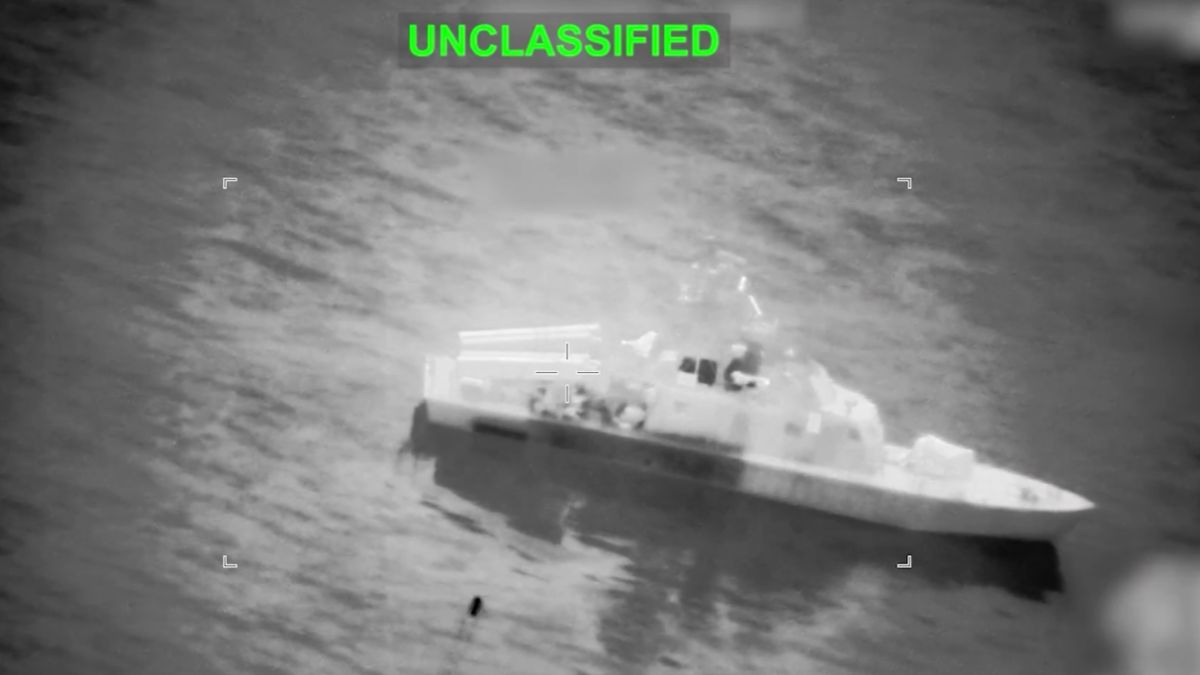
The Iran war has entered dangerous waters, quite literally. The United States has said that it destroyed 16 mine-laying naval vessels on Tuesday (March 10) amid concerns that Iran is preparing to deploy mines in the Strait of Hormuz.
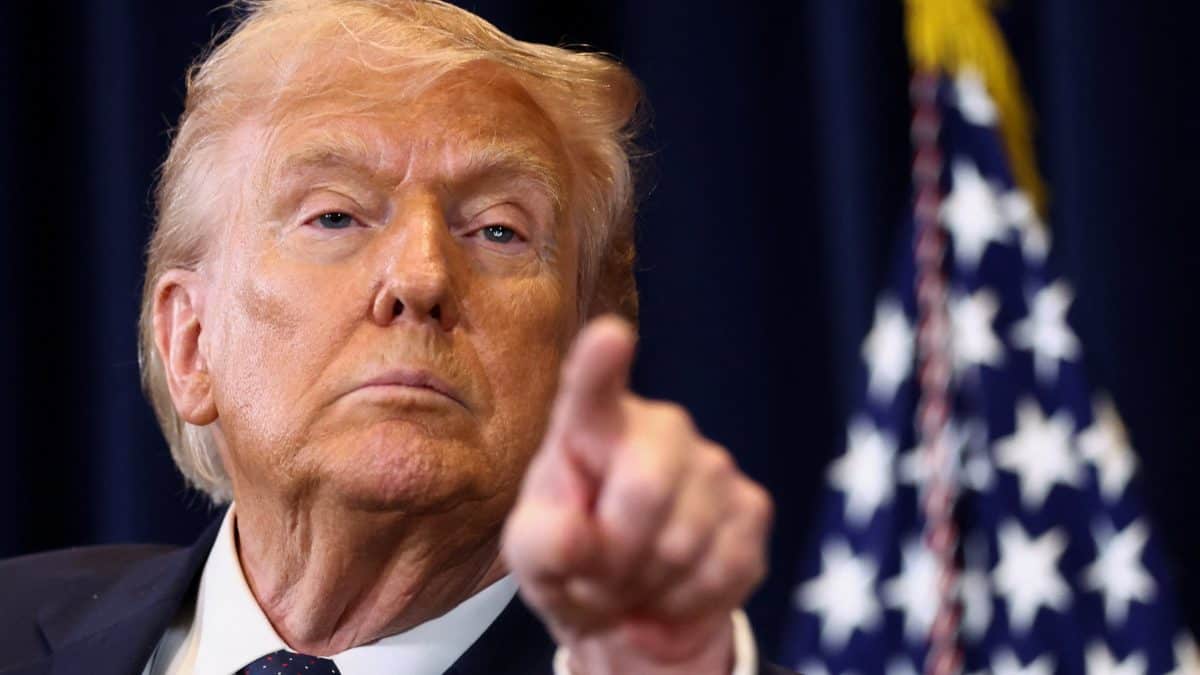
US President Donald Trump announced on his social media account that American military forces had “hit, and completely destroyed, 10 inactive mine-laying boats and/or ships”. Later, a senior US official told Axios that the strikes were a pre-emptive measure that was a result of intelligence about Iran’s operational plans. This comes as intelligence suggested that Tehran was set to begin a long-expected plan to mine the Strait of Hormuz.
- Don’t miss a single update from the Iran war
As the US wades further into troubled waters, here’s a closer look at what naval mines are and how they could pose the ultimate risk if deployed in the Strait of Hormuz.
What are naval mines?
A naval mine is a self-contained explosive device placed in the water, designed to destroy submarines and surface vessels. Mines are also used to deny the enemy access to areas and to quarantine the enemy into specific locations.
The use of this munition dates back to the American Revolution, when David Bushnell, then a student at Yale, discovered that gunpowder could be exploded underwater.
Today, there are different types of sea mines; some are designed to explode when the hull of a vessel comes into contact with them, and some are anchored to a steel cable to keep them under water. Mines also differ in how they detonate. Contact mines require contact by a vessel for them to explode. Influence mines are detonated by the presence of a ship, be it magnetic, acoustic, or pressure. Controlled mines are detonated from a shore station.
Naval mines can be significantly dangerous. The threat of this munition has been aptly explained in a 2011 Naval War College Review article called Taking Mines Seriously—Mine Warfare in China’s Near Seas. In it, author Scott Truver said, “Mines are ‘weapons that wait.’ They are the quintessential naval asymmetric threat. Since the end of World War II, mines have seriously damaged or sunk almost four times more Navy ships than all other means of attack combined.”
Unlike landmines, sea mines are not banned by international agreements. However, international humanitarian law prescribes certain rules. For example, states can place them in their territorial waters to defend their coasts from external attacks. The Hague Convention forbids the use of drifting mines in international waters.
How dangerous are sea mines?
Defence experts state that naval mines are among the most-efficient weapons at sea. Requiring relatively modest technology, they can be deployed covertly by ships, submarines, small boats, and even improvised platforms, yet cripple both military and commercial traffic, like oil tankers, in inverse proportion to their size and cost.
They are so dangerous that sea mines have hit 15 American naval vessels since World War II – nearly four times more than any other weapon. The most damaging of these hits was in 1988 amid the Iran-Iraq war. An Iranian mine severely damaged — but did not sink — an American frigate, USS Samuel Roberts. The cost to repair the vessel was pegged at $96 million. The cost of the mine? $1,500.
The dangers that naval mines pose have also been demonstrated amid the Russia-Ukraine war. The Black Sea is infested with hundreds of mines dropped by both sides, posing a serious threat to people.
Defence analysts also note that what makes naval mines even more difficult is their ‘demining’. On land, demining efforts focus on a single level, not particularly deep in the soil. But underwater, the search goes deep as well as wide. Also, landmines tend to stay put. But at sea, a mine could drift into a different spot.
What risks could sea mines pose in the Strait of Hormuz?
Since the start of the Iran war, there have been concerns of how Tehran would maintain its chokehold on the crucial Strait of Hormuz, through which 20 per cent of all the world’s oil is transported.
US President Donald Trump had earlier warned the Iranian Guards (IRGC) of “death, fire, and fury” if the Strait was blocked. And on March 10, US officials revealed that the Islamic Republic was preparing to deploy naval mines in the Strait of Hormuz in an effort to further disrupt the key shipping lane.
According to a CBS report, Iran is using smaller vessels that can carry two to three mines each to lay them into the strait. While Iran’s mine stock isn’t known, it is estimated that they have roughly 2,000 to 6,000 naval mines, largely produced by Iran, China, or Russia.
Following this, Trump wrote in a social media post, “If for any reason mines were placed, and they are not removed forthwith, the military consequences to Iran will be at a level never seen before. If, on the other hand, they remove what may have been placed, it will be a giant step in the right direction.”
Experts are of the opinion that mining the Strait of Hormuz is a huge risk and a last-resort strategy. The Strait of Hormuz, located on Iran’s southern border, connects the Persian Gulf to the Gulf of Oman and the Arabian Sea. Described as a “choke point”, the strait — almost 100 miles long and 21 miles wide at its narrowest point — allows the world’s largest vessels to transport oil and gas from West Asia to China, Europe, and the US. Most of that crude comes from Saudi Arabia, the United Arab Emirates, Iraq, Kuwait, Qatar, and Iran.
However, since the beginning of the Iran war, on February 28, traffic through the Strait of Hormuz has come to a virtual standstill. According to available data, the strait was averaging more than 153 vessel transits per day in the weeks leading up to the conflict, with container ships and oil tankers together making up roughly 88 per cent of traffic. But since March 1, only 78 vessels have been detected passing through the strait, for a daily average of 13.
Now imagine if Iran were to place naval mines in these waters. The largest ships carrying gas and oil, highly flammable objects, would be at risk of explosion, causing not just loss of lives and loss of precious crude, but also posing a bigger environmental risk.
It remains to be seen if the tides shift the direction of this war — but it’s been 12 days of fighting, and it doesn’t seem to be slowing down at all.
With inputs from agencies

 "US-Israel Iran War Live Updates: Saudi Arabia intercepts 2 drones heading to oil field, defence ministry says")
 "US destroys 16 Iranian minelayers after Hegseth warned of 'instense' day of bombing")
 "Greenland gambit & Iran tensions: Nato parliamentarian shares how the alliance is navigating tough world order")
 "How long will the Iran war last? Trump's mixed signals")
 "US-Israel Iran War Live Updates: Saudi Arabia intercepts 2 drones heading to oil field, defence ministry says")
 "US destroys 16 Iranian minelayers after Hegseth warned of 'instense' day of bombing")
 "Greenland gambit & Iran tensions: Nato parliamentarian shares how the alliance is navigating tough world order")
 "How long will the Iran war last? Trump's mixed signals")