 "Bangladesh, Brazil, US midterms and more: Elections that will define 2026 and why they matter to India")
From India’s immediate neighbourhood of South Asia to the geopolitical fault lines of West Asia and the Americas, voters in key nations will head to the ballot box in 2026 in contests that promise to alter power dynamics.
For New Delhi, sitting at the crossroads, 2026 is not merely a year of observation but one of subtle diplomatic calibration.
South Block officials are already war-gaming scenarios for a year where established relationships could be upended and new political realities birthed.
The outcomes in Bangladesh, Nepal, Thailand, Israel, Russia, Brazil and let’s not forget the midterms in the United States will directly impact India’s national security perimeter, its “Act East” momentum, its crucial defence supply chains, and its leadership role within the Global South.
The post-Hasina reckoning in Bangladesh
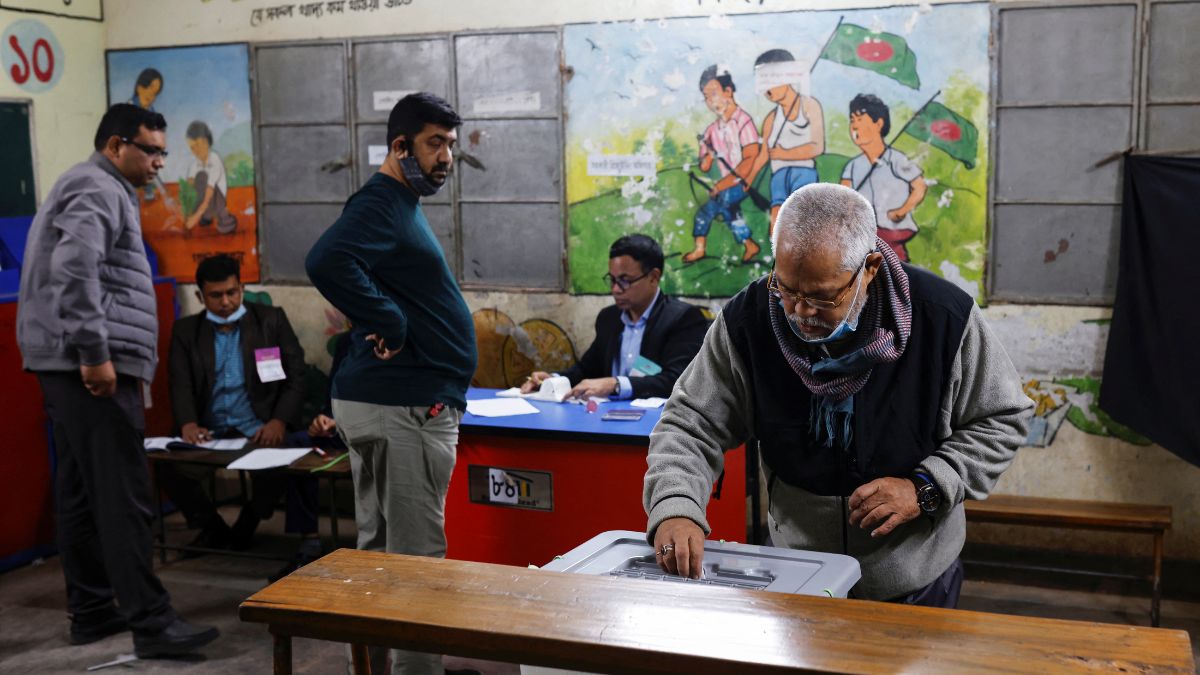
The general election scheduled for February 12 in Bangladesh is arguably the most critical foreign policy event for India, as the South Asian state continues to be haunted by violent protests.
The sudden collapse of the Sheikh Hasina-led Awami League government in late 2024 created a political vacuum that has been precariously managed by an interim administration.
For fifteen years, Hasina’s tenure provided New Delhi with unprecedented stability on its eastern flank.
Her government cracked down on anti-India insurgent groups using Bangladeshi soil, resolved long-standing border disputes, and facilitated crucial connectivity projects linking mainland India to its Northeast.
This election is a dive into uncharted waters. The interim government has promised a free and fair process, opening the door for the resurgence of the Bangladesh Nationalist Party (BNP) and its Islamist allies, including elements of the Jamaat-e-Islami.
Historically, BNP regimes have been less receptive to Indian security concerns and closer to Pakistan and China.
The primary concern for New Delhi is security. A regime in Dhaka hostile to Indian interests could reinvigorate insurgency in the Northeast and complicate the management of the long, porous border.
India has also invested heavily in transit and transshipment agreements through Bangladesh to develop the Northeast. Political instability or a policy reversal in Dhaka could jeopardise these economic lifelines.
Finally, the safety of Hindu and other minority communities in Bangladesh remains an emotive and significant domestic political issue within India, one that always flares up during periods of instability in Dhaka.
Indian diplomacy will need to be agile in building bridges.
The “Gen-Z” challenge to the old guard in Nepal
Nepal’s political calendar was dramatically accelerated by the events of 2025. Widespread, youth-led protests — dubbed the “Gen Z protests” — against corruption and the revolving-door politics of established leaders forced the dissolution of the House of Representatives and the installation of an interim government led by former Chief Justice Sushila Karki.
The elections moved forward to March 5, are framed as a battle between the entrenched old guard — the Nepali Congress, the CPN-UML, and the Maoist Centre — and a rising tide of new political entities backed by younger voters demanding systemic reform.
India has traditionally managed its relationship with Nepal through familiar political brokers. The potential disruption of this established elite by untried “Gen-Z” political forces introduces unpredictability.
New Delhi’s core interests remain immutable: maintaining an open border that facilitates unique people-to-people ties while preventing its misuse by third-party intelligence or terrorist elements.
The perennial tug-of-war for influence between India and China in Kathmandu will be central to the election backdrop. Beijing has heavily courted various communist factions in Nepal.
India will be watching closely to see if the new political landscape tilts toward the north.
A stable government in Kathmandu that is sensitive to India’s security concerns and open to accelerating hydropower cooperation remains the optimal outcome for New Delhi.
The battle for the Global South in Brazil
Brazil’s general elections on October 4 will be a massive political event, likely pitting the incumbent Workers’ Party (PT) administration of President Luiz Inácio Lula da Silva against a resurgent right-wing movement still heavily influenced by now-incarcerated former President Jair Bolsonaro (despite his own eligibility issues).
The election will be a stark choice between two vastly different visions for Brazil’s economy, environmental policy, and role in the world.
Brazil is a critical partner for India in multilateral forums, most notably Brics and the IBSA (India-Brazil-South Africa) dialogue forum. New Delhi is chairing the former for 2026.
As two of the largest democracies in the Global South, India and Brazil often coordinate positions on reforming institutions like the UN Security Council, global trade rules, and climate finance.
A victory for Lula’s coalition generally aligns better with India’s multilateral agenda of advocating for developing world interests and strengthening Brics as a non-Western (though not necessarily anti-Western) power centre.
A return of the Bolsonarista right could see Brazil pivoting back toward a more pro-US stance and potentially deprioritising the Brics agenda. Economically, Brazil is a major trade partner in Latin America, particularly in agriculture and energy.
The Republican litmus test in the US
On November 3, the United States will undergo its biennial democratic stress test: the midterm elections.
Occurring midway through US President Donald Trump’s second term, the 120th Congress is at stake, and New Delhi is watching the shifting political sands in Washington.
The midterms will see all 435 seats in the House of Representatives and 33 regular Class 2 Senate seats (plus two special elections) up for grabs.
Currently, Republicans hold a narrow majority in the House. Historically, the party in the White House almost always loses House seats during the midterms.
If Democrats regain control, it could create a lame-duck environment for the Trump administration’s more aggressive trade and immigration policies, potentially providing India with a more stable, albeit more gridlocked, legislative partner.
In contrast, the Senate map for 2026 is mathematically favourable to Republicans. Democrats are defending 13 seats while Republicans defend 22. However, key battlegrounds in states with high Indian-diaspora concentrations — such as Michigan, Georgia, and North Carolina — could determine the upper house’s ideological tilt.
Two critical special elections will be held to fill the remaining years of unexpired terms: one in Ohio (vacated by US Vice President JD Vance) and one in Florida (vacated by Marco Rubio).
The winners of these seats will likely become influential voices on the Senate Foreign Relations Committee, a body that wields immense power over India-specific legislation and defence waivers.
2025 was a wobbly year for India-US trade, marked by the Trump administration’s renewed focus on "reciprocal" tariffs. With high-level talks suggesting progress on a comprehensive trade deal — the midterms will act as a barometer for protectionist sentiment.
One of the most significant points of friction has been the Trump’s administration’s move to impose a high annual fee on H-1B visas — reported in some sectors as high as $100,000 — which sent shockwaves through the Bengaluru and Hyderabad tech ecosystems.
While the executive branch drives these proclamations, Congress controls the statutory caps and the broader legislative framework of the Immigration and Nationality Act.
With high-profile Indian-origin candidates increasingly contesting seats across both parties, the "Samosa Caucus" in the House is expected to expand.
For India, this diaspora serves as a living bridge, ensuring that Indian interests remain a localised concern for American lawmakers, regardless of which party holds the gavel.
The “Act East” gateway through Thailand
Thailand’s general election on February 8 is another critical contest in India’s extended neighborhood.
The Kingdom has been trapped in a cycle of political crises, marked by tension between the royalist-military establishment and progressive pro-democracy parties like the erstwhile Move Forward Party.
The 2026 polls are viewed as another attempt to break this deadlock. For India, Thailand is not just a bilateral partner but the geographic gateway to the Asean region, central to its “Act East” policy.
Domestic political paralysis in Bangkok has often slowed the momentum of regional connectivity projects.
India’s primary interest lies in a stable Thai government capable of decisively moving forward on initiatives like the India-Myanmar-Thailand Trilateral Highway, which is crucial for connecting India’s Northeast to Southeast Asian markets.
Strategically, Thailand is a key arena for great power competition in the Mekong sub-region. While Thailand is a US treaty ally, it maintains very close defence and economic ties with China.
India needs a government in Bangkok that maintains a balanced foreign policy, allowing space for New Delhi to deepen its own economic footprint in the region without being crowded out by Beijing’s influence.
The post-war verdict in Israel
While Israeli politics are notoriously volatile and early elections are always possible, the country is constitutionally due for a general election by late 2026, preferably October.
This vote will take place in the long shadow of the devastating conflicts that engulfed Gaza, Lebanon, and the wider region.
The election will essentially be a referendum on Prime Minister Benjamin Netanyahu’s long tenure and his security doctrine, which faced its severest test during the conflicts.
The Israeli electorate is deeply divided between right-wing coalitions prioritising aggressive security measures and settlement expansion, and a fragmented centre-left calling for new leadership.
Under Prime Minister Narendra Modi, the India-Israel relationship was elevated to a strategic partnership, characterised by a “de-hyphenation” from the Palestinian issue.
Israel has become one of India’s most reliable suppliers of high-technology defence equipment, including drones, missiles, and surveillance systems critical for India’s border security against China and Pakistan.
Regardless of who wins in Jerusalem, the foundational elements of defence and agricultural cooperation are likely to endure. However, a highly unstable Israeli coalition or a renewed cycle of regional violence could impact energy prices and the security of the millions of Indian expatriates working in the Gulf region.
India is also deeply invested in the I2U2 grouping (India, Israel, UAE, USA) and the India-Middle East-Europe Economic Corridor (IMEC), both require a stable Israel at peace with its Arab neighbours to fully realise their potential.
Managing managed democracy in Russia
Elections to the State Duma, Russia’s lower house of parliament, are scheduled for September. Given the nature of the Russian political system under President Vladimir Putin, these are not viewed by international observers as competitive in the Western sense.
Instead, they serve as a mechanism for the Kremlin to demonstrate consolidated domestic support, particularly amid the ongoing attrition warfare in Ukraine and sustained Western sanctions.
The United Russia party is expected to retain its dominance. The election will likely be used to validate the Kremlin’s narrative of a besieged fortress standing against the West.
Despite diversifying its defence acquisitions towards the West in recent years, India remains heavily dependent on Russian platforms for upwards of 50 per cent of its military hardware.
Ensuring a steady supply of spares for aircraft like the Su-30MKI, ongoing delivery of S-400 air defence systems, and cooperation on nuclear submarine technology requires a stable political interface in Moscow.
Since the Ukraine war began, Russia has become a vital supplier of discounted crude oil to India, helping manage domestic inflation and energy security.
India’s diplomatic tightrope walk — maintaining the strategic partnership with Russia while deepening ties with the US and Europe — relies on a predictable Kremlin.
Other crucial elections scheduled in 2026 comprise Benin - parliamentary (January 11), Uganda (January 15), Portugal (January 18), Costa Rica (February 1), Vietnam (March 15), Peru (April 12), Benin - presidential (April 12), Cyprus (May 24), Colombia (May 31), Ethiopia (June 1), Zambia (August 13), Sweden (September 13), Haiti (August 30 & December 6), Gambia (December 5), and South Sudan (December 22).
The common thread connecting these diverse elections to Indian interests is the undeniable reality of an interconnected, multipolar world.
A tremor in Dhaka is felt in Assam; a policy shift in Brasilia impacts Brics dynamics in New Delhi; a defence procurement delay in Moscow affects preparedness on the Himalayas; a hasty legislation passed in Washington sends markets crashing in Mumbai.
Also Watch:
With inputs from agencies

 "Trump announces 25% tariff on Iran’s trading partners. How India may be affected")
 "India, US to resume BTA talks after 5 months as Gor pushes for trade deal with 'real friends'")
 "ICC sources rubbish Bangladesh sports adviser’s sensational claim of BCB being asked to drop Mustafizur")
 "Jerome Powell: The 'Fed chair with a spine' taking on Trump")
 "Trump announces 25% tariff on Iran’s trading partners. How India may be affected")
 "India, US to resume BTA talks after 5 months as Gor pushes for trade deal with 'real friends'")
 "ICC sources rubbish Bangladesh sports adviser’s sensational claim of BCB being asked to drop Mustafizur")
 "Jerome Powell: The 'Fed chair with a spine' taking on Trump")