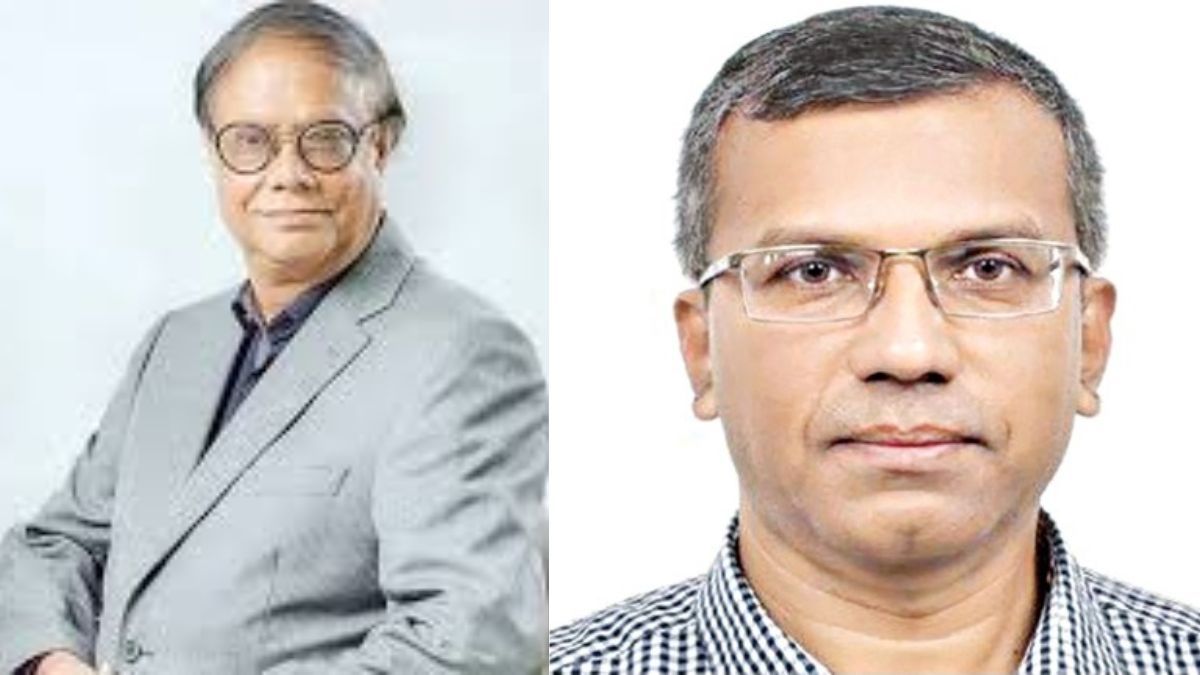
 "A defaulter replaces an economist. The controversy over appointment of new Bangladesh bank chief")
The Tarique Rahman government in Bangladesh, which was sworn in just days ago on February 17, is seeing its first major controversy. The new government has abruptly replaced the governor of the country’s central bank, resulting in backlash.
Critics are questioning the Bangladesh government’s reasoning regarding the credentials of the new appointee as well as the manner in which his predecessor was removed.
What is going on in Bangladesh? Why has the Bangladesh government’s decision to replace the Governor of Bangladesh Bank created a furore?
Abrupt exit of governor of Bank of Bangladesh
On Wednesday, the Tarique Rahman-led government suddenly announced the appointment of Mostaqur Rahman as the Governor of Bangladesh Bank, bringing an end to the tenure of Ahsan Habib Mansur, a respected economist who had been appointed during the Muhammad Yunus-led interim regime.
What is surprising is that Mansur’s tenure was cut short way before the actual period, 2028. What made Mansur’s departure even more notable was that he reportedly wasn’t informed of the decision.
Mansur confirmed his departure in an interview with Bloomberg News on Wednesday, saying he made the decision after local TV news reported the new government was planning to replace him. “After seeing the TV news that I’m being replaced, I left the job,” Mansur said in a phone interview with Bloomberg News. “There are formalities remaining. I will do that later.”
Mansur joined as the 13th governor of the Bangladesh Bank in August 2024 amid a period of intense political instability following the popular uprising that led to the ouster of former Prime Minister Sheikh Hasina.
During the 18 months of the interim government, his reform efforts were widely known. He also played a significant role in improving the external sector. During his tenure, remittances hit record highs one after another. Stability returned to the dollar market, and exchange rate volatility eased.
Backlash over Mansur’s removal
The Rahman government’s decision to abruptly oust Mansur invited criticism from the Jamaat-e-Islami, with the Opposition leader Shafiqur Rahman describing the move as “the formal beginning of mob culture backed by the current government”.
On his Facebook page, Rahman added, “No one has the right to insult respected figures such as the governor of Bangladesh Bank and his advisers in this manner.”
“The country’s economy is already in dire straits, with an epidemic of corruption at all levels, along with extortion and syndicates; in addition, if such undesirable activities continue at the highest level of the state, such as Bangladesh Bank, the rest of the country’s economy will also be destroyed,” he further wrote in the post.
NCP convener Nahid Islam also sharply criticised the appointment of the new governor, calling the process “shameless and undemocratic”. Speaking at a discussion in Dhaka on Thursday, he said, “The governor was removed through mob pressure to install a loan-defaulter businessman, undermining the aspirations of the July Uprising.”
Even The Daily Star, a reputed news outlet in Bangladesh, questioned the removal of Mansur, with one report titled ‘Does Ahsan H Mansur not deserve a respectful farewell?’
Mostaqur Rahman — a controversial choice
What has earned the Tarique Rahman government even more brickbats is the appointment of Mostaqur Rahman as Governor of Bangladesh Bank.
This appointment is a sharp departure from tradition. The post of Bangladesh Bank governor has historically been reserved for senior bankers, economists, or career civil servants with deep monetary policy experience.
But Rahman has been none of these; he’s a corporate accountant who owns a garment company. In fact, before his appointment, Rahman chaired the Bangladesh Garment Manufacturers and Exporters Association’s standing committee on the central bank. He also sat on the ruling Bangladesh Nationalist Party’s election steering committee.
But it’s not just his lack of experience that makes Rahman a controversial choice for governor of Bangladesh Bank. Rahman’s credibility is under a cloud as Mutual Trust Bank rescheduled Tk 89 crore (Rs 66.2 crore) worth of loans to his company, Hera Sweaters, last December. The loans have been restructured for 10 years with a two-year grace period under a special facility for distressed borrowers.
This has caused much unease among those in the banking sector. One executive told the Daily Star, “How can someone who rescheduled loans for his own company under special terms work in the interest of the country’s banks,” adding it was a clear conflict of interest.
Former Dhaka University economics professor Deen Islam wrote on Facebook, “Appointing a garment industrialist and Bangladesh Garment Manufacturers and Exporters Association standing committee chair as central bank governor sends the wrong signal. Regardless of his experience, the conflict of interest is obvious. How can Bangladesh Bank remain independent if it is led by an active business figure from a sector it must regulate?”
Selim Raihan, a professor of economics at Dhaka University, also noted that the appointment of Rahman was questionable.
“The decision to appoint a professional accountant and businessman as Bangladesh Bank governor naturally raises questions. Is the government truly committed to reforming the banking sector? A businessman may prioritise corporate interests, whereas the primary responsibilities of the central bank are to control inflation, ensure financial stability, and take firm action against weak banks,” he wrote.
Tarique Rahman’s government responds
When asked why Mansur’s contract as governor of Bangladesh Bank was terminated, Finance Minister Amir Khosru Mahmud Chowdhury said it was normal for an administration to make changes as they see fit. “There’s nothing to consider. A new government has taken office and has its priorities. Changes have not only occurred at Bangladesh Bank; changes are happening in many places and will continue to happen,” he told reporters.
“To align with and implement the new government’s programmes, preferences, thoughts, and vision, changes will be made wherever necessary. This is perfectly normal.”
With inputs from agencies

 "Pakistan-Afghanistan War Live Updates: Russia, China call for ceasefire as Pak-Taliban conflict worsens")
 "Local ceasefire in Russia-Ukraine war to repair Moscow-controlled Zaporizhzhia nuclear plant")
 "Rising Bharat Summit: Gold’s big moment? What the World Gold Council chief revealed")
 "Pakistan Stock Exchange tanks over 3,000 points as border tensions with Afghanistan escalate")
 "Pakistan-Afghanistan War Live Updates: Russia, China call for ceasefire as Pak-Taliban conflict worsens")
 "Local ceasefire in Russia-Ukraine war to repair Moscow-controlled Zaporizhzhia nuclear plant")
 "Rising Bharat Summit: Gold’s big moment? What the World Gold Council chief revealed")
 "Pakistan Stock Exchange tanks over 3,000 points as border tensions with Afghanistan escalate")