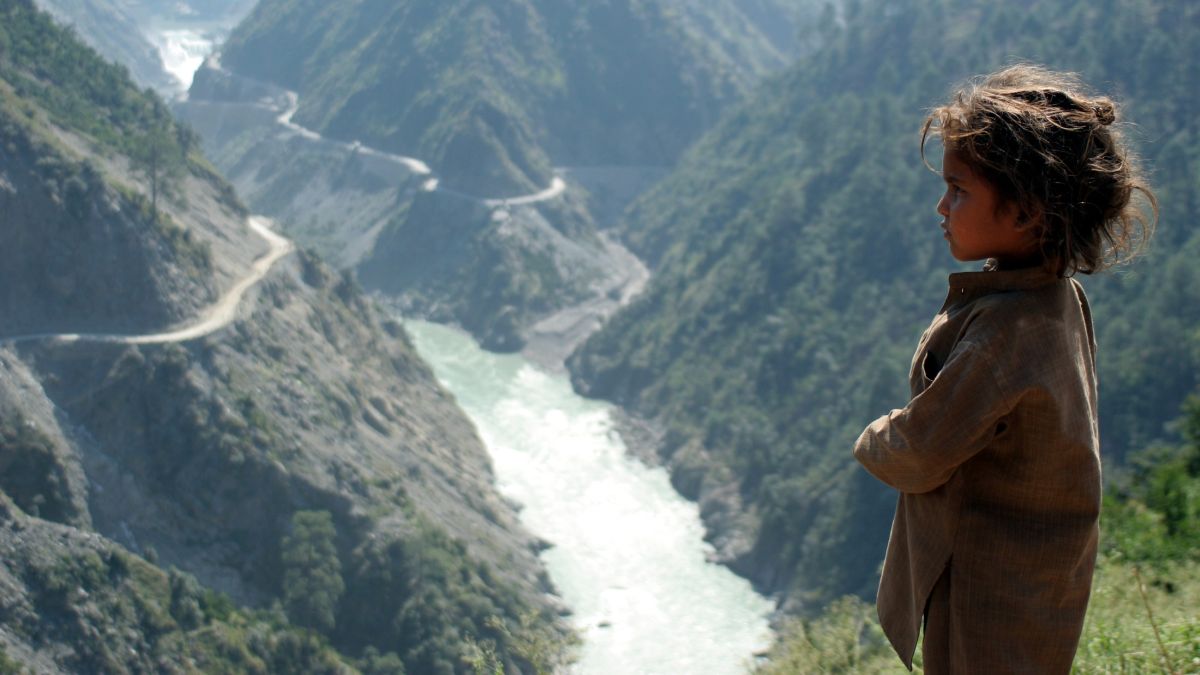
 "India fast-tracks Sawalkote Hydro Project in J&K: Will it hurt Pakistan?")
India is moving ahead with its plans to build the Sawalkote Hydro Project in Jammu and Kashmir. The government has begun inviting tenders for the 1,856 Megawatt project on the Chenab River.
The development comes in the aftermath of India suspending the Indus Waters Treaty with Pakistan. But what happened? And what do we know about this project? Will it hurt Pakistan?
Let’s take a closer look
What do we know about the project?
The Sawalkote Hydro Project is one of India’s most ambitious schemes. The project will come up near Ramban district’s Sidhu village. This is around 120 kilometres from Jammu and 130 kilometres from Srinagar. The project was conceived in the 1960s by the Central Water Commission (CWC).
Detailed investigations for the Detailed Project Report (DPR) were conducted at the time. Officers of the Geological Survey of India conducted surveys for the project between 1962-1963 and 1970-1971. The Sawalkote Consortium submitted the Detailed Project Report in February 2018.
The project has been delayed for decades over environmental concerns, political issues, administrative challenges, red tape and legal issues. Over a dozen villages in the area will be affected by the project. Its residents will need to be shifted to new homes and compensated for the same.
An army transit camp in Ramaban will also have to be relocated. Pakistan had also objected to the project under the terms of the Indus Waters Treaty.
The National Hydroelectric Power Corporation (NHPC) was given the project in 1985. In 1997, it handed back the project to the Jammu and Kashmir State Power Development Corporation, which spent 400 crores on the project. The project landed in the NHPC’s hands again in 2021.
India, earlier this week, began laying the ground for the project. The NHPC on July 29 floated a tender valued at Rs 200 crore. This covers the planning, design and engineering works for the scheme. The agency has fixed September 10 as the final date for submitting bids. The bid is open to international firms. This is merely the first tender. Additional tenders for construction and development will be floated in the coming months.
The project was originally designed on a much smaller scale. However, over the years, plans for the scheme have grown bigger. The project is designed as a run-of-the-river scheme. It will comprise nine turbines and an underground power station. It will feature a Roller Compacted Concrete Gravity Dam at a height of 192.5 metres.
The water will flow through three horseshoe-shaped tunnels measuring 965 metres, 1,130 metres, and 1,280 metres in length. It will have non-monsoon and monsoon period flood diversions at 2,977 cumec and 9,292 cumec, respectively.
It will produce around 8000 million units of electricity every year. The reservoir that will come up with the project will have a capacity of over 500 million cubic metres. That’s around a fifth of the capacity of Delhi’s Bhakra dam. It will be the largest hydroelectric project in the Union Territory.
The delays have caused the estimated cost of the project to escalate from around Rs 8,000 crore. The current price of the project is pegged at 22,000 crores. However, others warn that the final price tag could be over 30,000 crores by the time the project is done.
India in June declared the project one of “national importance”. This gives the NHPC greater freedom to execute the project and will likely cut down on red tape. It does one of a half dozen projects that India is set to revive in the region.
These include the Pakal Dul on Marusudar river in Kishtwar, Kiru and Ratle projects , which are also on the Chenab River, Kirthai I & II, Parnai project on Jhelum’s Suran tributary. These projects, when finished, will bring in more than 5,000 megawatts of clean power to Jammu and Kashmir.
This will make the region more energy independent and boost the national grid.
Will it hurt Pakistan?
The move must be seen in a larger context.
India’s move comes after it suspended the Indus Waters Treaty with Pakistan in the aftermath of the Pahalgam terror attack in April.
India and Pakistan had signed the treaty in 1960 under the aegis of the World Bank.
The treaty governs the use of the Indus River system that flows through both countries and is vital to their economies. It left India in control of the eastern Beas, Ravi and Sutlej rivers, and gave Pakistan rights over the Indus, Chenab and Jhelum.
However, India was still allowed to draw from the western rivers for, among other things, domestic and agricultural use and hydroelectricity. Many in India have been calling for New Delhi to renegotiate the treaty or withdraw from it entirely.
Home Minister Ahmed Shah, speaking in Parliament recently, decried the treaty as ‘one-sided’. “The Indus Water Treaty was one-sided. Farmers of India also have the right over the water, and soon, drinking water will reach Kashmir, Punjab, Haryana, Rajasthan, and Delhi from the Indus,” Shah said.
“The Indus Water Treaty will be held in abeyance until Pakistan irrevocably gives up its support of terrorism. We have warned that Blood and water will not flow together”, Foreign Minister S Jaishankar added.
Prime Minister Narendra Modi, in his Parliament speech on Tuesday, had taken Jawaharlal Nehru to task over the treaty. Nehru, India’s first prime minister, had played a crucial role in the signing of the treaty. Many now think he was too generous by far with Pakistan.
India is now trying to make the most of its share of the western rivers – particularly the Chenab River.
The Chenab, which is one of the region’s three major rivers, starts in Himachal Pradesh and runs through the Western Himalayas. Over 10,000 square km of its catchment falls permanently above the snowline. This means it can be used around the year to generate hydroelectricity.
Experts say India sees the Chenab River both as an asset and as a symbol of energy independence. They say this will further increase Pakistan’s concerns about its water woes and its energy issues.
With inputs from agencies

 "Zelensky suggests 'trilateral' talks between Russia, US, Ukraine in UAE")
 "Trump finds new raid target? Report says US actively seeking regime change in Cuba by 2026-end")
 "Power shift in Hanoi: Vietnam party list hints PM and president losing clout")
 "Can Trump’s Board of Peace replace the United Nations?")
 "Zelensky suggests 'trilateral' talks between Russia, US, Ukraine in UAE")
 "Trump finds new raid target? Report says US actively seeking regime change in Cuba by 2026-end")
 "Power shift in Hanoi: Vietnam party list hints PM and president losing clout")
 "Can Trump’s Board of Peace replace the United Nations?")