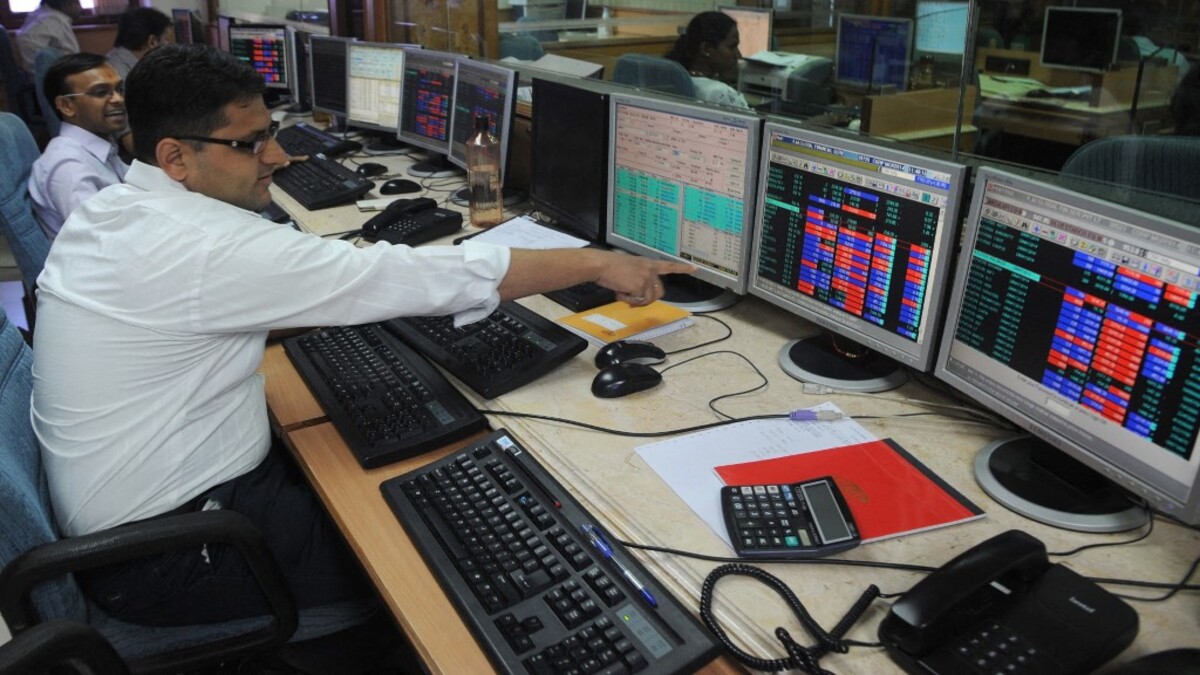
 "Indian stock traders react on seeing the 30 share benchmark index Sensex. (File/AFP)")
Global markets traded cautiously on Thursday, with investors holding back from large bets ahead of a closely watched address by US President Donald Trump that could signal a potential end to the ongoing conflict involving Iran and reshape risk sentiment worldwide.
Asian equities edged higher in early trade, while the US dollar softened and oil prices retreated, reflecting tentative optimism that tensions in West Asia may ease. The shift follows two sessions of gains in global stocks after a turbulent March, when surging crude prices rattled financial markets and triggered a broad risk-off move.
Investor focus is now firmly on Trump’s scheduled primetime speech, where markets expect clarity on the timeline and scope of any US withdrawal from the conflict. In remarks to Reuters ahead of the address, Trump said the United States would be “out of Iran pretty quickly” but could still carry out limited “spot hits” if necessary.
The possibility of a de-escalation has already begun to influence asset prices. MSCI’s broadest index of Asia-Pacific shares outside Japan inched higher after posting its biggest one-day gain since November 2022 in the previous session. Japan’s benchmark also looked set for a firm opening, mirroring the improved risk appetite.
At the heart of market concerns is the Strait of Hormuz, a critical artery for global energy flows that accounts for roughly a fifth of the world’s oil and liquefied natural gas shipments. Any indication of reopening or easing disruptions in the route could significantly ease supply bottlenecks, particularly for energy-importing Asian economies.
Analysts caution, however, that even if the US signals a withdrawal, uncertainty will remain elevated. “A US exit within the next few weeks would remove one massive layer of tension, but it doesn’t automatically guarantee smooth energy flows,” Tony Sycamore, a market analyst at IG, told Reuters.
Quick Reads
View AllHe added that Iran’s response would be crucial, especially whether it continues to leverage its strategic position by imposing restrictions on tanker movements or targeting regional energy infrastructure. Iran has already carried out strikes on Gulf nations, some of which host US military bases, underscoring the fragility of the situation.
Currency markets reflected this cautious optimism. The dollar, which had strengthened during the height of the conflict as a safe-haven asset, weakened this week as traders began pricing in a potential ceasefire. The euro held firm near recent highs, while the Japanese yen edged away from the psychologically important 160-per-dollar level that has previously triggered concerns about intervention by Japanese authorities.
Oil prices, a key barometer of geopolitical risk, also pulled back. Brent crude futures for June delivery fell 2.7 per cent to settle at $101.16 per barrel, after briefly dropping below $100 during the session. The decline suggests that markets are beginning to factor in a possible easing of supply disruptions, though volatility remains high.
The past month has underscored how sensitive global markets are to developments in West Asia. Elevated energy prices in March reignited inflation fears and weighed on growth expectations, prompting sharp sell-offs across equities and emerging market assets.
With inputs from agencies.