

 "GST a bold reform, but the 4-tier tax rates seem to be a backdoor manipulation of taxation system")
With the passing of four supplementary bills –The Central GST Bill, The Integrated GST Bill, The Union Territory GST Bill and the Compensation to the States Bill – by the Lok Sabha on 29 March (Wednesday), the Goods and Services Tax (GST) regime has almost become a reality. The prime minister and the finance minister have hailed it as a history-in-the making measure. It indeed is. A GST regime is expected to reduce, if not eliminate, the cascading effect of taxation prevailing today, taking into view the multiple taxes levied by the states and the Centre. The producer, trader and consumer of goods would stand to benefit from it. Both the state and central governments are also likely to benefit from the GST regime as it provides the basis to expand the tax base available to each level of government. We must, however, admit that, despite all our hype, we are still a far cry from implementing the classic GST principle – one nation, one rate – given the four tax rates that the GST Council has adopted for the current rollout. The finance minister had a convincing response to this criticism: “One rate would be highly regressive as hawai chappal and BMW cannot be taxed at the same rate.” The finance minister is right. As such, indirect taxes are regressive and they affect the poor more than the rich, if we consider the proportion of their respective income that goes to pay for the taxes. [caption id=“attachment_2940664” align=“alignleft” width=“380”] 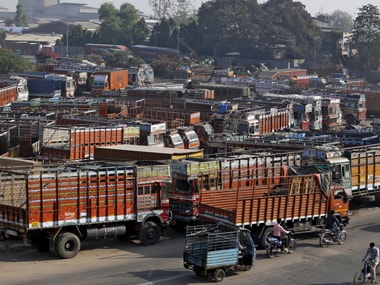 Representational image. Reuters[/caption] So far so good. But the decision to keep the bulk of the petroleum products out of the GST regime is self-defeating, to say the least. As it stands today, crude oil, natural gas, aviation fuel, diesel and petrol do not come under the purview of the GST. This is surprising, given the fact that petroleum forms a basis for a substantial portion of goods and services in India; it, in fact, constitutes the lifeline of the transportation system across the country. If the intent of the GST was to have an efficient indirect tax regime without distortion and to minimise the cascading effect created by multiple taxes in the existing system then including petroleum products under GST ambit was a must as this is one product that involves various goods and services in each stage like exploration, production and refining etc. Not covering petroleum products under the GST would result in the continuance of the multiple central and state taxes and duties that exist today ( excise duty, VAT, cess, purchase tax, entry tax, service tax etc which together constitute a tax burden of over 50 percent). Oil refineries used to absorb the additional cost of the multiple, often exorbitant, levies when the prices were regulated. In a free-pricing scenario, as it stands today, the end consumer is the sufferer. Consider this fact: the crude oil is available today at an average cost of Rs 25 per litre. After taking into consideration the refining, transportation and allied costs, a litre of petrol should cost Rs 30 or Rs 31. But a consumer pays Rs 70 to Rs 80 per litre depending on taxation structure in different states. A rough calculation would tell us that we end of paying 50 to 60 percent taxes for petroleum products. And it is a product which is used both by the rich and the poor. Parthasarathi Shome, as the chairman of the Tax Administration Reform Commission, had nailed it when he had said that no tax policy designer could call it GST if petroleum products were kept out of it. Clearly, treating the petroleum products as the cash cow for state and central governments is a clear negation of the spirit of the GST. The other major issue of the current GST bill, soon going to be an act, is the high taxation rates. The bottom two rates – 5 percent and 12 percent – appear reasonable. But the top two rates – 18 percent and 28 percent – seem to be on the higher side. This is all the more distressing as the governments (Centre and states) have reserved the discretion to impose additional levy over and above the 28 percent tax bracket. For example, the GST Council has decided to impose 15 percent additional cess, over and above 28 percent GST tax on aerated drinks. Whether aerated drinks like Pepsi and Coca Cola are ‘sin’ goods is a matter of debate. But the fact that several such additional levies, over and above the highest tax rate within the GST structure, amounts to backdoor manipulation of the taxation system. If both the central and state governments were honest – if the GST Council were not to mince words – then they could have said candidly that the highest rate within the GST would be around 60 percent. That would have been an honest admission. Of course, it would have made us a laughing stock in the comity of nations. Consider this: the highest tax rate in Thailand is 7 percent, in Indonesia 10 percent, in Australia 10 percent, in New Zeland 15 percent, in Germany 16 percent, in China 17 percent and so like. A 60 percent peak rate would have taken the fizz out of our boast. So we chose to camouflage it to make our achievement seem somewhat respectable. Let us look at the consequences: the first four decades of Independent India had one of the most regressive tax structures: four out of every five rupees collected as taxes by the government came from indirect taxes, the direct taxes resources being minuscule. The situation somewhat changed with the onset of tax reforms in 1990s when the share of direct taxes in the kitty went up. But since the fiscal 2010, the share of indirect taxes has been steadily going up, with the imposition of multiple cesses and other levies. With the onset of the GST regime, the share of indirect taxes is likely go up further as the direct taxes are likely to stagnate or come down, given the government’s unwillingness to increase the rate of tax for the wealthy or to bring rich peasantry under the tax net. Such a scenario would make India one of the most regressive regimes of the world.
If both the central and state governments were honest – if the GST Council were not to mince words – then they could have said candidly that the highest rate within the GST would be around 60 percent
Advertisement
End of Article


 "US ready to ‘impose costs’ on Russia if war in Ukraine drags on, says Hegseth")
 "US tells Hamas to stop violence against Gaza civilians and disarm 'without delay'")
 "China seizes 60,000 maps mislabelling Taiwan, omitting South China Sea islands")
 "Syria’s Sharaa pledges to honor Russia ties, seeks economic and military support in Kremlin visit")
 "US ready to ‘impose costs’ on Russia if war in Ukraine drags on, says Hegseth")
 "US tells Hamas to stop violence against Gaza civilians and disarm 'without delay'")
 "China seizes 60,000 maps mislabelling Taiwan, omitting South China Sea islands")
 "Syria’s Sharaa pledges to honor Russia ties, seeks economic and military support in Kremlin visit")



](https://images.firstpost.com/wp-content/uploads/2016/08/GST_reuters3_380.jpg)