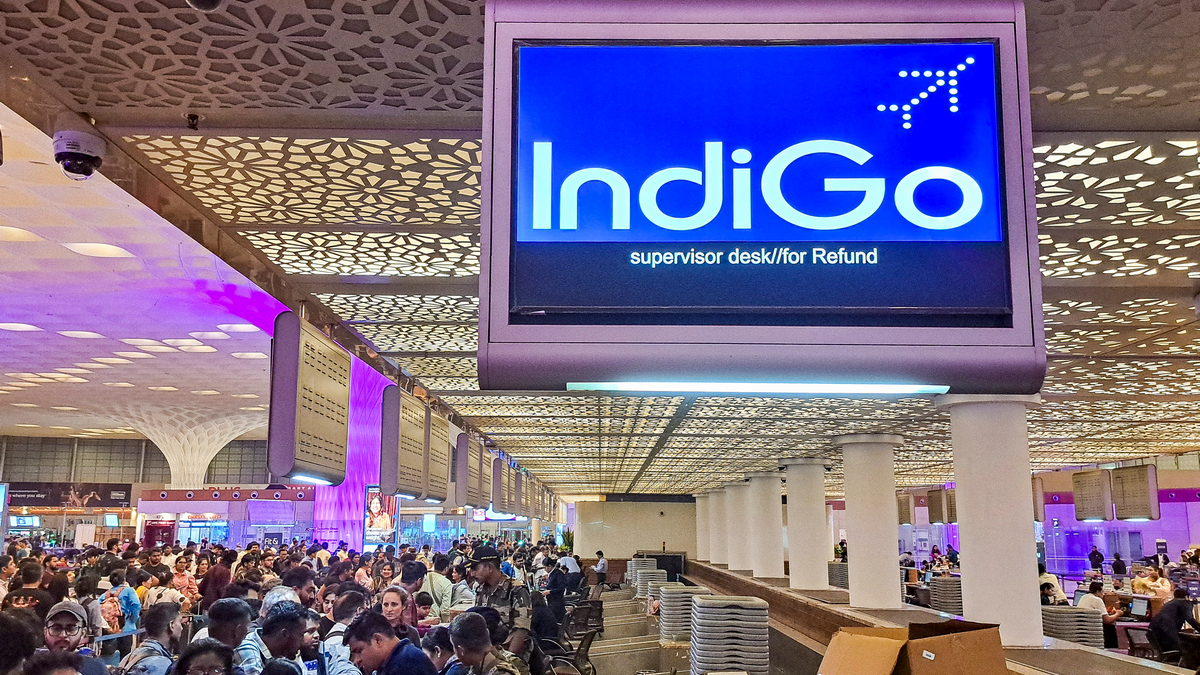
 "Airfares may still rise, but relief in sight as government allows partial increase in jet fuel prices")
Air travel in India could still become costlier, but a government intervention to allow only a partial increase in jet fuel prices is expected to cushion the impact for both airlines and passengers amid the ongoing energy crisis linked to the West Asia conflict.
After initial concerns that aviation turbine fuel (ATF) prices had surged sharply, the Centre stepped in to permit only a staggered increase for domestic carriers. The decision, taken by public sector oil marketing companies in consultation with the Ministry of Civil Aviation, limits the hike to 25 per cent, or about Rs 15 per litre, for domestic airlines.
Civil Aviation Minister K. Rammohan Naidu said the calibrated approach aims to balance global market realities with the need to protect India’s aviation ecosystem from a sudden cost shock. ATF prices in India, deregulated since 2001, are typically revised monthly based on international benchmarks, which have seen extreme volatility due to supply disruptions and disruptions around key routes such as the Strait of Hormuz.
Industry welcomes move
The move has been welcomed by airlines, which were bracing for a steep spike in fuel costs. Ajay Singh, Chairman and Managing Director of SpiceJet, said the partial increase would provide “significant relief” to the aviation industry at a time of unprecedented global uncertainty.
Airlines including IndiGo, Air India and Akasa Air have already raised fuel surcharges in recent weeks, citing rising costs driven by higher crude prices and operational disruptions.
Costs remain elevated
Even with the moderated increase, airlines continue to face mounting pressure. Aviation fuel accounts for roughly 40 per cent of operating costs, and carriers are also dealing with longer flight routes due to airspace restrictions over parts of West Asia. These detours are increasing fuel burn and adding to expenses, particularly on international routes.
Notably, the government’s relief applies primarily to domestic operations. International flights will continue to bear market-linked ATF prices, meaning fares on overseas routes could still see sharper increases.
Global turbulence driving prices
The surge in fuel prices has been triggered by the West Asia conflict, which has disrupted energy supply chains and driven up global oil and jet fuel prices. Data from the International Air Transport Association (IATA) shows jet fuel prices have nearly doubled since late February, intensifying cost pressures for airlines worldwide.
Shielding passengers, stabilising sector
The government said the staggered increase is intended to prevent a sudden spike in airfares, support airline viability, and ensure continuity in cargo and passenger connectivity — critical for trade and economic activity.
The intervention also reflects broader concerns that a sharp rise in ticket prices could dampen travel demand, forcing airlines to cut capacity and affecting the sector’s recovery.

 "Iran Israel War News Live: Israel says chief engineer behind Hezbollah’s secret tunnels killed in strike")
 "End of Nato? Why are European allies refusing to back Trump’s Iran war?")
 "New Delhi to host Brics FMs meet in May; Russia's Lavrov among key attendees")
 "Did a Hindu guru inspire Steve Jobs to come up with Apple? The many theories behind tech giant’s name")
 "Iran Israel War News Live: Israel says chief engineer behind Hezbollah’s secret tunnels killed in strike")
 "End of Nato? Why are European allies refusing to back Trump’s Iran war?")
 "New Delhi to host Brics FMs meet in May; Russia's Lavrov among key attendees")
 "Did a Hindu guru inspire Steve Jobs to come up with Apple? The many theories behind tech giant’s name")