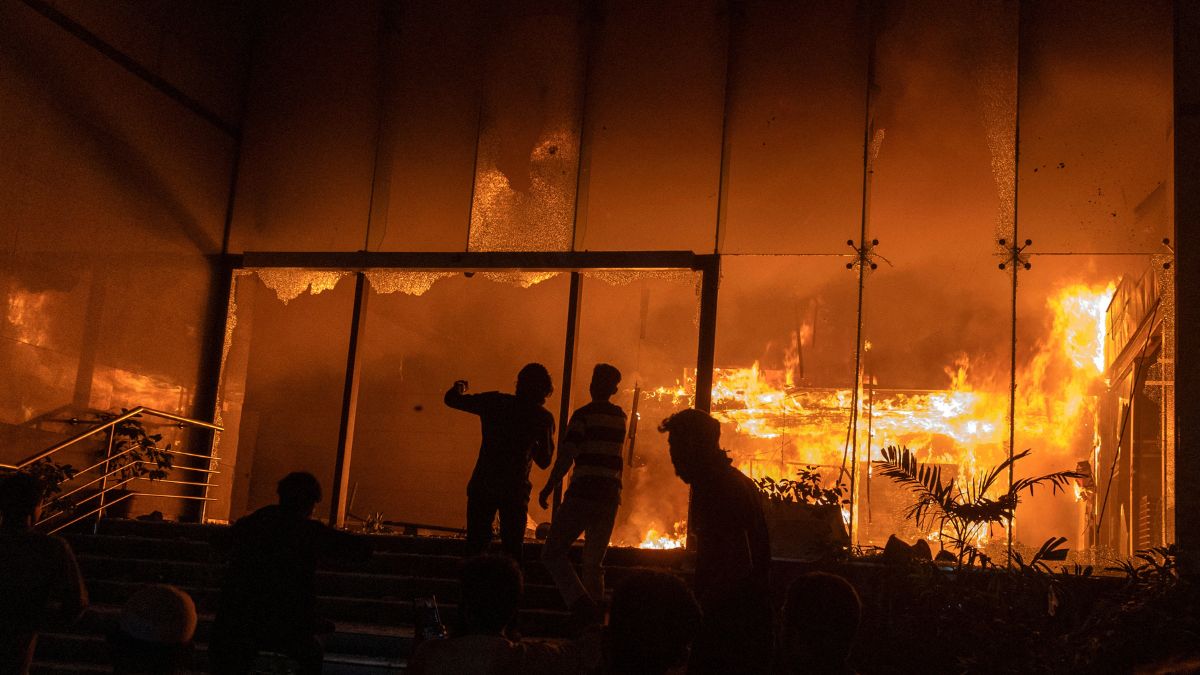
 "A mob sets fire to The Daily Star newspaper office building in Dhaka, Bangladesh, on December 19, 2025. (Photo: Abdul Goni/Reuters)")
Amid ongoing political violence and anti-India protests, Bangladesh’s interim ruler Muhammad Yunus on Friday vowed action those responsible.
However, Yunus’s pledge may turn out to be hollow as these mobs are the same groups that ousted then-Prime Minister Sheikh Hasina last year and propped him as the country’s unelected ruler. Moreover, he did not address the targeted violence against Indian diplomats at all.
In a statement issued by his office, Yunus referred to attacks on Prothom Alo and Daily Star newspapers’ offices, attack on journalists, and a lynching of a Hindu man , and “strongly and unequivocally” condemned the violence. He blamed “a few fringe elements” for these attacks.
Yunus further said, “Attacks on journalists are attacks on truth itself. We promise you full justice. We wholeheartedly condemn lynching of a Hindu man in Mymensingh. There is no space for such violence in new Bangladesh. The perpetrators of this heinous crimine [sic] will not be spared.”
ALSO READ: As post-Hadi violence makes Bangladesh election ‘unsafe’, is there a plot to delay polls?
But Yunus did not say anything about violent demonstrations targeting the Indian High Commission and attack on the residence of an Indian diplomat. With such a selective pledge, which does not appear to be backed by any real action against mobs, the confidence in the pledge is bound to be low.
Quick Reads
View AllThere are also concerns that the ongoing violence could further delay elections that are supposed to be held in February.
Plot to delay elections & help Islamists?
The ongoing wave of political violence and anti-India protests appear to be managed to create an atmosphere of fear and instability ahead of the elections to help Islamist forces in Bangladesh, sources tracking developments on the ground previously CNN-News 18.
Sources said that vested interests were deliberately worsening the security situation in Bangladesh to delay elections by building a narrative that elections were unsafe. They added that such a delay would allow radical elements —Islamists like the Jamaat-e-Islami— to consolidate themselves in the country.
OPINION — Bangladesh at a crossroads: Between street unrest and a soft state
The latest round of violence in Bangladesh erupted after the death of Sharif Osman Hadi, a prominent figure in last year’s movement that ousted Hasina and propped Yunus as the country’s unelected ruler. He was shot by unidentified assailants in Dhaka last week.
Since the news of Hadi’s death broke, mobs have attacked the house of India’s Assistant Indian High Commissioner in Chattogram, set on fire the house of former minister Mohibul Hasan Chowdhury Nowfel, demolished the Awami League office in Rajshahi, and attacked the offices of Prothom Alo and Daily Star newspapers.
Prothom Alo not published for first time
For the first time in its 27 years of operations, Prothom Alo was not published on Friday as a mob burnt down its office the previous night, the newspaper said in a statement.
The Bangla-language daily is among the most-read newspapers in the country.
In the statement, the newspaper dubbed it was a subject of a deliberate and organised “terrorist attack”.
“At the time of the attack, on-duty journalists were engaged in operating the online news portal as well as preparing the print edition for 19 December. In the face of this terrorist attack, Prothom Alo employees were left completely unprotected and their lives were put at serious risk. The attackers extensively vandalised the office building and then set it on fire. Due to the prolonged blaze, the building was gutted and the assets and valuable documents stored there were reduced to ashes,” the statement read.
Along with the published edition, the digital operations of the newspaper were also suspended, the statement read.
The Prothom Alo linked the attack with an attack on Daily Star newspaper and called it a black day for journalism in the country.
“There are reasonable grounds to believe that a vested interest group deliberately carried out these attacks by exploiting the tragic killing of Sharif Osman Hadi. This was a black day for independent journalism. Through these incidents, there was not only an attempt to derail the upcoming election, but also a clear intent to severely damage Bangladesh’s image on the international stage,” the statement read.