

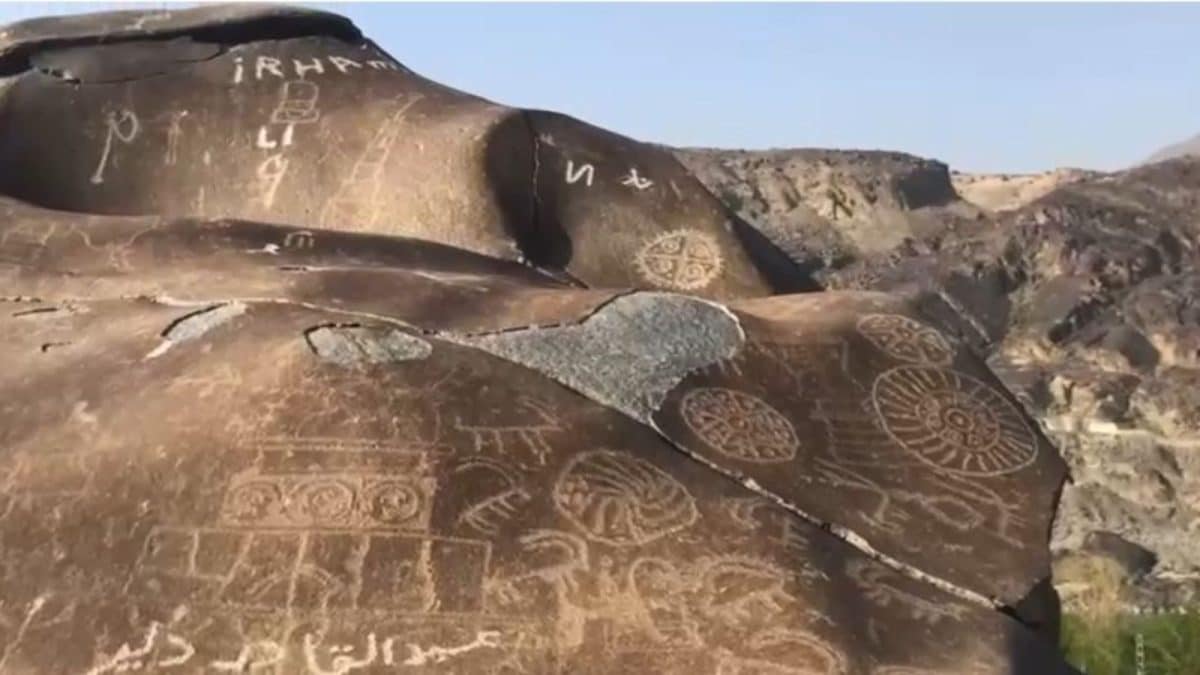
 "Why ancient Hindu and Buddhist heritage sites in Pakistan are under threat from vandalism, illegal occupation")
Prestigious Hindu and Buddhist heritage sites across Pakistan, some dating back nearly 5,000 years, are increasingly facing threats from vandalism, neglect and illegal occupation, CNN-News18 reported citing activists, experts and intelligence assessments.
The affected areas include Pakistan-occupied Kashmir, Gilgit-Baltistan, Chilas, Hunza, Shatial, and parts of Khyber Pakhtunkhwa and Balochistan, home to ancient temples, petroglyphs and inscriptions. Researchers estimate that the Chilas–Hunza–Shatial belt alone contains over 25,000 petroglyphs and inscriptions, dating from 5000 BCE to the 16th century CE.
News18’s Manoj Gupta reported that extremist groups have deliberately targeted Hindu and Buddhist imagery at several sites, defacing carvings with permanent paint or scratching out figures. In some cases, local authorities have also drawn criticism for painting official notices directly over ancient carvings—acts experts describe as desecration of priceless heritage.
Intelligence inputs cited by sources identify Chilas as an area with the presence of hardline Islamist groups, raising serious concerns about the safety of nearby archaeological and religious sites. Separately, activists allege that multiple Hindu and Buddhist sites remain under illegal occupation, with little visible action taken by authorities to reclaim or safeguard them.
Unesco obligations under question
Cultural heritage advocates argue that Pakistan has failed to adequately uphold its commitments under Unesco conventions and international agreements aimed at protecting minority and indigenous heritage. They warn that continued inaction could lead to irreversible damage to sites that form part of South Asia’s shared civilisational legacy.
Calls for urgent protection
Amid growing concern, demands are mounting for stronger legal protections, enhanced on-ground security and international monitoring to safeguard these vulnerable heritage sites before further damage occurs.

 "Back from exile, BNP’s Tarique Rahman files nomination to contest Bangladesh polls")
 "'Till we are closer to qualification, I’m not thinking about squash at the LA Olympics': World Cup winning captain Abhay Singh")
 "Bangladesh: Targeted mob sets Hindu family’s home ablaze as minority attacks continue, say reports")
 "‘Fake’ Indian rabies vaccine row: Why have Australia, US, UK raised concerns about the jab?")
 "Back from exile, BNP’s Tarique Rahman files nomination to contest Bangladesh polls")
 "'Till we are closer to qualification, I’m not thinking about squash at the LA Olympics': World Cup winning captain Abhay Singh")
 "Bangladesh: Targeted mob sets Hindu family’s home ablaze as minority attacks continue, say reports")
 "‘Fake’ Indian rabies vaccine row: Why have Australia, US, UK raised concerns about the jab?")



