

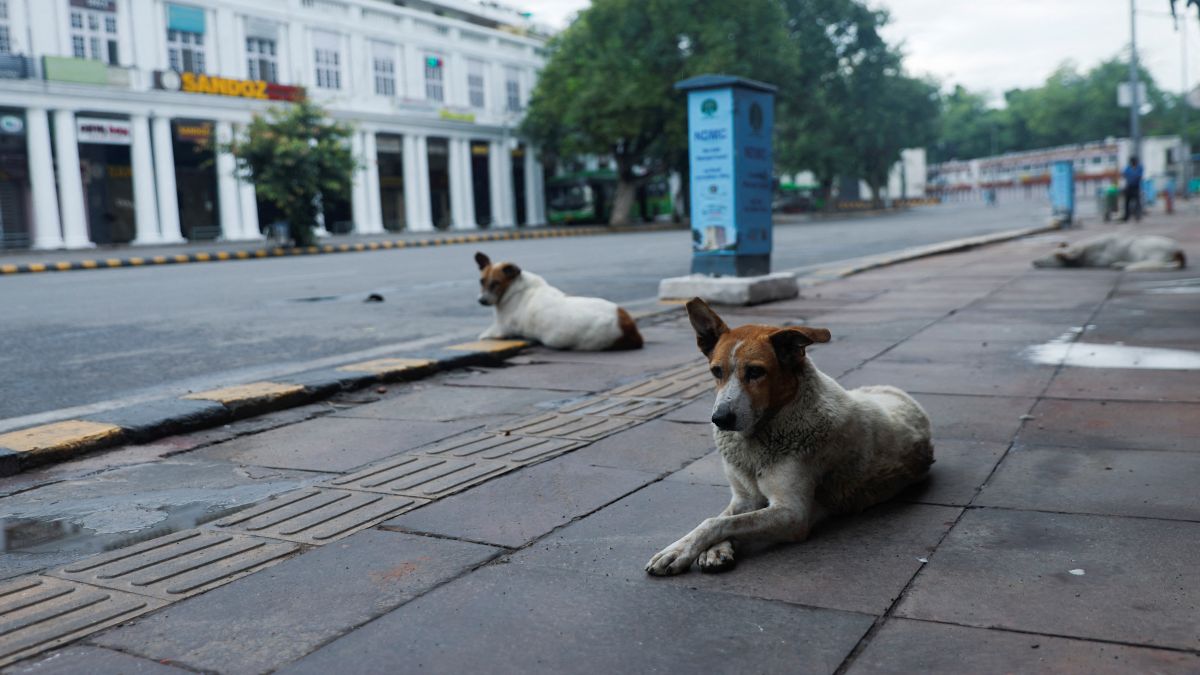
 "‘Fake’ Indian rabies vaccine row: Why have Australia, US, UK raised concerns about the jab?")
The Australian health department’s recent advisory to its citizens has raised eyebrows in India.
Why?
Because last week, the Australian government issued a health advisory warning that counterfeit batches of a rabies vaccine have been circulating in India since November 2023. The Australian authorities noted that that people who have been vaccinated with the Abhayrab vaccine might not be completely protected against rabies — a disease, that the World Health Organisation, notes kills around 18,000 to 20,000 people every year.
Here’s what you need to know about the matter and what is India’s response to it.
What did Australia say about the Abhayrab rabies vaccine?
On December 22, the Australian Technical Advisory Group on Immunisation (ATAGI) issued an alert about counterfeit batches of the vaccine Abhayrab, which is manufactured by the Human Biologicals Institute, a key division of the PSU Indian Immunologicals (IIL).
ATAGI said: “People who received the fake vaccine may not be fully protected against rabies and are advised to get replacement doses to ensure they are adequately protected. While infection with rabies is fatal, it is important to note that rabies disease after a potential exposure remains very rare among travellers.”
The Australian advisory said that while Abhayrab is not available in Australia, people who have received the vaccine while in India may not be fully protected against rabies.
Have other countries raised concerns about Abhayrab?
Notably, Australia isn’t the only country to raise flags about the Abhayrab rabies vaccine. In November, the US Centers for Disease Control and Prevention (CDC) said that a case of the disease had been reported in the country from a traveller who came from India, and cited the circulation of a counterfeit Abhayrab vaccine in India.
In their advisory, the CDC noted, “Travelers potentially exposed to rabies in India should immediately seek medical care. Upon returning home, travellers should follow up with their health care provider as soon as possible.”
The UK health authority had also issued a similar advisory on the vaccine in October. In its alert, it said: “The public health agencies in the four nations of the UK are conducting a look-back exercise to identify any travellers who reported receiving rabies vaccine following an animal bite in India from November 2023 onwards, to determine whether further rabies vaccination may be recommended.”
What has been Abhayrab’s response to the issue?
Responding to the counterfeit claims made by the Australian health authorities, IIL, the makers of the vaccine, said that the advisory was “over-cautionary and misplaced”. It added that the counterfeiting incident involving Abhayrab batch no. KA24014 (manufacturing date: March 2024; expiry date: February 2027) was identified by early January 2025 and that the counterfeit batch was no longer available on the shelves.
“In January 2025, IIL identified a packaging anomaly in one specific batch [Batch # KA 24014]. The company immediately notified Indian regulators and law enforcement agencies, lodged a formal complaint, and worked closely with authorities to ensure swift action,” said IIL, adding that this was an isolated incident, and the counterfeit batch was no longer available on the shelves.
IIL further emphasised that every batch of the vaccine manufactured in India is tested and released by the Central Drugs Laboratory before it is made available for sale or administration.
Sunil Tiwari, the vice-president and head of quality management at IIL also said: “Supplies made through government institutions and authorised distributors remain safe and of standard quality.”
The vaccine maker also wrote to the Australian Technical Advisory Group on Immunisation, asking it to review its advisory. “We humbly request your good office to urgently consider reviewing the advisory notification, in the interest of preventing potential complications in interpretations by healthcare practitioners and mitigating any negative impact on public trust in vaccines, particularly given the general public’s limited awareness of technical details.”
The makers of Abhayrab, which holds nearly 40 per cent of the market share in India, further explained that advisories such as the one Australia has issued could result in vaccine hesitancy within the country. “Imagine if Abhayrab is the only rabies vaccine on the shelf in a village — and someone does not take it because of this news. We want to let people know that the vaccine is safe and effective,” a senior official from the company was quoted as saying by Indian Express.
Moreover, Reeta Mani, professor and head of neurovirology at the National Institute of Mental Health and Neurosciences in Bangalore, was quoted as telling The Telegraph, “Abhayrab is a reliable vaccine, used widely across the country. “It is important to use precise language in public advisories. People should not lose trust in vaccines.”
How deadly is rabies though?
Rabies, according to the WHO, is a viral zoonotic disease that causes progressive and fatal inflammation of the brain and spinal cord. The disease spreads to people through the bites and scratches of an infected animal.
Experts note that Rabies is most likely to be found in wild animals, including bats. In developing countries, most people get rabies from domestic dogs.
Rabies primarily affects the central nervous system, leading to severe brain disease and death if medical care is not received before symptoms start. After a rabies exposure, the rabies virus must travel to the brain before it can cause symptoms. This time between exposure and the appearance of symptoms is the incubation period, which may last for weeks to months.
Rabies is estimated to cause 59,000 human deaths annually in over 150 countries. Of these, around 20,000 deaths occur in India, said a paper published in One Health in December 2024. Rabies is endemic to India, with the main reservoir of the virus being dogs, and the poorest, the majority of the patients, reports The Hindu.
With inputs from agencies


 "From Air India crash to Zohran Mamdani, the A to Z of 2025")
 "Mapping 2025: A timeline of global diplomatic wins and woes — Trump cloud looming large")
 "Bangladesh: Targeted mob sets Hindu family’s home ablaze as minority attacks continue, say reports")
 "'Misconstrued': Ex-IPL boss Lalit Modi apologises to Indian govt over viral video with Vijay Mallya")
 "From Air India crash to Zohran Mamdani, the A to Z of 2025")
 "Mapping 2025: A timeline of global diplomatic wins and woes — Trump cloud looming large")
 "Bangladesh: Targeted mob sets Hindu family’s home ablaze as minority attacks continue, say reports")
 "'Misconstrued': Ex-IPL boss Lalit Modi apologises to Indian govt over viral video with Vijay Mallya")



