

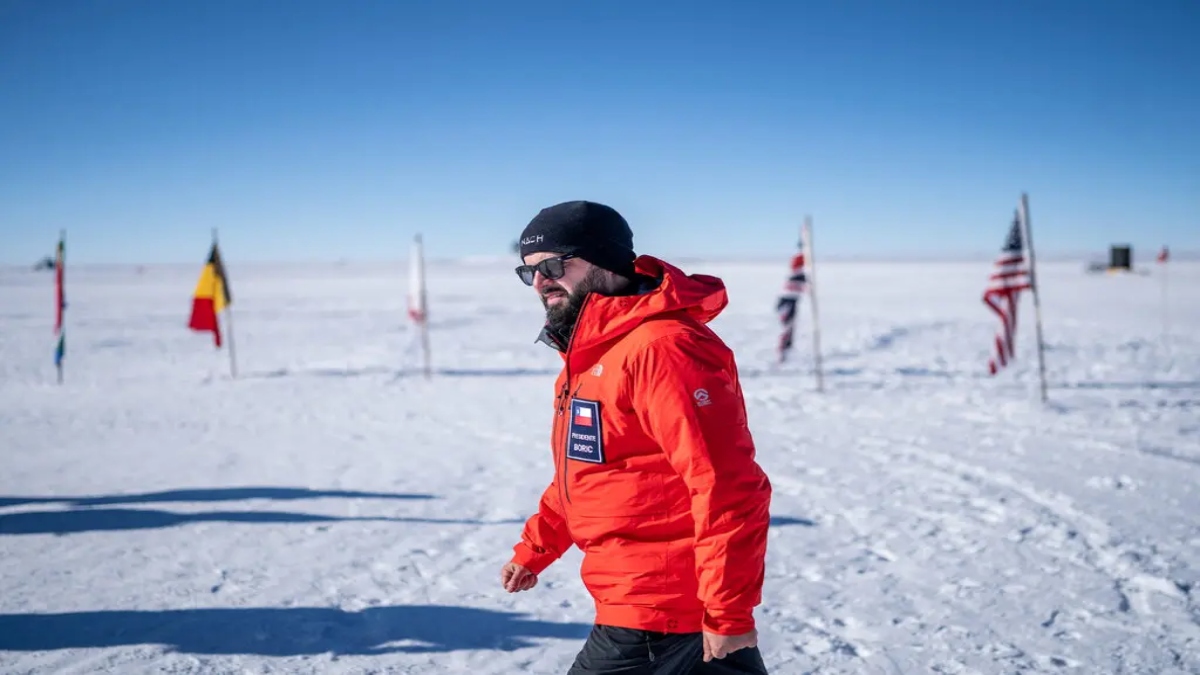
 "Who owns Antarctica? Chile president makes a claim with maiden visit")
Chile’s President Gabriel Boric paid a visit to the South Pole on Friday in a bid to solidify the country’s claims over land that belongs to no one. The ceremonial visit to Antarctica came at a time when the competition among countries to claim the region had reached an all-time high.
Boric and a delegation of officials visited Amundsen-Scott South Pole Station which is a US research base. His office said that this was the first time a president from a Latin American nation had set foot on the continent. Boric declared the trip as “a landmark” and “a confirmation of our claim of sovereignty in this space.”
The visit came at a time, when the Arctic in the North has garnered attention with climate change, ultimately making the region important for global trade. Countries around the world are interested in garnering access to natural resources that are present on both continents.
The no man’s land
In contrast to the Arctic, Antarctica more or less remained under the radar of the hawks around the world. It is pertinent to note that the area is governed by the Antarctic Treaty System, which mandates that “Antarctica shall be used for peaceful purposes only.” The pact was signed during the Cold War era and subsequent agreements have been drawn out to keep the continent a “military-free zone”.
For decades the system has largely succeeded in establishing international consensus over the matter. Over the years, several nations have long-established or new facilities in Antarctica conducting scientific research. Some of this research also deals with the region’s strategic and commercial potential.
However, Antarctica’s harsh environment has prevented the continent from being exploited. But things have changed in recent years. Russia has increased efforts to build monitoring stations for GLONASS, its version of the Global Positioning System, which experts say also has military use. Three stations have been operating in Antarctica since 2015.
Meanwhile, in 2023, China announced plans to build new satellite stations in Antarctica, another project with potential military applications. However, the treaty bans mining in the region, protecting small reserves of iron ore, coal and chromium. Another facet of the treaty that involves environmental protections will be up for review in 2048, The New York Times reported.
Impact Shorts
More ShortsBut, the treaty could be undermined before then. Some signatories of the Antarctic treaty have also staked territorial claims — a number of which overlap — while others do not recognize the territorial claims of other countries.
Chile is one of the few countries claiming territory on the continent and has managed to install a permanent settlement called Villa Las Estrellas. In May 2024, Chile sought to strengthen its territorial claims by holding a meeting with defence officials in the Antarctic. They called the meeting a symbol of sovereignty amid tension over Russia’s reported geological surveys in the Weddell Sea, an Antarctic region off South America’s southernmost tip.
With inputs from agencies.


 "Russian drones over Poland: Trump’s tepid reaction a wake-up call for Nato?")
 "As Russia pushes east, Ukraine faces mounting pressure to defend its heartland")
 "Why Mossad was not on board with Israel’s strike on Hamas in Qatar")
 "Turkey: Erdogan's police arrest opposition mayor Hasan Mutlu, dozens officials in corruption probe")
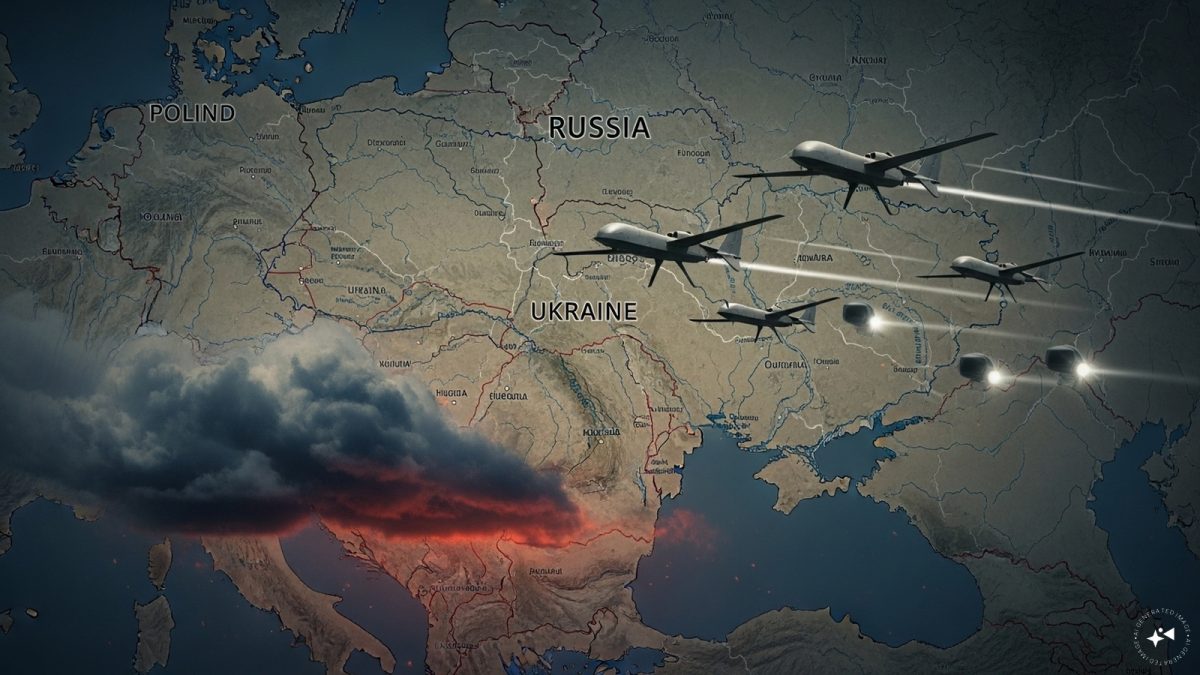 "Russian drones over Poland: Trump’s tepid reaction a wake-up call for Nato?")
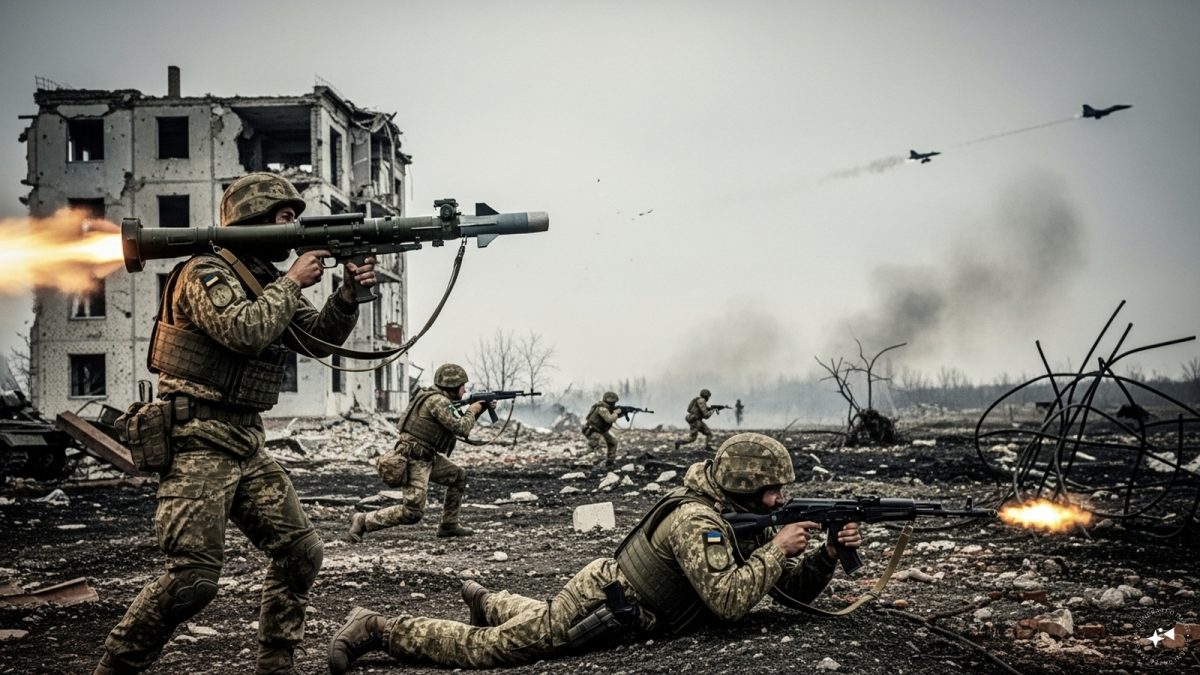 "As Russia pushes east, Ukraine faces mounting pressure to defend its heartland")
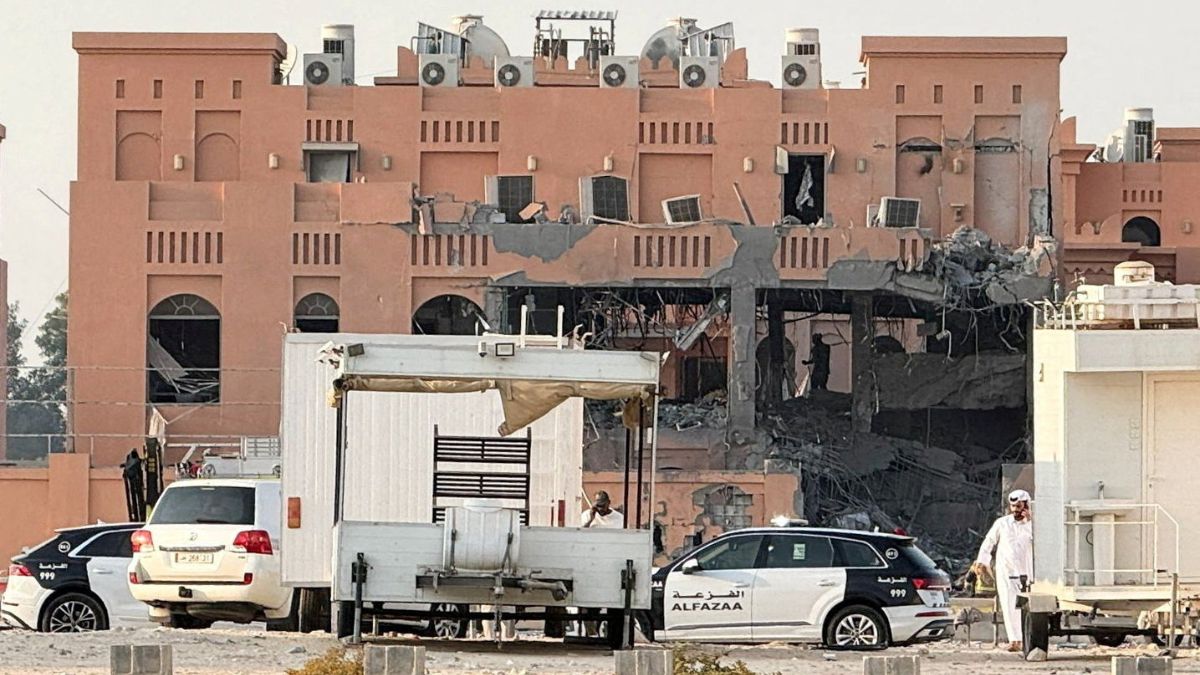 "Why Mossad was not on board with Israel’s strike on Hamas in Qatar")
 "Turkey: Erdogan's police arrest opposition mayor Hasan Mutlu, dozens officials in corruption probe")



