Firstpost
  • Home
  • Video Shows
    Vantage Firstpost America Firstpost Africa First Sports
  • World
    US News
  • Explainers
  • News
    India Opinion Cricket Tech Entertainment Sports Health Photostories
  • Asia Cup 2025
Apple Incorporated Modi ji Justin Trudeau Trending

Sections

  • Home
  • Live TV
  • Videos
  • Shows
  • World
  • India
  • Explainers
  • Opinion
  • Sports
  • Cricket
  • Health
  • Tech/Auto
  • Entertainment
  • Web Stories
  • Business
  • Impact Shorts

Shows

  • Vantage
  • Firstpost America
  • Firstpost Africa
  • First Sports
  • Fast and Factual
  • Between The Lines
  • Flashback
  • Live TV

Events

  • Raisina Dialogue
  • Independence Day
  • Champions Trophy
  • Delhi Elections 2025
  • Budget 2025
  • US Elections 2024
  • Firstpost Defence Summit
Trending:
  • PM Modi in Manipur
  • Charlie Kirk killer
  • Sushila Karki
  • IND vs PAK
  • India-US ties
  • New human organ
  • Downton Abbey: The Grand Finale Movie Review
fp-logo
WHO has a 2030 deadline to eradicate sleeping sickness but is the world actually getting rid of it?
Whatsapp Facebook Twitter
Apple Incorporated Modi ji Justin Trudeau Trending

Sections

  • Home
  • Live TV
  • Videos
  • Shows
  • World
  • India
  • Explainers
  • Opinion
  • Sports
  • Cricket
  • Health
  • Tech/Auto
  • Entertainment
  • Web Stories
  • Business
  • Impact Shorts

Shows

  • Vantage
  • Firstpost America
  • Firstpost Africa
  • First Sports
  • Fast and Factual
  • Between The Lines
  • Flashback
  • Live TV

Events

  • Raisina Dialogue
  • Independence Day
  • Champions Trophy
  • Delhi Elections 2025
  • Budget 2025
  • US Elections 2024
  • Firstpost Defence Summit
  • Home
  • World
  • WHO has a 2030 deadline to eradicate sleeping sickness but is the world actually getting rid of it?

WHO has a 2030 deadline to eradicate sleeping sickness but is the world actually getting rid of it?

FP Staff • February 7, 2025, 18:36:01 IST
Whatsapp Facebook Twitter

Civil unrest in key endemic regions, such as the Central African Republic and southwestern Cameroon, has hindered disease control efforts in the past

Advertisement
Subscribe Join Us
Add as a preferred source on Google
Prefer
Firstpost
On
Google
WHO has a 2030 deadline to eradicate sleeping sickness but is the world actually getting rid of it?
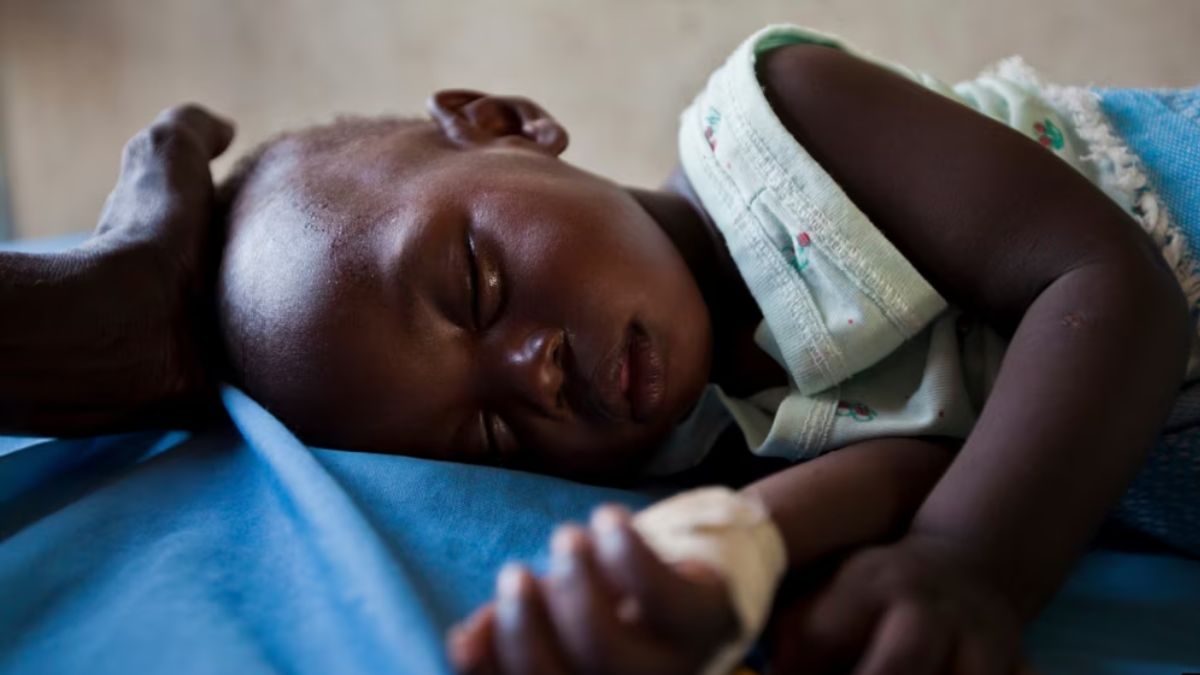
Representative image/Reuters

The human African trypanosomiasis, better known as sleeping sickness, is among the most dangerous illnesses in Africa.

The World Health Organization (WHO) in 2021 set the ambitious goal of eradicating sleeping sickness, which is caused by protozoan parasites, by 2030.

Since then, coordinated efforts spearheaded by WHO and public health authorities across Africa have led to significant progress. Reported cases have declined by 97.5 per cent since 2000, falling from nearly 40,000 cases in 1998 to fewer than 1,000 annually for the past seven years.

STORY CONTINUES BELOW THIS AD

Seven countries have already reduced cases to below one per 10,000 residents, and others are approaching that threshold.

Still, a declaration of victory would be premature. History has shown that diseases once thought to be on the brink of disappearance can resurge when vigilance lapses.

More from World
After Trump and Milei exits, Hungary considers withdrawal from WHO After Trump and Milei exits, Hungary considers withdrawal from WHO New study: Switching salt with alternative can reduce risk of recurring stroke by 14% New study: Switching salt with alternative can reduce risk of recurring stroke by 14%

Can the world get rid of sleeping sickness?

Elimination is not the same as eradication. The trypanosome parasites that cause sleeping sickness have evolved a mechanism to evade immune responses, constantly altering their surface proteins to avoid detection. The tsetse fly, the primary vector, remains widespread in many regions.

“There has been a lot of progress toward elimination, but if we stopped now, sleeping sickness would come back, and it could affect millions of people,” Nature quoted Gerardo Priotto, a medical officer at the WHO, as saying. “The tsetse fly is still there.”

New treatment and persistent obstacles

One of the most significant breakthroughs in the fight against sleeping sickness has been the introduction of fexinidazole, an oral drug that has replaced the arsenic-containing melarsoprol regimen previously used.

The medication, developed with support from pharmaceutical firms Sanofi and Bayer in a charity-based initiative, was initially discovered in the 1970s but shelved due to a lack of commercial interest.

Fexinidazole is a substantial improvement: it can be taken orally and eliminates the need for hospitalisation and painful injections. Since its introduction in 2020, it has accounted for about 70 per cent of sleeping sickness treatments.

Impact Shorts

More Shorts
‘The cries of this widow will echo’: In first public remarks, Erika Kirk warns Charlie’s killers they’ve ‘unleashed a fire’

‘The cries of this widow will echo’: In first public remarks, Erika Kirk warns Charlie’s killers they’ve ‘unleashed a fire’

Trump urges Nato to back sanctions on Russia, calls for 50–100% tariffs on China

Trump urges Nato to back sanctions on Russia, calls for 50–100% tariffs on China

However, it is not a silver bullet. The drug is less effective in advanced stages of the disease. Side effects such as nausea and vomiting also lead some patients to abandon treatment before completion.

People’s ability to go healthcare facilities is also an important factor.

“You can’t obligate someone to go for treatment,” says Jean-Mathieu Bart, an investigator with the French National Research Institute for Sustainable Development. “Sometimes it takes one year before we succeed in convincing the person to go for treatment, and during this year, they can contaminate other people in the village.”

STORY CONTINUES BELOW THIS AD

Final hurdles: War, politics, and donor fatigue

Even as cases dwindle, obstacles remain. Civil unrest in key endemic regions, such as the Central African Republic and southwestern Cameroon, has hindered disease control efforts in the past.

In some areas, medical personnel face threats from rebel factions, making it impossible to conduct active surveillance and treatment campaigns.

Another growing concern is ‘donor fatigue.’

As sleeping sickness cases become rarer, the cost and effort required to detect and treat each case increases.

With limited global funding, convincing stakeholders to continue investing in disease eradication becomes harder. “It’s difficult to convince people that we need as much money to detect one case as we used to need to detect 10–20 cases,” Bart notes.

Challenges endure, but so does WHO

Beyond logistical and financial hurdles, scientific unknowns persist. Researchers still do not know whether the parasite has an undetected animal reservoir, allowing it to persist in nature even if human cases reach zero.

Additionally, some individuals may harbour the parasite and remain infectious without ever developing any symptoms, complicating eradication efforts.

Despite these challenges, WHO remains committed to its goal of eliminating sleeping sickness as a public health problem by 2030.


Tags
Africa World Health Organization (WHO)
End of Article
Latest News
Find us on YouTube
Subscribe
End of Article

Impact Shorts

‘The cries of this widow will echo’: In first public remarks, Erika Kirk warns Charlie’s killers they’ve ‘unleashed a fire’

‘The cries of this widow will echo’: In first public remarks, Erika Kirk warns Charlie’s killers they’ve ‘unleashed a fire’

Erika Kirk delivered an emotional speech from her late husband's studio, addressing President Trump directly. She urged people to join a church and keep Charlie Kirk's mission alive, despite technical interruptions. Erika vowed to continue Charlie's campus tours and podcast, promising his mission will not end.

More Impact Shorts

Top Stories

Russian drones over Poland: Trump’s tepid reaction a wake-up call for Nato?

Russian drones over Poland: Trump’s tepid reaction a wake-up call for Nato?

As Russia pushes east, Ukraine faces mounting pressure to defend its heartland

As Russia pushes east, Ukraine faces mounting pressure to defend its heartland

Why Mossad was not on board with Israel’s strike on Hamas in Qatar

Why Mossad was not on board with Israel’s strike on Hamas in Qatar

Turkey: Erdogan's police arrest opposition mayor Hasan Mutlu, dozens officials in corruption probe

Turkey: Erdogan's police arrest opposition mayor Hasan Mutlu, dozens officials in corruption probe

Russian drones over Poland: Trump’s tepid reaction a wake-up call for Nato?

Russian drones over Poland: Trump’s tepid reaction a wake-up call for Nato?

As Russia pushes east, Ukraine faces mounting pressure to defend its heartland

As Russia pushes east, Ukraine faces mounting pressure to defend its heartland

Why Mossad was not on board with Israel’s strike on Hamas in Qatar

Why Mossad was not on board with Israel’s strike on Hamas in Qatar

Turkey: Erdogan's police arrest opposition mayor Hasan Mutlu, dozens officials in corruption probe

Turkey: Erdogan's police arrest opposition mayor Hasan Mutlu, dozens officials in corruption probe

Top Shows

Vantage Firstpost America Firstpost Africa First Sports

QUICK LINKS

  • Trump-Zelenskyy meeting
Latest News About Firstpost
Most Searched Categories
  • Web Stories
  • World
  • India
  • Explainers
  • Opinion
  • Sports
  • Cricket
  • Tech/Auto
  • Entertainment
  • IPL 2025
NETWORK18 SITES
  • News18
  • Money Control
  • CNBC TV18
  • Forbes India
  • Advertise with us
  • Sitemap
Firstpost Logo

is on YouTube

Subscribe Now

Copyright @ 2024. Firstpost - All Rights Reserved

About Us Contact Us Privacy Policy Cookie Policy Terms Of Use
Home Video Shorts Live TV