 "Representational Image - AP")
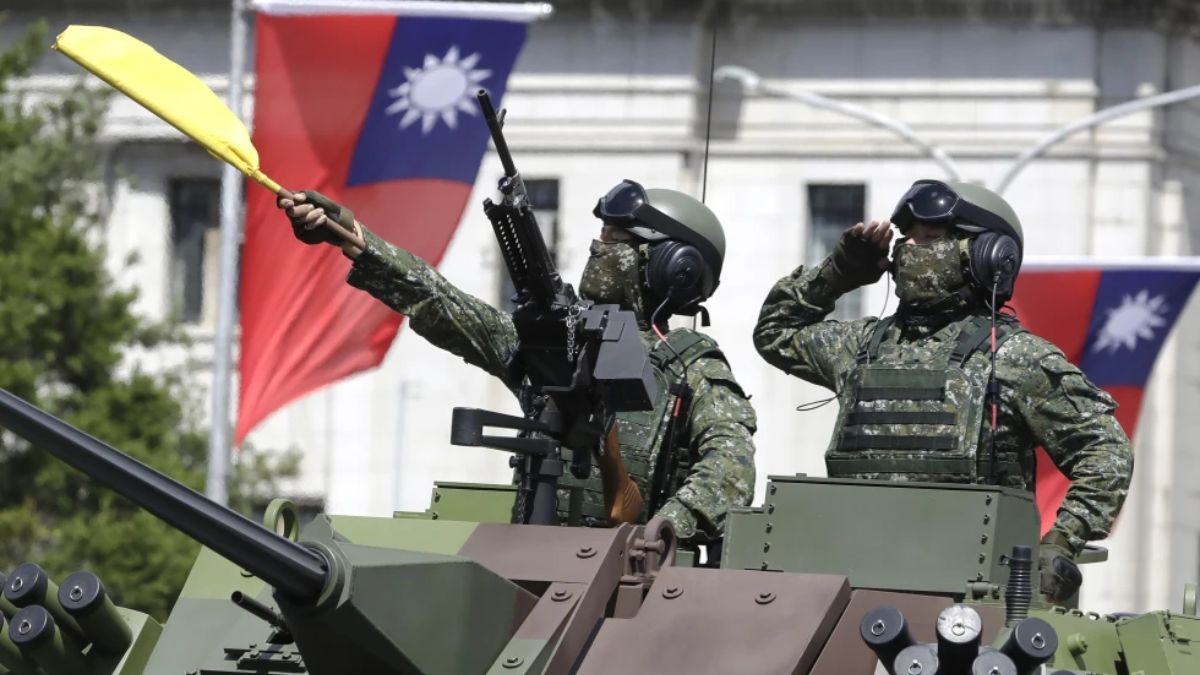
Taiwan is seeking closer security ties with the United States and plans to purchase more American weapons, as the island ramps up defence spending amid growing tensions with China.
“I believe there is a way to have a closer security relation, unofficially, with the US,” Bloomberg cited François Chihchung Wu, Taiwan’s deputy foreign minister, as saying in an interview. “We are praying to do that, and it will also be sending a message to China not to touch Taiwan so easily.”
Taiwanese President Lai Ching-te announced in February that the island would increase its defence spending to 3 per cent of gross domestic product, following US President Donald Trump’s campaign remarks last year that Taiwan should cover more of its own defence costs, suggesting it spend 10 per cent of its Gross Domestic Product on its military.
“In increasing our defence budget, certainly the consequence is to buy more American weapons because Europeans don’t want to sell us weapons,” Wu said from his office in Taipei. “Even Japan is very careful about this.”
Taiwan-US relations
Wu dismissed concerns that relations between Taiwan and the US could sour, pointing to last week’s contentious White House meeting between Trump and Ukrainian President Volodymyr Zelenskyy.
“If it is possible that our president meets the president of the US, it will be considered a very positive and diplomatic” event, he said.
Since Washington shifted diplomatic recognition from Taipei to Beijing in 1979, it has maintained only unofficial relations with Taiwan, despite being the island’s most significant political and economic partner. Taiwanese presidents typically visit the US under the guise of “transit” stops, making direct engagement with US leaders rare.
Impact Shorts
More ShortsChip export controls
Wu also addressed US efforts to tighten semiconductor export controls on China, a policy that has significant implications for Taiwan Semiconductor Manufacturing Co. (TSMC), the world’s largest contract chipmaker.
“We just need to adapt to it,” Wu said, acknowledging that Taiwan lacks the ability to challenge US decisions on semiconductor restrictions.
Earlier this year, the US introduced new regulations aimed at preventing advanced chips from TSMC and other firms from reaching China. The measures require companies to enhance scrutiny of their customers, particularly Chinese entities, after reports that TSMC-made chips were secretly diverted to Huawei Technologies, a firm blacklisted by the US.