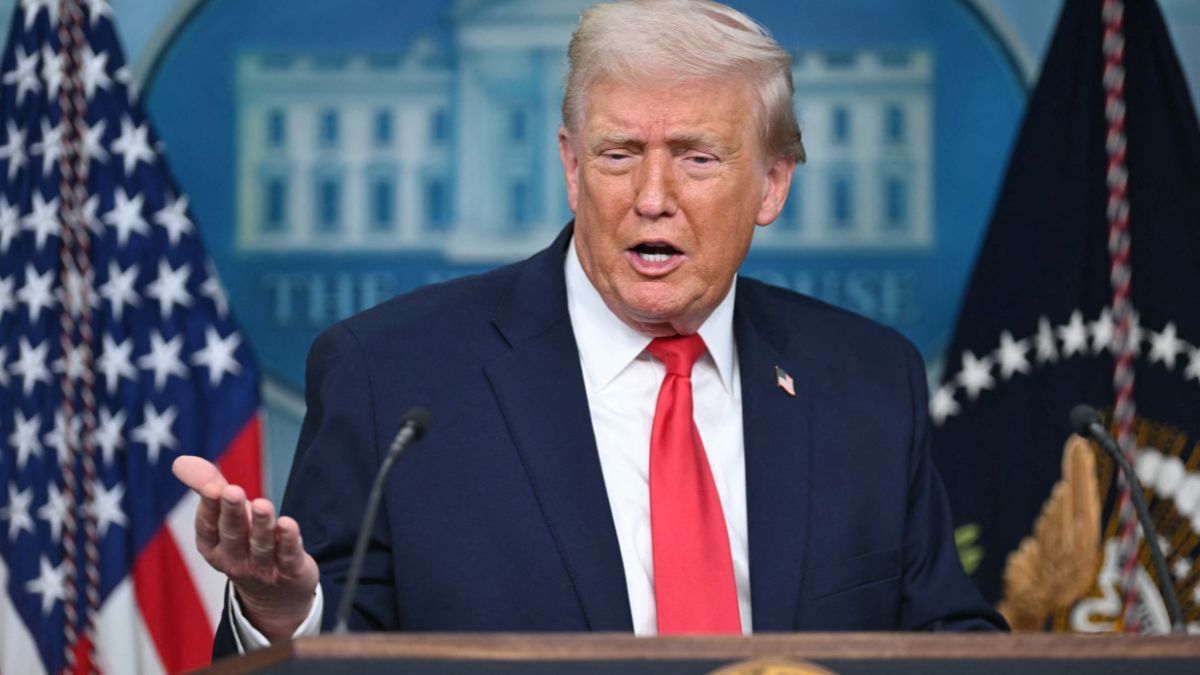
 "US President Donald Trump speaks during a briefing in the Brady Briefing Room of the White House in Washington, DC, on January 20, 2026. AFP File")
The United States on Thursday formally completed its withdrawal from the World Health Organization (WHO), a year after President Donald Trump ordered the move on his first day back in office.
US exits WHO, leaves unpaid dues
The withdrawal ends all US participation in the UN health agency but leaves behind unpaid dues estimated at about $260 million, according to Bloomberg and Reuters. The Associated Press, citing a WHO official, put the outstanding amount at more than $130 million.
The US Department of Health and Human Services (HHS) said all funding to the WHO has been terminated and American personnel have been recalled from the agency’s headquarters and offices worldwide. Washington has also ended its participation in WHO leadership bodies, technical committees and working groups, Bloomberg reported.
Trump cites Covid response and lack of reform
Trump ordered the withdrawal through an executive order, citing the WHO’s “mishandling of the Covid pandemic, failure to adopt reforms and a lack of independence from inappropriate political influence.”
Administration rejects obligation to clear dues
Senior administration officials said there was no obligation to settle outstanding dues before the withdrawal. An HHS official told reporters there is no statutory requirement to pay pending contributions, despite a 1948 Congressional resolution that mandates one year’s notice and settlement of dues.
The US has not paid its WHO contributions for 2024 and 2025.
WHO loses its largest contributor
The US exit deprives the WHO of its biggest donor. According to Bloomberg, Washington contributed nearly $1.3 billion to the organisation between 2022 and 2023.
“It’s a very messy divorce,” said Lawrence Gostin, director of the WHO Collaborating Center on National and Global Health Law at Georgetown University.
Gostin warned the decision would weaken the global response to future outbreaks and hinder the ability of US scientists and pharmaceutical companies to develop vaccines and treatments. “In my opinion, it’s the most ruinous presidential decision in my lifetime,” he said.
Global health implications
The WHO coordinates responses to global health emergencies, provides technical support to poorer countries, distributes vaccines and treatments, and sets international health guidelines. Nearly every country in the world is a member.
Health experts have warned that the US withdrawal could undermine initiatives ranging from polio eradication to maternal and child health programmes, as well as research on emerging viruses.
Dr Ronald Nahass, president of the Infectious Diseases Society of America, described the move as “shortsighted and misguided” and “scientifically reckless.”
By ending participation in WHO technical and advisory bodies, the US has also lost access to global influenza surveillance data, which informs vaccine development and enables rapid responses to outbreaks.