Firstpost
  • Video Shows
    Vantage Firstpost America Firstpost Africa First Sports
  • World
    US News
  • Explainers
  • News
    India Opinion Cricket Tech Entertainment Sports Health Photostories
  • Lifestyle
  • India-EU Summit
Trending Donald Trump Narendra Modi Elon Musk United States Joe Biden

Sections

  • Home
  • Live TV
  • Videos
  • Shows
  • World
  • Entertainment
  • India
  • Explainers
  • Opinion
  • Sports
  • Cricket
  • Lifestyle
  • Health
  • Tech/Auto
  • Web Stories
  • Business
  • Impact Shorts

Shows

  • Vantage
  • Firstpost America
  • Firstpost Africa
  • First Sports
  • Fast and Factual
  • Between The Lines
  • Flashback
  • Live TV

Events

  • Putin in India
  • Bihar Election
  • Raisina Dialogue
  • Independence Day
  • Champions Trophy
  • Delhi Elections 2025
  • Budget 2025
  • Firstpost Defence Summit
Trending:
  • Minneapolis Shooting
  • Republic Day 2026
  • Carney-Macron-Davos
  • Operation Sindoor
  • Scotland accepts ICC invite
  • Border 2 review
fp-logo
Tsunami hits Russia, Japan: Why these waves are they so destructive? Key questions answered
Whatsapp Facebook Twitter
Trending

Sections

  • Home
  • Live TV
  • Videos
  • Shows
  • World
  • Entertainment
  • India
  • Explainers
  • Opinion
  • Sports
  • Cricket
  • Lifestyle
  • Health
  • Tech/Auto
  • Web Stories
  • Business
  • Impact Shorts

Shows

  • Vantage
  • Firstpost America
  • Firstpost Africa
  • First Sports
  • Fast and Factual
  • Between The Lines
  • Flashback
  • Live TV

Events

  • Putin in India
  • Bihar Election
  • Raisina Dialogue
  • Independence Day
  • Champions Trophy
  • Delhi Elections 2025
  • Budget 2025
  • Firstpost Defence Summit

Tsunami hits Russia, Japan: Why these waves are they so destructive? Key questions answered

agence france-presse • July 30, 2025, 09:55:12 IST
Whatsapp Facebook Twitter

Tsunami waves have struck Russian and Japanese coasts after an 8.7-magnitude earthquake struck off the coast of Russia’s sparsely-populated far-east region. The Western coast of the United States is also on alert. Here we explain why tsunamis are so destructive.

Advertisement
Subscribe Join Us
+ Follow us On Google
Choose
Firstpost on Google
Tsunami hits Russia, Japan: Why these waves are they so destructive? Key questions answered
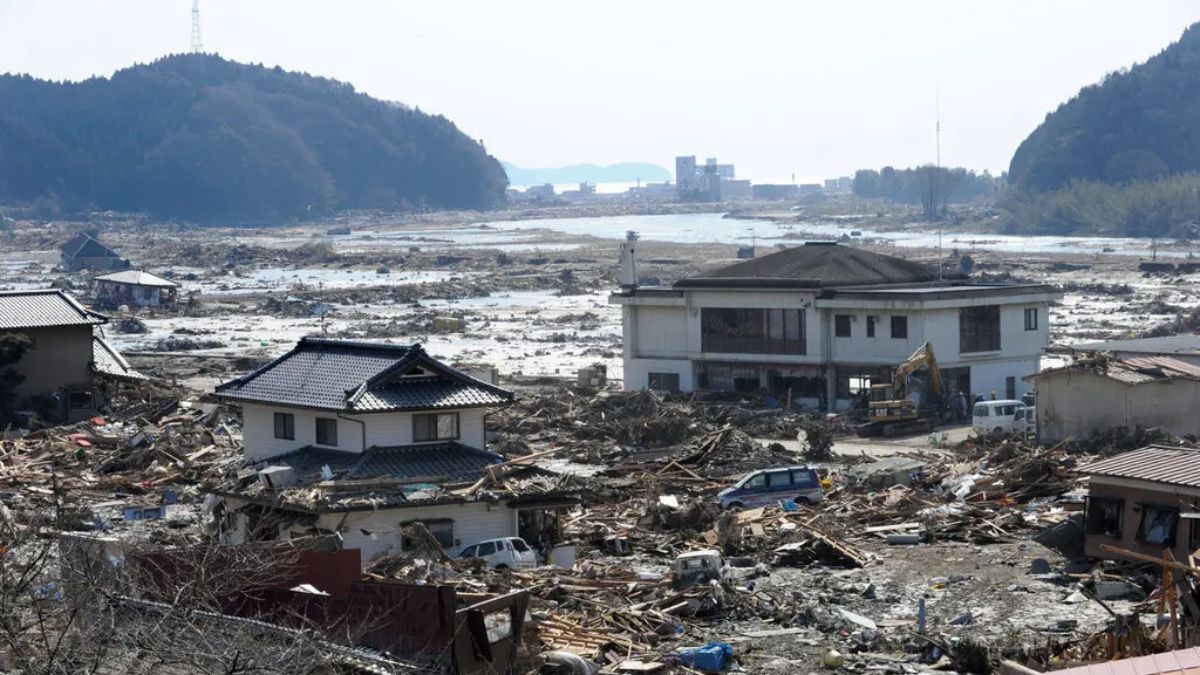
The devastated Takekoma area in Iwate Prefecture, Japan, in 2011, three days after an earthquake and resulting tsunami hit the region. (Photo: Toshifumi Kitamura/AFP)

Tsunami alerts were issued across much of the Pacific on Wednesday after an 8.8 magnitude earthquake off Russia’s far east.

Here are key facts about tsunamis and the damage they can cause:

Shock of water

A tsunami is a shock of water that spreads through the sea, usually triggered by a strong earthquake beneath the ocean floor.

The sudden, violent movement of the Earth’s crust can thrust up or drive down a section of the seabed — with the rift displacing vast quantities of water that move as waves.

STORY CONTINUES BELOW THIS AD

ALSO READ — 8.8 magnitude quake: Tsunami waves hit Russia coast and Japan’s Hokkaido; alerts in place for Alaska, Hawaii

Tsunamis radiate in all directions from their source and can cover enormous distances, sometimes at the speed of a jet plane.

More from World
Did Russia’s Kamchatka earthquake cause damage to nuclear submarine base? Did Russia’s Kamchatka earthquake cause damage to nuclear submarine base? Russia earthquake aftermath: Which countries have been hit by tsunami? How much damage has it caused? Russia earthquake aftermath: Which countries have been hit by tsunami? How much damage has it caused?

They are a rare phenomenon but can create dangerously powerful currents and cause deadly flooding in coastal areas.

Other causes

Large quakes are the main driver of tsunamis, but the phenomenon can also be sparked by other cataclysmic geographic events, such as volcanic eruptions and landslides.

In 1883, a volcano shattered the Pacific island of Krakatoa, causing a blast that could be heard 4,500 kilometres (2,800 miles) away, followed by a tsunami that killed around 30,000 people.

Large storms or a meteorite falling into the ocean can also be powerful enough to cause a tsunami, according to the US National Oceanic and Atmospheric Administration.

Quick Reads

View All
'Indian food, our pride': $200k settlement in Palak Paneer case a moral victory against racism in the west

'Indian food, our pride': $200k settlement in Palak Paneer case a moral victory against racism in the west

Mark Tully, BBC’s longtime India voice and chronicler of the country, dies at 90

Mark Tully, BBC’s longtime India voice and chronicler of the country, dies at 90

‘Harbour wave’

The word “tsunami” comes from the Japanese words for “harbour” and “wave”.

Tsunamis are sometimes referred to as “tidal waves” but experts say this is inaccurate because they are not related to tides.

At their point of generation, tsunamis have a relatively small wave height, with peaks far apart.

As the waves approach the shore they are compressed by the shelving of the sea floor, reducing the distance between the peaks and vastly increasing the height.

STORY CONTINUES BELOW THIS AD

When they hit the coast, tsunami waves can strike repeatedly over several hours, or even days.

Roman historian

To those on the shore, the first sign of something amiss can be the retreat of the sea, which is followed by the arrival of large waves.

“The sea was driven back, and its waters flowed away to such an extent that the deep seabed was laid bare and many kinds of sea creatures could be seen,” wrote Roman author Ammianus Marcellinus of a tsunami that struck Alexandria in 365 AD.

“Huge masses of water flowed back when least expected, and now overwhelmed and killed many thousands of people… some great ships were hurled by the fury of the waves onto the rooftops.”

How much damage?

Several factors determine the height and destructiveness of a tsunami.

They include the size of the quake, the volume of displaced water, the topography of the sea floor and whether there are natural obstacles that dampen the shock.

STORY CONTINUES BELOW THIS AD

The Pacific Ocean is particularly prone to earthquakes and therefore to tsunamis, but over the millennia tsunamis have occurred in many parts of the world.

The tsunami of December 2004 in the Indian Ocean was caused by a 9.1 magnitude earthquake off the Indonesian island of Sumatra.

It released energy equivalent to 23,000 of the atomic bombs dropped on Hiroshima, according to the US Geological Survey (USGS). Around 220,000 people in 11 nations were killed, many of them thousands of kilometres from the epicentre.

(This is an agency copy. Except for the headline, the copy has not been updated.)

Follow Firstpost on Google. Get insightful explainers, sharp opinions, and in-depth latest news on everything from geopolitics and diplomacy to World News. Stay informed with the latest perspectives only on Firstpost.
Tags
Japan Russia United States of America
  • Home
  • World
  • Tsunami hits Russia, Japan: Why these waves are they so destructive? Key questions answered
End of Article
Latest News
Find us on YouTube
Subscribe
  • Home
  • World
  • Tsunami hits Russia, Japan: Why these waves are they so destructive? Key questions answered
End of Article

Quick Reads

'Indian food, our pride': $200k settlement in Palak Paneer case a moral victory against racism in the west

'Indian food, our pride': $200k settlement in Palak Paneer case a moral victory against racism in the west

Two Indian scholars won a $200,000 settlement in the US after facing racial discrimination over the smell of palak paneer in a university microwave. The case highlighted "olfactory racism" and institutional bias, with both scholars leaving their PhD program due to retaliation and loss of academic support. The university settled without admitting liability, granting degrees but barring the scholars from future association with the institution.

More Quick Reads

Top Stories

'Indian food, our pride': $200k settlement in Palak Paneer case a moral victory against racism in the west

'Indian food, our pride': $200k settlement in Palak Paneer case a moral victory against racism in the west

India’s air dominance in Operation Sindoor forced Pakistan to seek ceasefire, European report says

India’s air dominance in Operation Sindoor forced Pakistan to seek ceasefire, European report says

How Pakistan’s support may have led Bangladesh towards a very costly mistake

How Pakistan’s support may have led Bangladesh towards a very costly mistake

India vs New Zealand Live Score 3rd T20: Kishan gone after IND cross 50 in just 3.1 overs

India vs New Zealand Live Score 3rd T20: Kishan gone after IND cross 50 in just 3.1 overs

'Indian food, our pride': $200k settlement in Palak Paneer case a moral victory against racism in the west

'Indian food, our pride': $200k settlement in Palak Paneer case a moral victory against racism in the west

India’s air dominance in Operation Sindoor forced Pakistan to seek ceasefire, European report says

India’s air dominance in Operation Sindoor forced Pakistan to seek ceasefire, European report says

How Pakistan’s support may have led Bangladesh towards a very costly mistake

How Pakistan’s support may have led Bangladesh towards a very costly mistake

India vs New Zealand Live Score 3rd T20: Kishan gone after IND cross 50 in just 3.1 overs

India vs New Zealand Live Score 3rd T20: Kishan gone after IND cross 50 in just 3.1 overs

Top Shows

Vantage Firstpost America Firstpost Africa First Sports
Enjoying the news?

Get the latest stories delivered straight to your inbox.

Subscribe

QUICK LINKS

  • US Govt Shutdown
Latest News About Firstpost
Most Searched Categories
  • Web Stories
  • World
  • India
  • Explainers
  • Opinion
  • Sports
  • Cricket
  • Tech/Auto
  • Entertainment
  • Photostories
  • Lifestyle
NETWORK18 SITES
  • News18
  • Money Control
  • CNBC TV18
  • Forbes India
  • Advertise with us
  • Sitemap
Firstpost Logo

is on YouTube

Subscribe Now

Copyright @ 2024. Firstpost - All Rights Reserved

About Us Contact Us Privacy Policy Cookie Policy Terms Of Use
Home Video Quick Reads Shorts Live TV