

 "'They're not actually in effect': US responds to Pak journalist's query on Kanwar Yatra nameplate row")
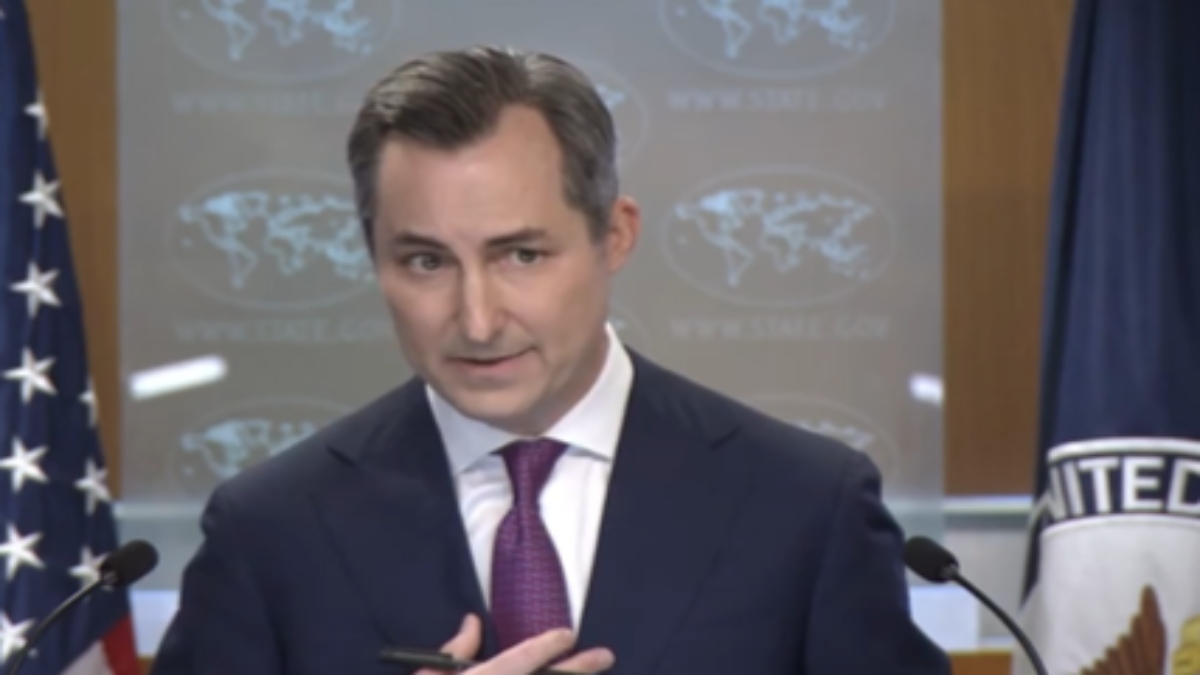
Days after the Supreme Court stayed the order passed by Uttar Pradesh and Uttarakhand police asking eatery owners along the Kanwar Yatra route to display names of owners and the staff employed by them, the US on Wednesday said they are aware of those reports and emphasised that the Indian top court has issued an interim stay on implementation of the order and is not actually in effect.
Responding to a Pakistani journalist’s question on the issue, US State Department Spokesperson Matthew Miller said, “We have seen those reports. We have also seen the reports that the Indian Supreme Court on July 22 issued an interim stay on the implementation of those rules. So they’re not actually in effect.”
#WATCH | On the 'nameplates in Kanwar Yatra' issue, US State Department Spokesperson, Matthew Miller responds to a Pakistani journalist’s question, "We have seen those reports. We have also seen the reports that the Indian Supreme Court on July 22 issued an interim stay on the… pic.twitter.com/9XcX4NliIa
— ANI (@ANI) July 24, 2024
Speaking generally, Miller said the US is always committed to promoting and protecting universal respect for the right of freedom of religion and belief for all anywhere in the world.
“And we have engaged with our Indian counterparts on the importance of equal treatment for members of all religions…,” he added.
The Supreme Court on Monday issued a stay on the orders issued by the Uttar Pradesh and Uttarakhand police that required eatery owners along the Kanwar Yatra route to publicly display the names of their owners and staff, terming the directives discriminatory.
Impact Shorts
More ShortsThe decision came during the hearing of a plea filed by an NGO, the Association of Protection of Civil Rights, challenging the orders of the Uttar Pradesh and Uttarakhand governments.
Trinamool Congress Member of Parliament Mahua Moitra had also approached the Supreme Court regarding this controversial issue. The petition sought a stay on the orders, arguing that they could escalate communal tensions and were intended to impose a socially enforced economic boycott on Muslim-owned shops.
With inputs from agencies


 "Russian drones over Poland: Trump’s tepid reaction a wake-up call for Nato?")
 "As Russia pushes east, Ukraine faces mounting pressure to defend its heartland")
 "Why Mossad was not on board with Israel’s strike on Hamas in Qatar")
 "Turkey: Erdogan's police arrest opposition mayor Hasan Mutlu, dozens officials in corruption probe")
 "Russian drones over Poland: Trump’s tepid reaction a wake-up call for Nato?")
 "As Russia pushes east, Ukraine faces mounting pressure to defend its heartland")
 "Why Mossad was not on board with Israel’s strike on Hamas in Qatar")
 "Turkey: Erdogan's police arrest opposition mayor Hasan Mutlu, dozens officials in corruption probe")



