

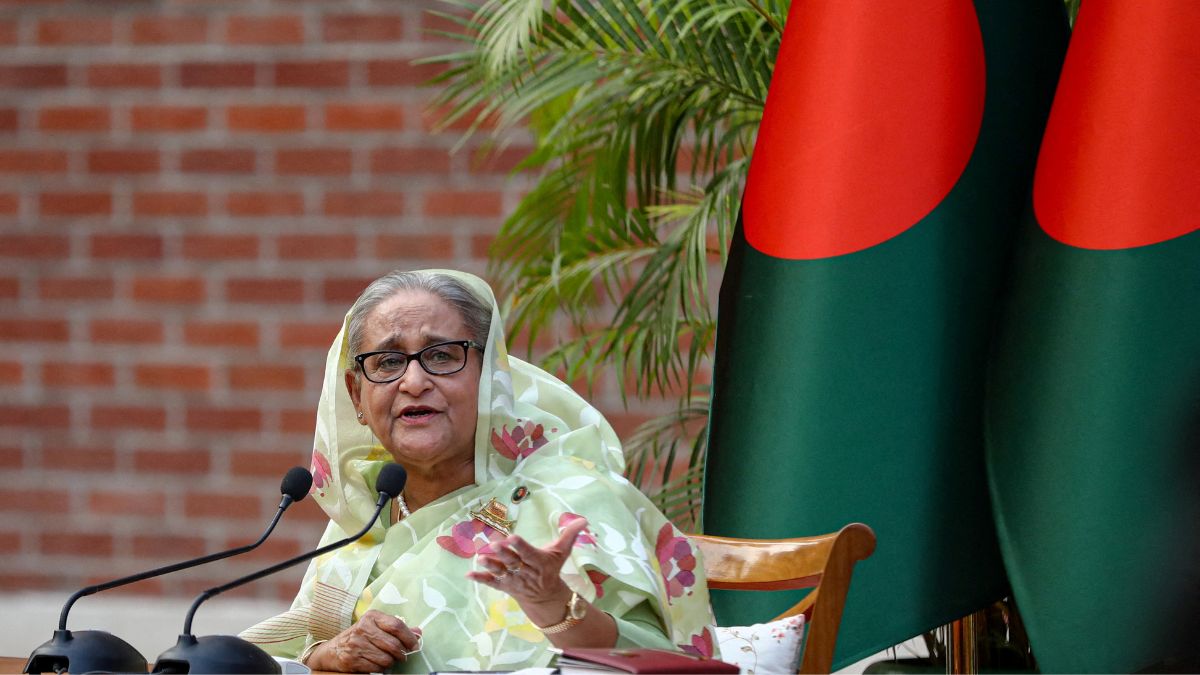
 "Sheikh Hasina gone, who can be Bangladesh’s next leader?")
The political landscape of Bangladesh has dramatically changed thanks to the youth agitation that toppled the long-standing government of Sheikh Hasina. The protests were driven by widespread discontent triggered by a quota regime that called for reserving 56 per cent of government jobs for stipulated sections of the population.
But there was a deeper link to economic issues of stagnating income, growing unemployment, and allegations of corruption that became existential threats to Hasina. She ultimately fled the country barely seven months after recording fifth national election victory in 28 years.
The turmoil has resulted in over 300 deaths, including protesters and police personnel, highlighting the urgent need for stable leadership. The country is in the process to form an interim government that will function under the guidance of Nobel Peace Prize winner Muhammad Yunus, who has been categorical in emphasising the need for a fresh national election.
“Without an election, there will be no change”, he said. This is a clear hint that his government will be a caretaker one to bring immediate order to an agitated Bangladesh society and to ensure that a parliamentary election is held in a free and fair manner.
Incidentally, Bangladesh had a legal provision saying that parliamentary elections would be conducted by a caretaker government until the Sheikh Hasina government scrapped it in 2011.
Now, as the interim government prepares to supervise the national election, the question on everyone’s mind is: Who can be Bangladesh’s next leader? Here’s a closer look at seven prominent figures who could potentially steer the nation forward.
Impact Shorts
More ShortsMuhammad Yunus: The Nobel laureate
The protest leaders of the Students Against Discrimination — the group that led the anti-quota protests and upped their ante to topple the Sheikh Hasina government — didn’t name Muhammad Yunus for nothing. He has had political ambition much before the Nobel committee chose him for the Peace Prize for his small loan work in rural Bangladesh for about three decades.
Yunus, the founder of Grameen Bank and a Nobel Peace Prize laureate, is globally respected for his work in microfinance and poverty alleviation. Yunus’s contributions have empowered millions of poor and marginalised individuals, particularly women, through small loans and entrepreneurship opportunities.
In the 2000s, Yunus debuted Bangladesh politics with the aim to bring political reform and began to consider a more active role in politics, toying with the idea of forming a pan-Bangladesh party.
He publicly discussed the possibility of forming a new political party that would focus on issues like poverty alleviation, governance reform, and anti-corruption. His intention was to bring his expertise in social entrepreneurship and microfinance into the political sphere to address systemic issues in Bangladesh.
His most active political years were 2006-08, particularly when the Army took over a caretaker government installed to oversee elections and address corruption. But this also set the grounds for political hostility between Yunus and Sheikh Hasina, who won the next national election.
Yunus’s support to the military-backed government was largely seen as controversial. Many believe this adversarial equation led to his ouster from the Grameen Bank in 2011 five years after he was awarded the Nobel Prize. The Bangladesh central bank accused him of financial irregularities.
The microfinance pioneer has been one of the vocal and most renowned global critics of Hasina, who has just been toppled by the angry masses of Bangladesh.
Yunus has consistently advocated for economic justice, transparency, and social equity. He has a clean image and is seen as a reformist who can address the systemic economic issues plaguing Bangladesh. Given his international acclaim and grassroots support, Yunus is a strong contender to lead the country towards economic stability and social justice. But before he is chosen through an electoral process to lead the country, his main challenge would be navigating the political landscape and building alliances with key political factions.
Khaleda Zia: The former prime minister
The Begum of Bangladesh was set free soon after Hasina was forced out of power and the country. Khaleda Zia is a two-time prime minister and the leader of the Bangladesh Nationalist Party (BNP). Despite facing numerous legal battles and periods of political exile, she remains a significant figure in Bangladesh politics.
The wife of a former military ruler who effected one of the coups in Bangladesh and founded the BNP, Zia’s outfit has often talked about restoring democratic norms, economic revitalisation, and addressing corruption. Her experience and established political base could appeal to those seeking stability and a return to familiar governance.
However, her contentious political stint and past controversies including a corruption conviction, leading to an ongoing 17-year jail term, may hinder her ability to unify the country. If she can leverage her experience and address past grievances, Zia could play a pivotal role in the nation’s recovery.
The fact that she was set free by President Mohammed Shahabuddin and that she has a strong ally in Jamaat-e-Islami, one of the parties that gave support to the youth agitation and sent its cadre to month-long protests, make her a strong contender to fill the leadership vacuum that Bangladesh faces today.
Nahid Islam: The rising star
If the youth agitation throws up a leader of its own to decide Bangladesh’s future, Nahid Islam seems to be that figure from the crowds of the thousands who unseated the country’s so-called Iron Lady Hasina. A relatively new face in Bangladeshi politics, if at all, Islam is known for his activism and human rights advocacy. He has gained popularity among the youth and progressive circles for his fresh perspective and reformist agenda.
Currently a student in the Sociology Department at Dhaka University, Islam is one of the national coordinators for the Students Against Discrimination Movement. He rose through the ranks during the agitation that began after a Bangladesh high court reinstated a 30 per cent quota for descendants of war veterans and freedom fighters in June 2024.
The agitation leaders argued the quota was a discriminatory and politically manipulated system to access government jobs. Islam became its voice. Having survived two abductions, allegedly at the behest of Hasina, during the agitation, Islam challenged the Awami League government on every front and refused to call off the campaign against Hasina despite the judicial stamp on the withdrawal of the existing quota system.
On July 19, some 25 men in plain clothes abducted Islam from a house in Dhaka. He was reportedly blindfolded, handcuffed and tortured. He was found unconscious and battered under a bridge two days later. Again on July 26, he was abducted from a hospital allegedly by intelligence and police personnel but was released soon.
In days leading up to the exit of Hasina from Bangladesh’s political scene, in one of his addresses to protesters at Dhaka’s Shahbagh, Islam declared that students had “picked up sticks today” and were ready to “take up arms” if sticks didn’t work.
The challenge for Islam is that he does not have the organisational support that is required to win a national election in one of the most populous countries in the world — with a population of over 170 million.
Islam’s platform emphasises transparency, social justice, and digital innovation. His appeal to younger voters and progressive elements may position him as a transformative leader who can bring new ideas and reforms to the political arena. However, his lack of political experience and the challenge of building a broad coalition may pose obstacles. If he can mobilise the youth and effectively communicate his vision, supposing he has one, Islam could be a catalyst for significant change in Bangladesh.
General Waker-uz-Zaman: The catalyst
“We will form an interim government,” announced General Waker-Uz-Zaman, donning his military fatigues and cap, as he informed the nation that Hasina had resigned on Monday.
Later, reports emerged that it was the general, who tipped the balance against Hasina, who in an online meeting with the Bangladesh Army chief sought his help to quell the protests. Waker refused to comply with the orders of the civilian boss. He sided with the protesters.
And the Army chief reportedly gave Hasina a 45-minute-ultimatum to resign beyond which there was no guarantee of her personal safety. In a hurried call with the family, Hasina was pressured to quit, not only the government but also the country.
Bangladesh is not unknown to military governance. One of the two main political parties of Bangladesh was founded by a military ruler, following a coup. There is no clear indication from Waker but the exit of Hasina has seen him make a flurry of changes in the military leadership structure, removing some top commanders to install ones he has greater confidence in.
In his national address, the Army chief also spoke like a politician who senses a turn in the tide. He said, “The country has suffered a lot, the economy has been hit, many people have been killed — it is time to stop the violence. I hope after my speech, the situation will improve.”
Shafiqur Rahman: The Islamist leader
Shafiqur Rahman is the leader of Jamaat-e-Islami, an Islamist political party in Bangladesh. He has been vocal about implementing Islamic principles in governance and promoting social justice.
Banned and shunted out from politics by the Hasina government, the Jamaat has made a comeback during the youth agitation. In fact, the Bangladesh Jamaat-e-Islami party opened its party office in Dhaka on Tuesday after more than a decade. It was shut down in 2011.
Jamaat-e-Islami chief Shafiqur Rahman entered the party’s head office in Dhaka late Monday after Haina fled the country. The head office of the Jamaat’s student wing, Bangladesh Islami Chhatra Shibir, was also reopened.
Jamaat leaders were among those Bangladesh President Mohammed Shahabuddin called for discussions at the all-party meet that excluded the Awami League. Shahabuddin also announced that political workers, leaders and activists arrested since July would be freed. Hundreds of them were granted bail on Tuesday.
However, Rahman’s potential candidacy may polarise voters, given Jamaat-e-Islami’s controversial past. But the Jamaat is known to have the ability to mobilise its cadres and work in coordination with its Pakistani counterpart in presenting a common idea of an Islamic rule in Bangladesh. If he can effectively communicate his agenda and build bridges with other political groups, Rahman could become a significant player in the election — as kingmaker if not the king.
Who else?
Jatiya Party leader Anisul Islam Mahmud, 76, is an experienced politician in Bangladesh and may have an outside chance to emerge as a front-row leader in the country. Mahmud has some experience in governance. He has served in various governmental roles and is known for his pragmatic approach to politics.
Mahmud’s focus on economic development, infrastructure, and education aligns with the immediate needs of the country. His ability to work across party lines and his experience in governance make him a unifying figure in Bangladesh’s fragmented political landscape.
His party had 13 members in the dissolved Parliament. Mahmud’s prospects depend on his ability to leverage his experience and build a broad coalition. If he can effectively address economic issues and promote inclusive growth, Mahmud could be a stabilising force in the country’s political transition. Given advanced age is not a problem in the subcontinental politics, less so in Bangladesh, Mahmud can at best be a compromise candidate as his party lacks organisational strength to win a national election in Bangladesh.
The other possible candidate could be Obaidul Quader, the second-in-command in Hasina’s Awami League. If Bangladesh goes for a free and fair election, the Awami League may look at using its organisational strength to its advantage in the national election that may take a few months to happen. By then the anger against Hasina may have died down a bit.
The statements by Hasina’s son Sajeeb Wajed Joy, if an indication, have put a full stop to the toppled prime minister’s return to Bangladesh politics. This means Quader may have a chance, may be a remote one, to spring a surprise when Bangladesh votes next.


 "Russian drones over Poland: Trump’s tepid reaction a wake-up call for Nato?")
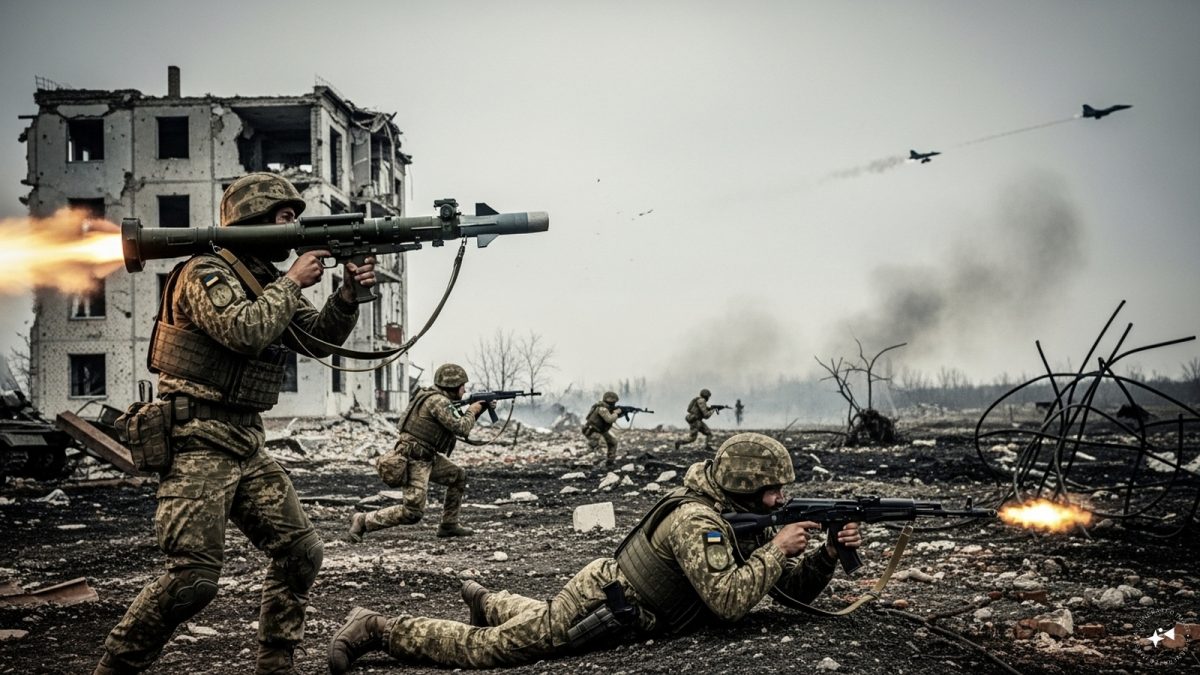 "As Russia pushes east, Ukraine faces mounting pressure to defend its heartland")
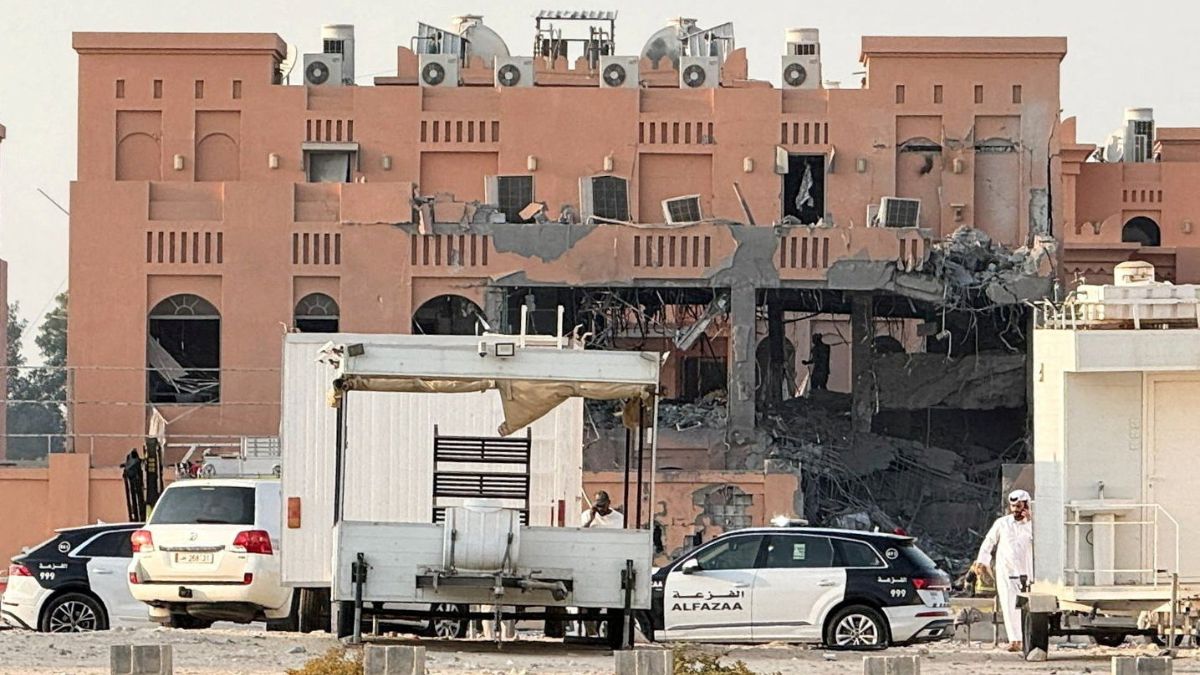 "Why Mossad was not on board with Israel’s strike on Hamas in Qatar")
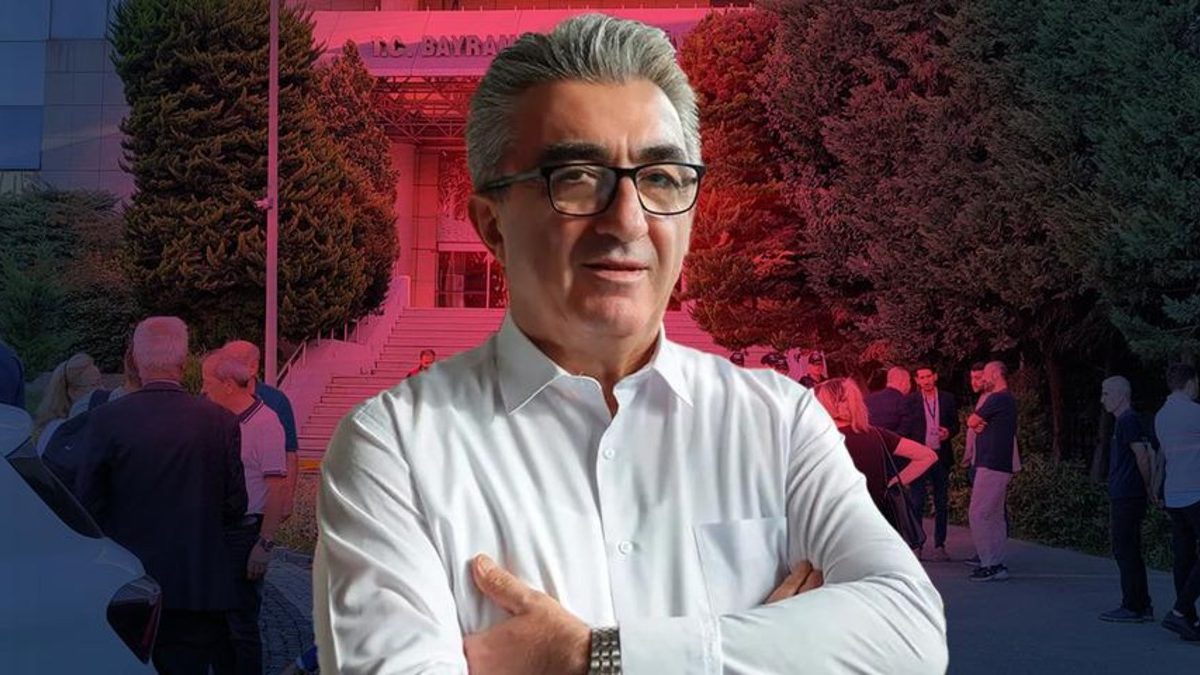 "Turkey: Erdogan's police arrest opposition mayor Hasan Mutlu, dozens officials in corruption probe")
 "Russian drones over Poland: Trump’s tepid reaction a wake-up call for Nato?")
 "As Russia pushes east, Ukraine faces mounting pressure to defend its heartland")
 "Why Mossad was not on board with Israel’s strike on Hamas in Qatar")
 "Turkey: Erdogan's police arrest opposition mayor Hasan Mutlu, dozens officials in corruption probe")



