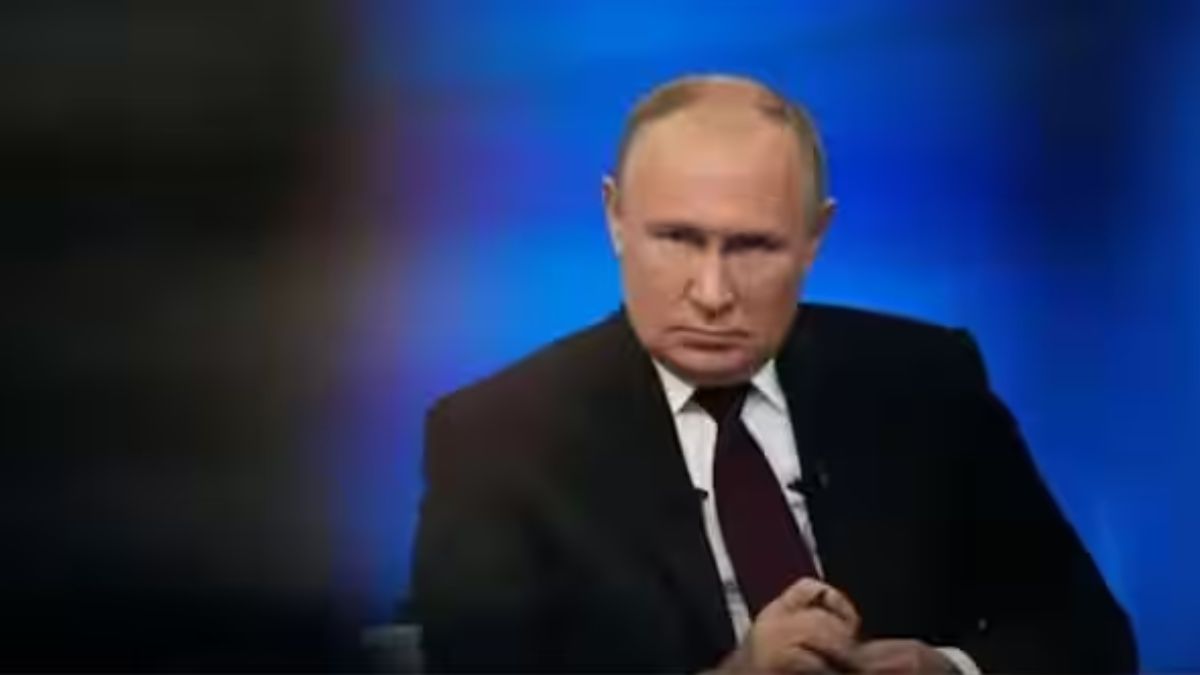
 "File Image- Reuters")
Russian President Vladimir Putin met the head of Iran’s top security body in Moscow on Friday, the Kremlin said as US President Donald Trump stepped up pressure on Tehran to strike a deal over its nuclear programme.
Putin received Ali Larijani, secretary of Iran’s Supreme National Security Council at the Kremlin during an unannounced visit to Russia, according to a statement published on the Kremlin’s website.
“The head of state received in the Kremlin the Secretary of the Supreme National Security Council of the Islamic Republic of Iran, Ali Larijani, who is visiting Russia,” the statement said.
The meeting came after Trump said earlier on Friday that he believed Iran wanted to make a deal to avert possible US military action. Trump also renewed threats of strikes against Tehran, citing Iran’s recent crackdown on protests that observers said killed thousands.
Iran’s embassy in Moscow said on social media that Putin and Larijani discussed economic cooperation as well as “important regional and international issues,” without providing further details.
The visit had not been announced in advance, Russia’s state news agency RIA Novosti reported.
Moscow has previously offered to mediate between Washington and Tehran, positioning itself as a diplomatic intermediary amid rising tensions over Iran’s nuclear programme.
Iran has become one of Russia’s closest partners since the start of the war in Ukraine, with Moscow providing Tehran with significant international backing as its standoff with the United States and its allies deepens.
Quick Reads
View AllStrikes on military and IRGC targets
If Trump decides on a course of military action, prime targets would be bases of the Islamic Revolutionary Guards Corps (IRGC) and its youth militia, the Basij, which are accused by rights groups of taking a frontline role in the deadly crackdown on the protests that according to rights groups left thousands dead.
Using Tomahawk missiles and combat aircraft, the United States could strike positions of the Basij and the IRGC forces, “particularly those forces that participated and continue to participate in targeting Iranian protesters”, said independent military researcher Eva J. Koulouriotis.
She said US intelligence, helped by Israel’s Mossad spy agency, has “a clear picture” of those forces and their location nationwide.
“Such a strike would serve as a direct warning to the Iranian regime,” she said.
During its June war against Tehran, Israel showed its deep intelligence penetration of the Islamic republic by killing senior security officials including the IRGC’s chief and the armed forces chief of staff in targeted strikes based on location intelligence.
In a “harsh but measured strike”, the United States could target “operations command and senior officers involved in mass killings carried out by the Iranian regime”, she said.
With inputs from agencies