

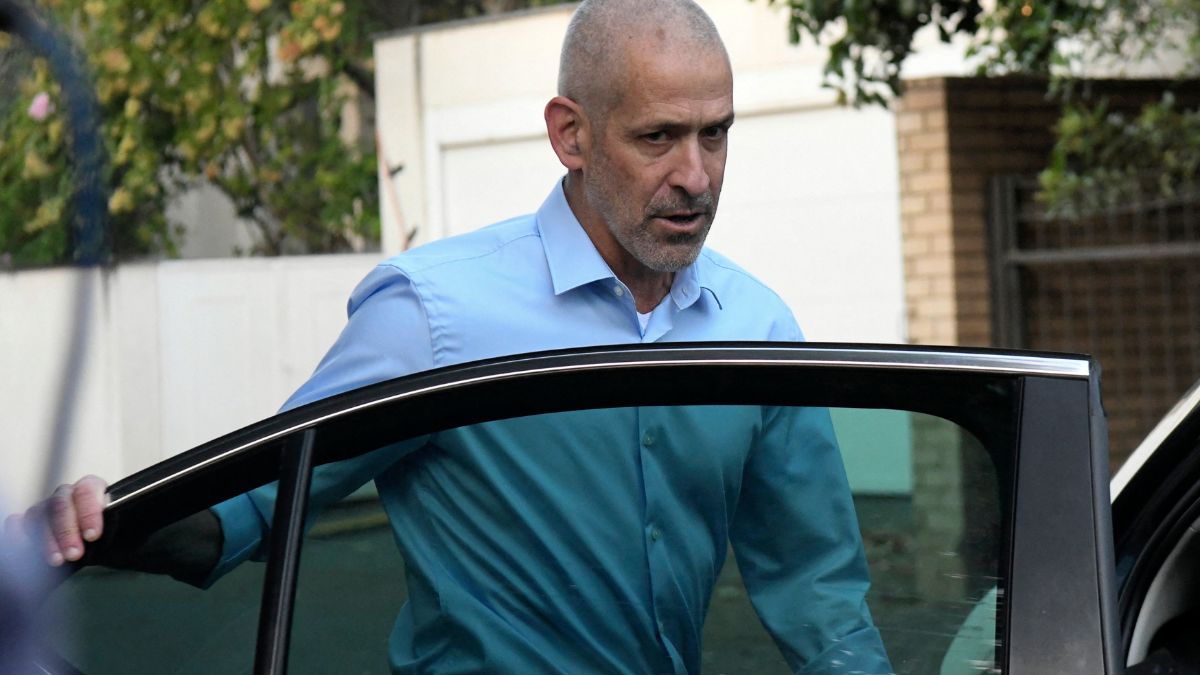
 "Netanyahu’s push to sack Shin Bet chief triggers uproar")
Prime Minister Benjamin Netanyahu’s move to fire a senior security official has sparked fresh political controversy in Israel with opponents organising protests and a former court president calling the move “dangerous.”
Netanyahu claims his actions are driven by a crisis of confidence and the need to replace officials who failed to prevent the October 7, 2023, disaster. However, his critics argue that the dismissals are part of a wider effort to weaken independent government institutions.
They allege that Netanyahu is seeking to bolster his reputation, retain power and deflect accountability while facing a corruption trial and public pressure to acknowledge his role in the policy failures leading up to October 7.
On Sunday, Netanyahu cited an “ongoing lack of trust” as the reason for his move to dismiss Ronen Bar, head of the Shin Bet internal security agency. This follows a similar attempt by the government to remove the attorney general.
Bar, who has been publicly at odds with Netanyahu in recent weeks over proposed reforms to the agency, hinted that the prime minister’s decision to seek his dismissal was politically motivated.
Bar, who was appointed to lead the Shin Bet in 2021 by a previous prime minister, accepted responsibility for his agency’s failure to halt the Oct. 7 attack ahead of time. He already has said he planned to step down before the end of his term in late 2026.
Impact Shorts
More ShortsBut the Shin Bet investigation into its Oct. 7 failures also pointed blame at Netanyahu for formulating a policy that focused on containing Hamas, while ignoring a growing threat.
Bar had been a key player in negotiations to free Israeli hostages held by Hamas. But he and Netanyahu differed on how to proceed. That led Netanyahu to replace him with Cabinet minister Ron Dermer, a Netanyahu confidant. Critics of Netanyahu said the move highlighted a growing tendency by Netanyahu to surround himself with loyalists.
A pair of Shin Bet investigations recently launched against advisers of Netanyahu appeared to be a tipping point.
One is examining a Netanyahu spokesperson who allegedly leaked to a German news outlet classified documents that appeared to give the prime minister political cover in ceasefire negotiations. The other is looking into claims that Qatar reportedly hired close Netanyahu aides to launch a public relations campaign in Israel.
Qatar, a key mediator between Israel and Hamas, was also the source of millions of dollars in cash sent to Gaza, with Netanyahu’s approval. The money, ostensibly meant for poor families, is seen as having helped Hamas bolster its military capabilities ahead of Oct. 7.
‘Blow to national security’
The Kaplan Force, a liberal umbrella organisation which led the fight against the judicial reform, on Monday announced rallies in Jerusalem and Tel Aviv this week to protest the dismissal of the Shin Bet head.
The move to sack Bar, who has been involved in negotiations over the fragile ceasefire in Gaza, comes at a crucial time for the talks.
The truce has largely held since January 19 despite an impasse in efforts to extend it.
Since the Gaza war began, Netanyahu has dismissed his defence minister, Yoav Gallant, while several senior military officials have resigned including army chief Herzi Halevi.
Benny Gantz, an opposition figure who once served as defence minister under Netanyahu, said on X that “the dismissal of the head of the Shin Bet is a direct blow to national security and a dismantling of unity within Israeli society, driven by political and personal considerations.”
Former Supreme Court president Dorit Beinisch told Kan public radio that Netanyahu was leading “processes that are dangerous for society”.
“We need to wake up, and to wake up in time,” she said.
The Movement for Quality Government in Israel, a good governance group, said Bar’s dismissal while the probes are ongoing raises concerns that the move was made out of “political considerations.”
If Bar’s dismissal is approved by the government, he will become the first Shin Bet chief in Israeli history to be fired. But he will also be just the latest in a series of defense officials to exit under pressure from Netanyahu during the war.
In November, Netanyahu fired his defense minister, Yoav Gallant, saying he had lost trust in him. Gallant had repeatedly prodded Netanyahu to set out a postwar plan for Gaza.
Gallant, a former top general, was replaced by Israel Katz, a longtime Netanyahu backer with little military experience who then pressured the military chief, Lt. Gen. Herzi Halevi, to step down earlier this month. Halevi’s replacement then sacked the military’s spokesman, Rear Adm. Daniel Hagari, a popular figure with the public who was rebuked by Israeli leaders for commenting on the leaked documents case.
With many top defense officials linked to the Oct. 7 failures out of office, the blame game over the deadliest attack in Israel’s history begins in earnest.
Netanyahu has repeatedly tried to pin responsibility on his security chiefs, saying he was never warned about Hamas’ intentions and was guided by their advice that Hamas was deterred.
With inputs from agencies


 "Russian drones over Poland: Trump’s tepid reaction a wake-up call for Nato?")
 "As Russia pushes east, Ukraine faces mounting pressure to defend its heartland")
 "Why Mossad was not on board with Israel’s strike on Hamas in Qatar")
 "Turkey: Erdogan's police arrest opposition mayor Hasan Mutlu, dozens officials in corruption probe")
 "Russian drones over Poland: Trump’s tepid reaction a wake-up call for Nato?")
 "As Russia pushes east, Ukraine faces mounting pressure to defend its heartland")
 "Why Mossad was not on board with Israel’s strike on Hamas in Qatar")
 "Turkey: Erdogan's police arrest opposition mayor Hasan Mutlu, dozens officials in corruption probe")



