

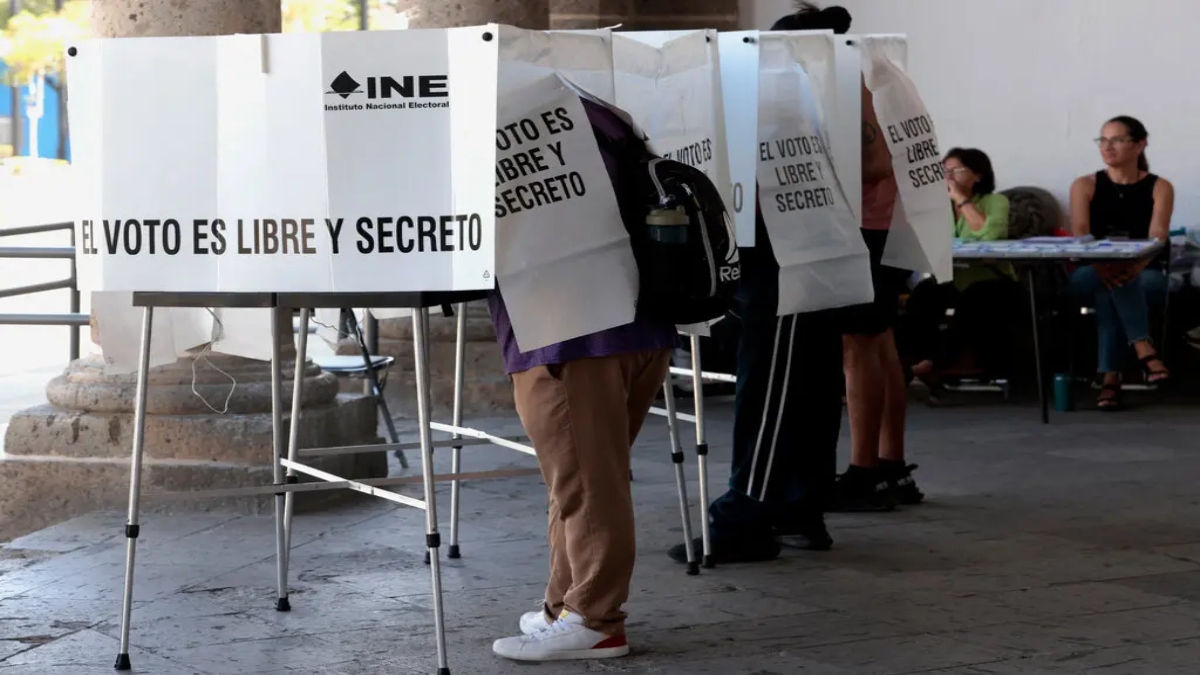
 "Nearly 90% Mexicans didn't vote when Mexico elected 2,700 judges")
Mexico’s nationwide election to appoint 2,700 judges saw nearly 90% of eligible voters abstain from voting, casting a shadow over the country’s sweeping judicial reform efforts.
The elections, held over the weekend, were part of a major initiative to reorganise the judiciary. However, the exceptionally low turnout has raised questions about public engagement and the perceived legitimacy of the process.
According to The New York Times report, citing estimates from the national electoral authority, only 12.6% to 13.3% of voters cast ballots in Sunday’s election, making it one of the lowest turnouts in any federal election since the early 2000s, when Mexico transitioned to a democracy.
The poor turnout highlights widespread confusion and uncertainty over Mexico’s shift from an appointment-based judiciary to one elected by popular vote.
According to the report, supporters say the reform enhances democracy, while critics call it a power grab by the ruling Morena party. Many voters were overwhelmed by the sheer number of candidates for nearly 2,700 judgeships, including Supreme Court seats and positions in lower courts.
Electoral monitoring groups reported that several voters simply used cheat sheets provided by Morena, President Claudia Sheinbaum’s party, added the report.
“It did not seem to me to be a democratic exercise — it was a clear attempt to manipulate the vote,” NYT quoted Laurence Pantin, an expert on judicial independence and director of Juicio Justo, or Fair Trial, a nonprofit organisation that seeks to broaden access to justice in Mexico, as saying.
Pantin and other volunteers reported several problems during Sunday’s vote. They saw voters carrying printed lists of candidates to choose, groups entering voting booths together, and some people taking photos of their completed ballots, signs that could point to possible vote buying.
Impact Shorts
More Shorts“There was an effort by Morena or groups related to the government to mobilize people,” Pantin was quoted as saying.
Ricardo Anaya, senator and former presidential candidate from the center-right National Action Party, called the low turnout and widespread voter confusion an “absolute failure” in a post on social media.
“This isn’t democracy,” Anaya told NYT, adding, “It’s an insult.”
Sheinbaum defends judicial elections
Amid sharp criticism, President Claudia Sheinbaum on Monday defended Mexico’s first-ever judicial elections as an “unprecedented, impressive, wonderful, democratic” event.
Turnout, however, fell well below expectations, with just 13% of voters participating — far lower than the 60% turnout in last year’s general election that brought Sheinbaum to power.
She said the turnout doubled that of a 2021 referendum on prosecuting former presidents, which saw only 7% participation. But unlike that non-binding vote, this election carried major implications, with voters selecting about half of the country’s judges. The rest are set to be elected in 2027.
The reform, introduced by Sheinbaum’s predecessor and political mentor, Andrés Manuel López Obrador, aimed to combat corruption and nepotism in the judiciary.
Critics argue it’s a move by the ruling Morena party to tighten its grip on power after courts blocked several of López Obrador’s key initiatives, reported NYT.
With paper ballots still being counted, final results are pending. But early returns suggest candidates aligned with Morena are on track to win seats on the Supreme Court — a result opposition leaders and legal analysts fear could erode judicial independence and undermine the balance of power.
With inputs from agencies


 "Russian drones over Poland: Trump’s tepid reaction a wake-up call for Nato?")
 "As Russia pushes east, Ukraine faces mounting pressure to defend its heartland")
 "Why Mossad was not on board with Israel’s strike on Hamas in Qatar")
 "Turkey: Erdogan's police arrest opposition mayor Hasan Mutlu, dozens officials in corruption probe")
 "Russian drones over Poland: Trump’s tepid reaction a wake-up call for Nato?")
 "As Russia pushes east, Ukraine faces mounting pressure to defend its heartland")
 "Why Mossad was not on board with Israel’s strike on Hamas in Qatar")
 "Turkey: Erdogan's police arrest opposition mayor Hasan Mutlu, dozens officials in corruption probe")



