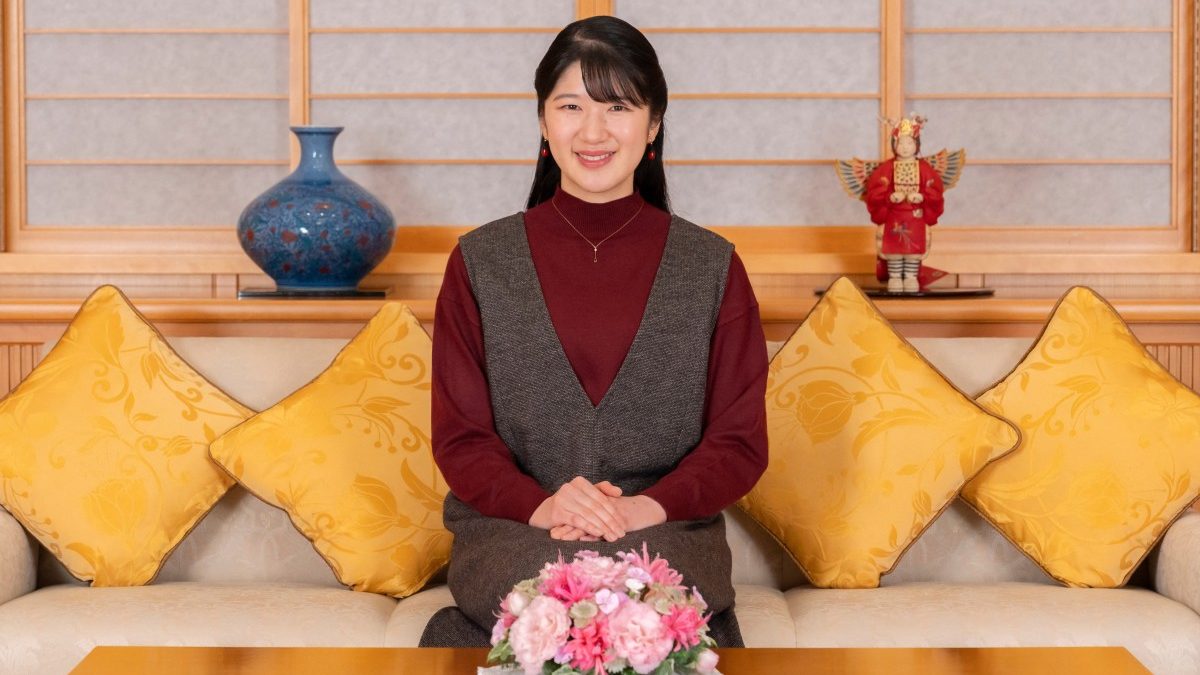
 "This handout photo taken on November 7, 2025 and released by the Imperial Household Agency of Japan shows Princess Aiko, the daughter of Japan's Emperor Naruhito and Empress Masako, posing for a photo at the Imperial Palace in Tokyo, ahead of her 24th birthday on December 1, 2025. (AFP)")
Japan’s centuries-old tradition of male-only imperial succession is facing its most significant challenge yet, driven by the immense public affection for Princess Aiko, the Emperor’s only child.
At 24, the Princess is stepping into the spotlight, pushing lawmakers to rethink the 1947 Imperial House Law.
The debate has intensified following Aiko’s successful first solo official overseas trip to Laos in November, where she represented Emperor Naruhito. Her presence, alongside her impressive debut as an adult royal in 2021, has solidified her image as an intelligent, friendly, and compassionate figure.
“I like everything about her, especially her smile… so comforting,” Setsuko Matsuo, an 82-year-old atomic bombing survivor, told The Associated Press (AP) in Nagasaki. Another well-wisher, 58-year-old office worker Mari Maehira, stated, “We want to see her become a future monarch.”
The urgency is driven by a stark demographic reality.
Japan’s Imperial Family is rapidly dwindling . The Emperor has only two potential male heirs from the younger generation: his 60-year-old brother, Crown Prince Akishino, and Akishino’s 19-year-old son, Prince Hisahito.
Experts argue that the female ban must be lifted soon, as the monarchy’s future now rests entirely on Prince Hisahito’s ability to produce a male heir. “I think the situation is already critical,” said Hideya Kawanishi, a Nagoya University professor and monarchy expert told AP. He warned that any potential spouse for Hisahito would “endure enormous pressure to produce a male heir while performing official duties at a superhuman capacity.”
Advocates see the issue as one of gender equality that extends beyond the palace walls.
Despite the growing public and expert consensus, conservative lawmakers, including some in the Prime Minister’s circle, remain opposed to the reform. Crown Prince Akishino himself has acknowledged the shrinking population, stating, “Nothing can be done under the current system,” while noting that royal members are “human beings” whose lives are directly affected by the discussion.
Quick Reads
View AllThe silence from the palace on the matter has been notable; the Princess, who graduated from university and now works at the Red Cross Society, has previously stated she “could not comment on the system,” but hoped to “sincerely serve every official duty.” However, with the public’s overwhelming support for the Emperor’s daughter, pressure is mounting on legislators to move the discussion out of a policy stalemate and secure the future of the world’s oldest monarchy.