

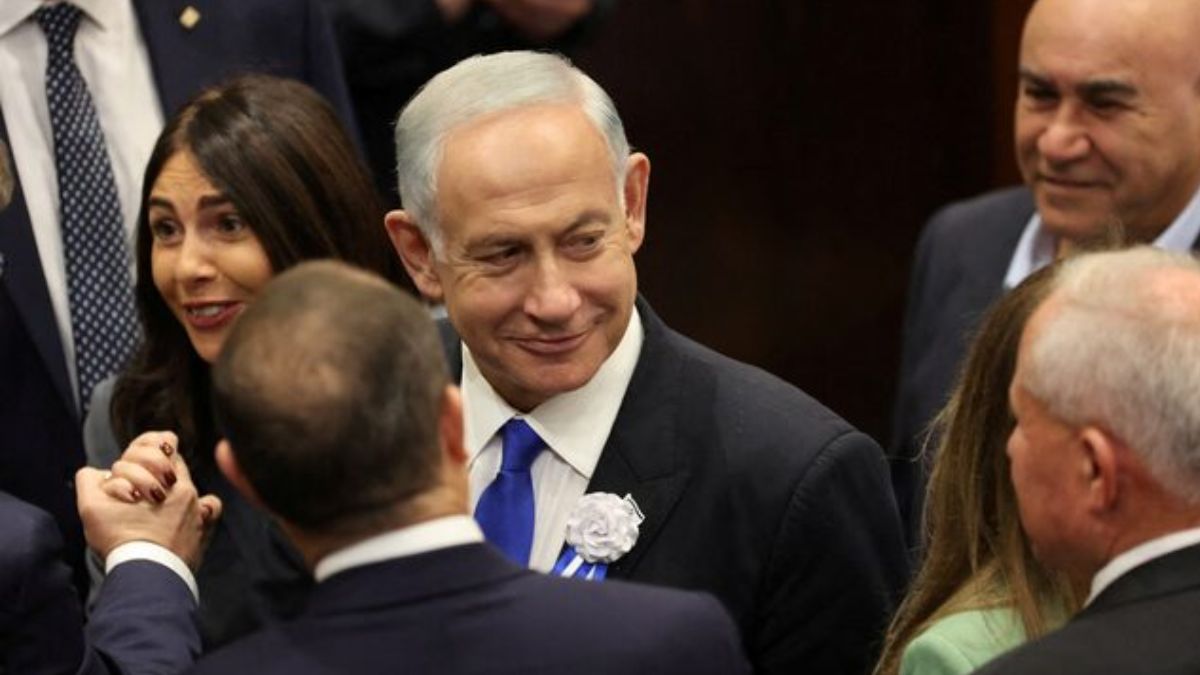
 "Israel: Security minister revolts but Netanyahu govt’s budget clears Knesset test by 59-57 vote")
Israeli lawmakers narrowly approved the 2025 state budget in its initial reading, with a 59-57 vote, despite fractures in Prime Minister Benjamin Netanyahu’s coalition partners. The wartime austerity budget passed its first of three required votes in the Knesset but exposed internal divisions, particularly from Netanyahu’s far-right and ultra-Orthodox allies.
Security Minister Itamar Ben-Gvir and his ultranationalist Otzma Yehudit party voted against the budget. Ben-Gvir continues to push for the dismissal of Attorney General Gali Baharav-Miara, accusing her of opposing judicial reforms and supporting an independent inquiry into the government’s handling of Hamas’s October 7 cross-border attack.
The tensions have sparked clashes within the coalition, particularly between Ben-Gvir and Finance Minister Bezalel Smotrich, who leads another right-wing faction. The dispute highlights Netanyahu’s challenges in balancing his government’s priorities amid wartime pressures.
Ben-Gvir said on X that his faction would no longer be bound by the coalition’s positions, including the budget law, and would operate independently.
Addressing Smotrich, he said the government must fire the attorney general so it can implement its policy. The right-wing government had to either to send her home or face having her bring the government down, Ben-Gvir wrote.
A month ago, in a letter to Netanyahu, Baharav-Miara asked the prime minister to consider firing Ben-Gvir, citing evidence that he allegedly interfered directly in police operations and politicized promotions within the force, threatening its status outside politics.
Impact Shorts
More ShortsShould the issue be raised at Sunday’s cabinet meeting, “the crisis will be behind us,” Ben-Gvir added.
In posts on X, Smotrich accused Ben-Gvir of irresponsibly aligning with the opposition and Arab parties and putting their right-wing government in danger in time of war.
Smotrich said Ben-Gvir and his party were jeopardising a historic opportunity for further Israeli settlement of the occupied West Bank and for the State of Israel itself with Donald Trump’s administration moving into the White House next month.
“We will continue to work for the people of Israel and for victory in the war, with or without Ben-Gvir,” he wrote.
Netanyahu in September sought to bolster his coalition, which had a 64-56 edge in Knesset, by bringing in opposition lawmaker Gideon Saar and his four seats in the New Hope party, enabling him to be less reliant on other members of his ruling coalition. Saar last month was named foreign minister.
Total budget spending in 2025 will be 756 billion shekels ($210 billion), with a deficit target set at 4.4% of gross domestic product. The budget includes spending cuts and tax increases of 37 billion shekels, which are needed to keep the deficit under control as war costs have soared. Spending on defence will be 108 billion shekels next year.
All three agencies have cut Israel’s credit rating this year due to war expenses that have pushed the budget deficit to near 8% of GDP.
The budget next goes to the Knesset finance and other committees, where it could face changes. It is not expected to be fully approved until at least January. Until a budget is approved in 2025, the 2024 budget will be divided into 12 parts and 1/12 is allocated each month.
Failure to approve the budget by March 31 would trigger new elections.
With inputs from agencies.


 "Russian drones over Poland: Trump’s tepid reaction a wake-up call for Nato?")
 "As Russia pushes east, Ukraine faces mounting pressure to defend its heartland")
 "Why Mossad was not on board with Israel’s strike on Hamas in Qatar")
 "Turkey: Erdogan's police arrest opposition mayor Hasan Mutlu, dozens officials in corruption probe")
 "Russian drones over Poland: Trump’s tepid reaction a wake-up call for Nato?")
 "As Russia pushes east, Ukraine faces mounting pressure to defend its heartland")
 "Why Mossad was not on board with Israel’s strike on Hamas in Qatar")
 "Turkey: Erdogan's police arrest opposition mayor Hasan Mutlu, dozens officials in corruption probe")



