

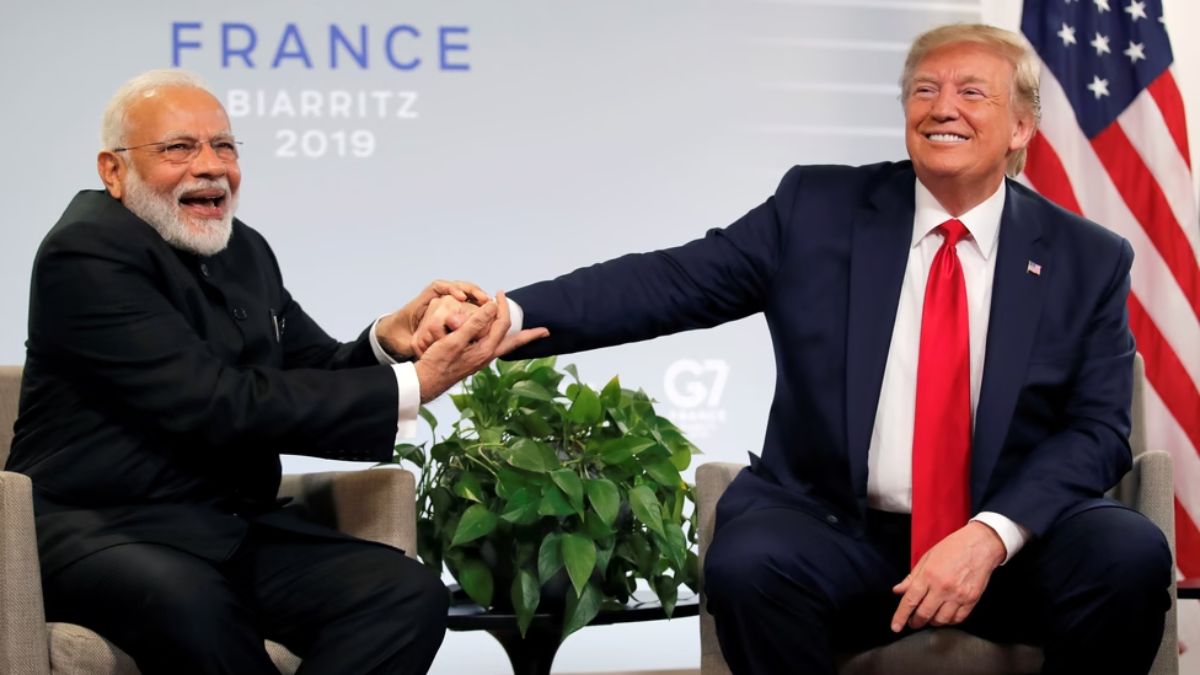
 "Is Trump taking leaves out of Modi's book of politics?")
US President Donald Trump appears to be taking leaves out of Indian Prime Minister Narendra Modi’s style of politics as he starts his second term.
Trump has started his second term with an unprecedented political comeback that not just brought him to the White House again, but also established him as the absolute leader of the Republican Party whose writ runs supreme.
Trump’s second term would be marked different from the first and the differences were visible in the Inauguration itself. In nearly every aspect of Trump 2.0, there appears to be an influence of Modi.
Foreign leaders on Inauguration Day
For the first time in American history, foreign leaders were invited to attend the Inauguration.
While the tradition to invite foreign leaders is not there in the United States, it is a trademark of Modi, who has invited a host of foreign leaders on all of his swearing-in ceremonies. In 2014, Modi invited South Asian leaders. In 2019, he invited leaders from the Bay of Bengal Initiative for Multi-Sectoral Technical and Economic Cooperation (Bimstec) group. In 2024, Modi invited leaders from the Indian Ocean Region (IOR) and South Asia.
Similarly, Trump invited the leaders of Italy, Argentina, and China. Italian Prime Minister Georgia Melonia, Argentina’s President Javier Milei, and Chinese Vice President Han Zheng attended the inauguration. Minister of External Affairs S Jaishankar also attended the inauguration.
Nationalism at the forefront
Both Modi and Trump are nationalist leaders who came to power with the promise of putting their countries on the right path after what they said was a long period of decline. While Modi dubbed his project as the making of ‘New India’, Trump dubbed his project ‘Make America Great Again’.
Both leaders have pursued a muscular foreign policies. While Modi has repeatedly ordered operations inside neighbouring countries to pursue terrorists, Trump during his first term sanctioned the operation that killed Islamic State chief Abu Bakr al-Baghdadi and ordered the assassination of top Iranian commander Qasem Soleimani, who was led the Quds Force of the Islamic Revolutionary Guards Corps (IRGC) of Iran and was key to Iran’s shadow war in Middle East.
Both Modi and Trump made crackdown on illegal immigration central to their pitch to voters.
Make in India & Make in US
While Modi launched ‘Make in India’ initiative in his first term, Trump has also pushed to bring manufacturing jobs back to the United States that companies shifted overseas over the years.
Trump’s voter base primarily comprises of White blue collar workers who do not have college degrees. This working class group thrives on manufacturing jobs and Trump has been pushing to create such jobs in the United States. He believes in using tariffs to persuade companies to reduce imports and instead set up manufacturing facilities in the United States.
Impact Shorts
More ShortsAbsolute leaders of their parties
Just like Modi is the towering leader of his Bharatiya Janata Party (BJP), Trump now stands as the unquestioned leader of the Republican Party. He has muted and eliminated all dissenters among Republicans and has come to have complete hold over the party.
Even those Republicans who criticised him after January 6 attack on the Capitol that he instigated have now fallen in line and toe his line. Trump is so powerful that there is now essentially no separation of branches of government. Republican Congressional leaders, the Speaker of the House of Representatives and Majority Leader in Senate, are yes-men of Trump who would do his bidding lest they lose their jobs.
Moreover, with three conservative judges that Trump appointed to the Supreme Court in his first term, the Supreme Court also has a 6-3 conservative majority and is in his pocket. With Republican trifecta in place and Supreme Court in his pocket, there are few —if any— checks on Trump’s power.

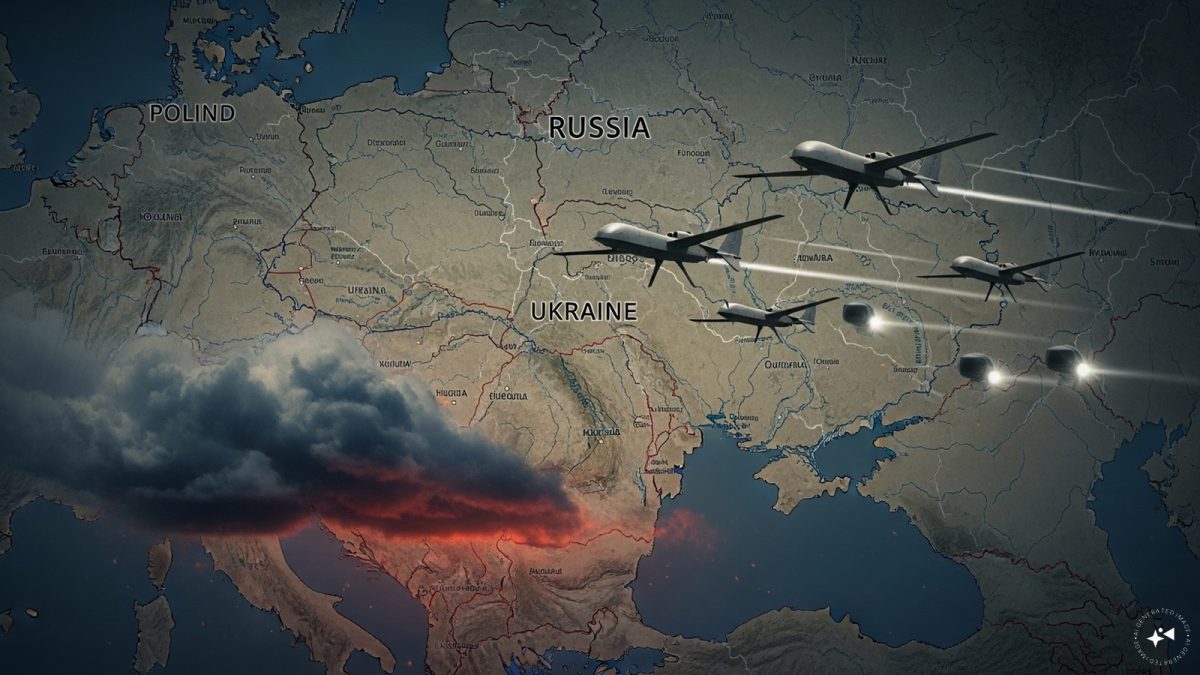 "Russian drones over Poland: Trump’s tepid reaction a wake-up call for Nato?")
 "As Russia pushes east, Ukraine faces mounting pressure to defend its heartland")
 "Why Mossad was not on board with Israel’s strike on Hamas in Qatar")
 "Turkey: Erdogan's police arrest opposition mayor Hasan Mutlu, dozens officials in corruption probe")
 "Russian drones over Poland: Trump’s tepid reaction a wake-up call for Nato?")
 "As Russia pushes east, Ukraine faces mounting pressure to defend its heartland")
 "Why Mossad was not on board with Israel’s strike on Hamas in Qatar")
 "Turkey: Erdogan's police arrest opposition mayor Hasan Mutlu, dozens officials in corruption probe")



