

 "UN nuclear watchdog's chief to arrive in Iran to hold talks as concerns mount over nuclear programme")
International Atomic Energy Agency (IAEA) chief Rafael Grossi will arrive in Iran on Monday to hold talks amid rising concerns over the country’s nuclear programme.
Iran has long been accused of working towards the development of a nuclear weapon. Lately, tensions have risen as Iran has faced fresh accusation of lack of cooperations on inspections of its nuclear facilities and other issues.
The US military has concluded that Iran can develop a weapon within months. The Iranian nuclear bomb is a red line for Israel, the regional arch-rival of Iran, and the United States and Israel have previously expressed commitment to not let Iran develop nuclear weapons.
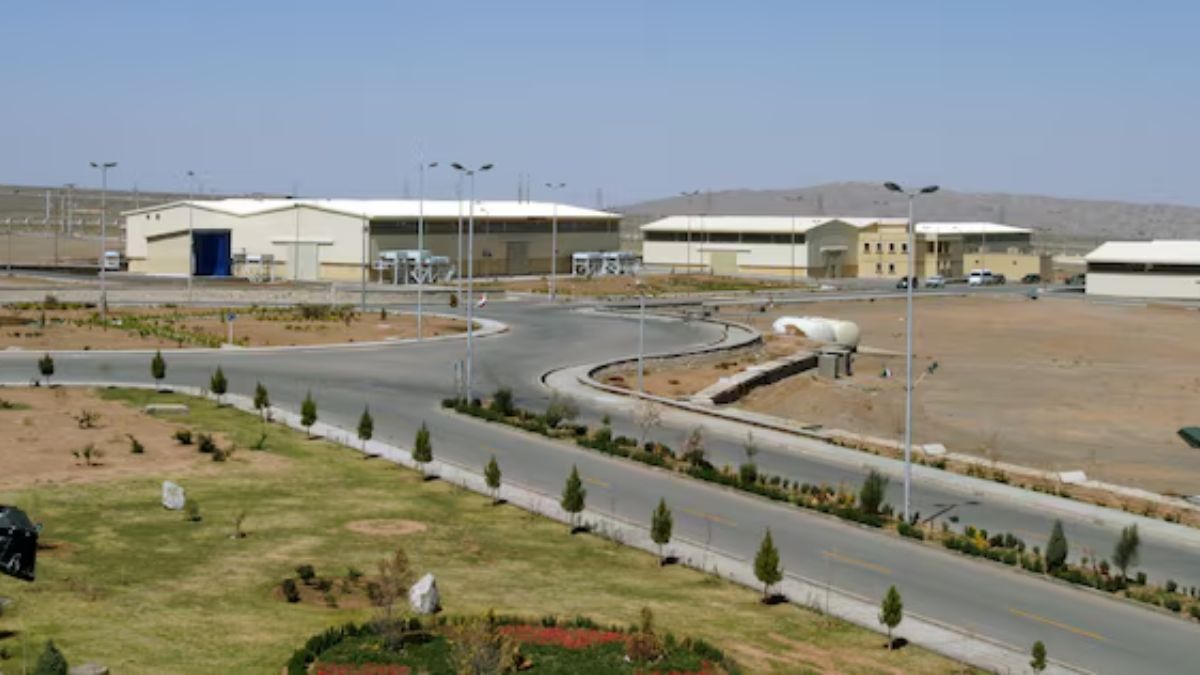
During his visit, UN atomic watchdog chief Grossi is also expected to deliver a speech at a science conference. Incidentally, the conference, dubbed the ‘International Conference on Nuclear Science and Technology’, is being held in Isfahan province, which is also home to the Natanz uranium enrichment plant. When Israel and Iran exchanged fire last month, Israel had launched attacks in the vicinity of the facility.
Iran’s tensions with UN nuclear watchdog
Tensions have repeatedly flared between Iran and IAEA in recent years over Iran’s stance on its nuclear programme.
In recent years, the IAEA has said that Iran has deactivated the monitoring devices at its nuclear facilities and has stopped access of its inspectors.
These inspectors and devices are meant to ensure that Iran is not making nuclear weapons and is complying with its obligations to the Nuclear Non-Proliferation Treaty (NPT). Iran is one of the signatories of the treaty that’s intended to put a stop to the development of nuclear weapons.
After the United States under former President Donald Trump quit the Iran nuclear deal, which promised the Islamic Republic economic relaxations in lieu of suspension of sensitive nuclear activities, Iran also suspended compliance to the deal. Since then, Iran has increased the enrichment of uranium.
Impact Shorts
More ShortsIn February, AFP news agency reported that IAEA in a confidential report had mentioned that Iran’s estimated stockpile of enriched uranium had reached 27 times the limit mentioned in the now-junked nuclear deal signed in 2015.
Separately, in its quarterly report, the IAEA said that Iran had an estimated 121.5 kg of uranium that has been enriched up to 60% purity, according to VOA News. This is just one step below weapons-grade uranium, which has 90% purity.
In September 2023, Iran withdrew the accreditation of several IAEA inspectors. The agency described the move as “extreme and unjustified”. Iran, however, said its actions were a result of “political abuses” by the United States, France, Germany, and the United Kingdom.
Iran can develop nuclear bomb in months: US assessment
In March 2023, the top US military officer said that Iran develop a nuclear weapon within weapons if it wanted to.
From the date Iran makes the final decision to develop a nuclear weapon, it would take “10-15 days” to have enough material to make a bomb and then a bomb could be ready within “several months”, said General Mark Milly, who was the Chairman of the Joint Chiefs of Staff at the time.
“From the time of a national decision, Iran could produce enough fissile material for a nuclear weapon in approximately 10-15 days and it would only take several months to produce an actual nuclear weapon. The United States remains committed, as a matter of policy, that Iran will not have a fielded nuclear weapon. The United States military has developed multiple options for our national leadership to consider, if or when Iran decides to develop a nuclear weapon,” said Milley, who has retired since making the comment.


 "Russian drones over Poland: Trump’s tepid reaction a wake-up call for Nato?")
 "As Russia pushes east, Ukraine faces mounting pressure to defend its heartland")
 "Why Mossad was not on board with Israel’s strike on Hamas in Qatar")
 "Turkey: Erdogan's police arrest opposition mayor Hasan Mutlu, dozens officials in corruption probe")
 "Russian drones over Poland: Trump’s tepid reaction a wake-up call for Nato?")
 "As Russia pushes east, Ukraine faces mounting pressure to defend its heartland")
 "Why Mossad was not on board with Israel’s strike on Hamas in Qatar")
 "Turkey: Erdogan's police arrest opposition mayor Hasan Mutlu, dozens officials in corruption probe")



