

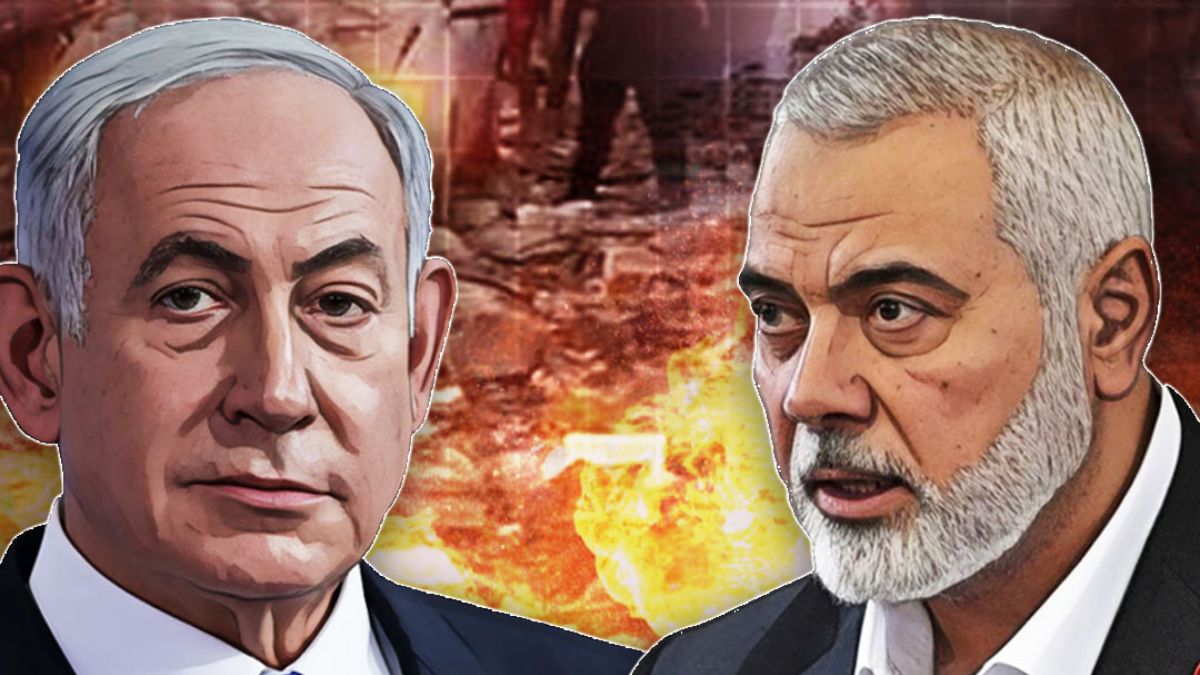
 "Have Mossad-led assassinations worked for Israel in West Asia?")
In a massive setback for the Palestinian terrorist organisation Hamas, one of its top leaders, Ismail Haniyeh was eliminated in Iran, a major success for Israel’s covert operations in West Asia.
This incident is not an isolated incident, but rather part of a larger pattern of Israel’s covert campaigns to eliminate those it considered potential threats in the region. Over the years, Israel has been suspected of conducting a series of daring operations, including the assassination of top Iranian nuclear scientists and officials linked to its nuclear program.
Though Israel has not claimed responsibility for the assassinations of Hezbollah leader Fuad Shukr in Lebanon and Hamas political bureau chief Ismail Haniyeh in Iran, its spy agency Mossad is being viewed as the prime suspect behind these targeted killings.
The killing of Haniyeh was the latest in a string of targeted Israeli killings in Lebanon since October when hostilities broke out between Hezbollah and Israel’s military in parallel with the Gaza war.
Israel has never accepted it publicly or officially but Israel-observers often talk about targeted killings being part of the foundational doctrine of Mossad, which was set up in 1949.
Though it got more global attention in the aftermath of the 1972 Munich Olympic massacre, Israel’s use of targeted assassinations began in 1955, with an operation in Gaza against an Egyptian colonel.
Impact Shorts
More ShortsThe strategy has been to eliminate key figures in hostile organisations, disrupt operations, and send a message of Israel’s far-reaching capabilities.
The operational focus over the decades has been to target leaders of Palestinian militant groups, such as Hamas, Palestinian Islamic Jihad (PIJ), and the Palestine Liberation Organization (PLO), aiming to hinder their operational effectiveness and morale.
Experts believe that rebuilding its military capabilities “is going to be the problem for Hamas in the next phase after losing its top leaders and commanders one after another, and it will likely be more dependent on foreign support as its base in Palestine weakens.
Watch Also: Lebanon: Israel Strikes Beirut, Avenges Golan Heights Attack; Claims Hezbollah Commander KilledSome of the key successes and high-profile targets
Fathi Shiqaqi (1995): The founder of PIJ was assassinated in Malta. Despite this, PIJ continued to grow in strength and capability, indicating that the group’s operational momentum was not permanently halted.
Ahmed Yassin (2004): The spiritual leader and founder of Hamas was killed in an airstrike. His death was a major psychological blow to Hamas, temporarily destabilising its leadership structure.
Imad Mughniyeh (2008): A joint operation by Mossad and the CIA eliminated the military chief of Hezbollah in Damascus. This was considered a significant blow to Hezbollah’s operational capabilities, demonstrating the effectiveness of collaboration in intelligence operations.
The question is what Israel get by these assassinations? Have these killings helped Israel in its almost non-stop war in West Asia?
Tactical advantages: Israeli observers say that the country views these assassinations as a tool to gain tactical advantage over its adversaries — plenty in the region.
Disruption of plans: By eliminating key figures, Israel has often managed to derail imminent attacks and disrupt the strategic planning of militant groups. This has provided short-term security benefits and bought time for Israeli defence forces to regroup and strategise.
Deterrence: The knowledge that their leaders are constantly targeted has forced militant groups to adopt more cautious and less centralised operational tactics, complicating their strategic coherence and execution.
Intelligence gathering: Successful targeted assassinations often rely on high-quality intelligence. These operations enhance Israeli intelligence agencies’ credibility and deterrent value, demonstrating their capacity to infiltrate and act on actionable intelligence.
But this approach has limitations and challenges
Replacement of leaders: Every eliminated leader has been replaced, sometimes by even more capable and determined individuals. This has kept the cycle of violence and retaliation alive, without leading to a decisive victory over these groups.
Diplomatic repercussions: High-profile failures or controversial assassinations, such as the 1997 botched poisoning of Khaled Meshaal in Jordan, have strained Israel’s diplomatic relations with other countries and sometimes backfired politically.
International condemnation: Civilian casualties, which Israel describes as collateral damage, during targeted killings draw international condemnation and complicate Israel’s diplomatic standing. These incidents undermine the moral high ground and exacerbate anti-Israel sentiments.
What has been the long-term impact?
Continued conflict: Despite the tactical successes of targeted assassinations, the overall strategy has not resolved the Israeli-Palestinian conflict. The core issues of territorial disputes, political sovereignty, and mutual recognition remain unaddressed.
Psychological warfare: Targeted killings have instilled a sense of insecurity among terrorists but have also contributed to a cycle of vengeance and martyrdom within these groups, perpetuating the conflict.
Strategic re-evaluation: Israeli intelligence and military leaders continue to reassess the role of targeted assassinations within a broader strategic framework. There is a recognition that while these operations provide immediate tactical benefits, they are insufficient for achieving long-term peace and stability.
Overall, targeted assassinations claimed by Israel or attributed to its spy agency Mossad have been an integral part of the country’s security strategy in West Asia. Successive Israeli governments have continued with the policy that has seemingly offered tactical advantages in disrupting militant activities and enhancing deterrence.
However, the strategy has notable limitations, including the cyclical replacement of leaders, diplomatic fallout, and the perpetuation of conflict. While targeted killings will likely remain a tool in Israel’s security arsenal, their effectiveness is contingent on being part of a more comprehensive approach to addressing the root causes of the Israeli-Palestinian conflict.
Heighten risk of broader conflict
Responding to Haniyeh’s death, Musa Abu Marzouk, a member of Hamas’ Political Bureau vowed that it would “not pass in vain.” At the same time, senior Hamas official Sami Abu Zuhri condemned it as a “grave escalation,” hinting at a potential surge in retaliation and violence."
However, the possibility of retaliation from Hamas cannot be ruled out, given the historical context of the conflict, which has only served to intensify the violence and perpetuate the dispute. Israeli Prime Minister Benjamin Netanyahu has publicly said his intention to target Hamas leaders, instructing the Mossad to “assassinate all Hamas leaders wherever they are.”
In the present situation, the terrorist organisation appears to have lost its potency and capability to retaliate against Israel in the absence of direct support and ammunition from any country. This weakness is further exacerbated by Israel’s access to intelligence inputs and military support from the United States, making it even more challenging for the organisation to regroup and retaliate.


 "Russian drones over Poland: Trump’s tepid reaction a wake-up call for Nato?")
 "As Russia pushes east, Ukraine faces mounting pressure to defend its heartland")
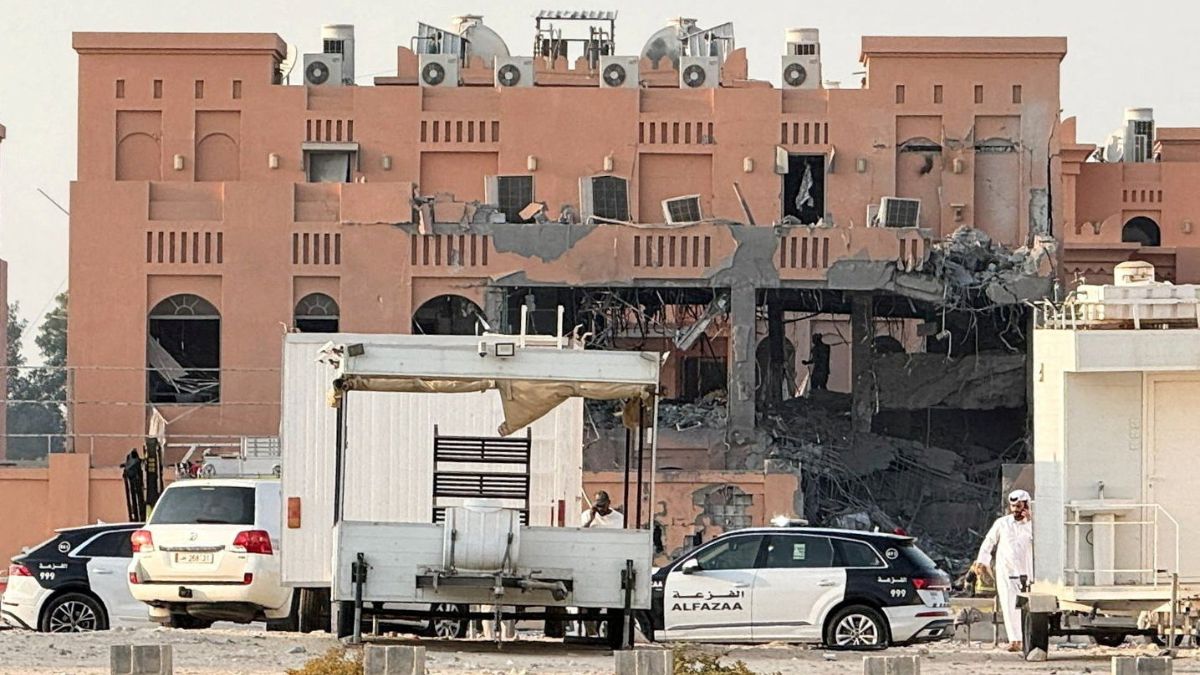 "Why Mossad was not on board with Israel’s strike on Hamas in Qatar")
 "Turkey: Erdogan's police arrest opposition mayor Hasan Mutlu, dozens officials in corruption probe")
 "Russian drones over Poland: Trump’s tepid reaction a wake-up call for Nato?")
 "As Russia pushes east, Ukraine faces mounting pressure to defend its heartland")
 "Why Mossad was not on board with Israel’s strike on Hamas in Qatar")
 "Turkey: Erdogan's police arrest opposition mayor Hasan Mutlu, dozens officials in corruption probe")



