

 "Germany, Australia among 4 countries to sue Taliban over women’s rights violations")
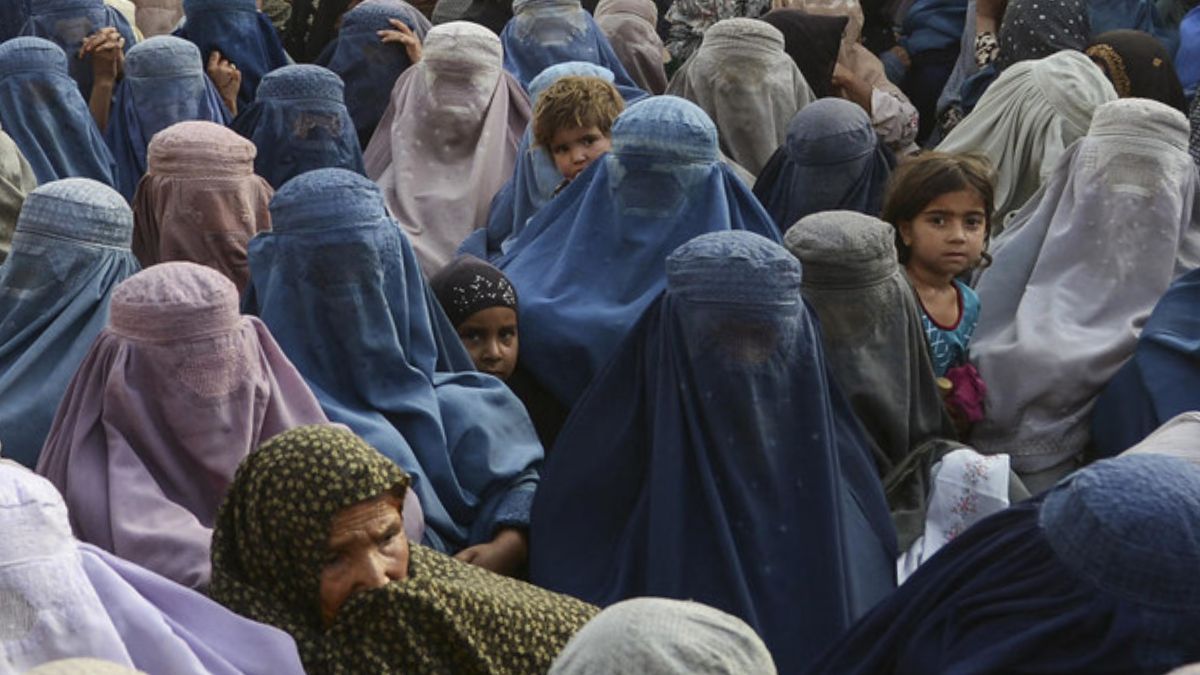
In a groundbreaking move, Canada, Australia, Germany, and the Netherlands are taking the Taliban to the International Court of Justice (ICJ) over gender discrimination, according to a report.
Announced during the UN General Assembly, this is the first instance of one country suing another at the ICJ over gender discrimination.
According to The Guardian report, the case is based on the convention on the elimination of all forms of discrimination against women, which was adopted by the General Assembly in 1979 and came into force in 1981.
Afghanistan ratified this convention in 2003, prior to the Taliban’s takeover in 2021, added the report.
In the first legal move of this type since the Taliban took over, Afghanistan will have six months to respond before the ICJ holds a hearing and likely proposes provisional measures.
According to The Guardian, advocates believe that even if the Taliban dismiss the court’s authority, a ruling could deter other countries from normalising relations with them, as signatories are expected to comply with ICJ decisions.
Concerns have arisen over UN discussions with the Taliban that exclude women’s issues to encourage their participation.
The initiative is supported by three female foreign ministers: Penny Wong (Australia), Annalena Baerbock (Germany), and Mélanie Joly (Canada), along with Dutch Foreign Minister Caspar Veldkamp, added the report.
Impact Shorts
More ShortsRecently, the Taliban banned Afghan women from speaking in public, sparking an online protest campaign where Afghan women sing in defiance.
“A female cat has more freedom than a woman. A cat may go sit on her front stoop and feel the sun on her face. She may chase a squirrel into the park. A squirrel has more rights than a girl in Afghanistan today because the public parks have been closed to women and girls by the Taliban. A bird may sing in Kabul, but a girl may not,” The Guardian quoted actor Meryl Streep as saying at a UN side event this week.
The countries involved in the litigation are prepared to negotiate with the Taliban in good faith to address gender discrimination, but if those efforts fail, they will seek a hearing at the ICJ.
Last month, the Taliban issued new vice and virtue laws stating that women must be fully covered when leaving the house and are prohibited from singing or raising their voices in public.
Streep spoke alongside Afghan activists and human rights defenders, urging the UN to take action to protect and restore the rights of women and girls in Afghanistan.
Asila Wardak, a leader of the Women’s Forum on Afghanistan, emphasised that the system of gender apartheid imposed on women and girls in Afghanistan is not just an Afghan issue, but part of the “global fight against extremism.”
“This case, by centering violations of women’s rights not only has the potential to deliver much needed justice to the women and girls of Afghanistan, but also forge new precedents for gender justice,” The Guardian quoted Akila Radhakrishnan, strategic legal advisor on gender justice at the Atlantic Council think tank, as saying.
With inputs from agencies


 "Russian drones over Poland: Trump’s tepid reaction a wake-up call for Nato?")
 "As Russia pushes east, Ukraine faces mounting pressure to defend its heartland")
 "Why Mossad was not on board with Israel’s strike on Hamas in Qatar")
 "Turkey: Erdogan's police arrest opposition mayor Hasan Mutlu, dozens officials in corruption probe")
 "Russian drones over Poland: Trump’s tepid reaction a wake-up call for Nato?")
 "As Russia pushes east, Ukraine faces mounting pressure to defend its heartland")
 "Why Mossad was not on board with Israel’s strike on Hamas in Qatar")
 "Turkey: Erdogan's police arrest opposition mayor Hasan Mutlu, dozens officials in corruption probe")



