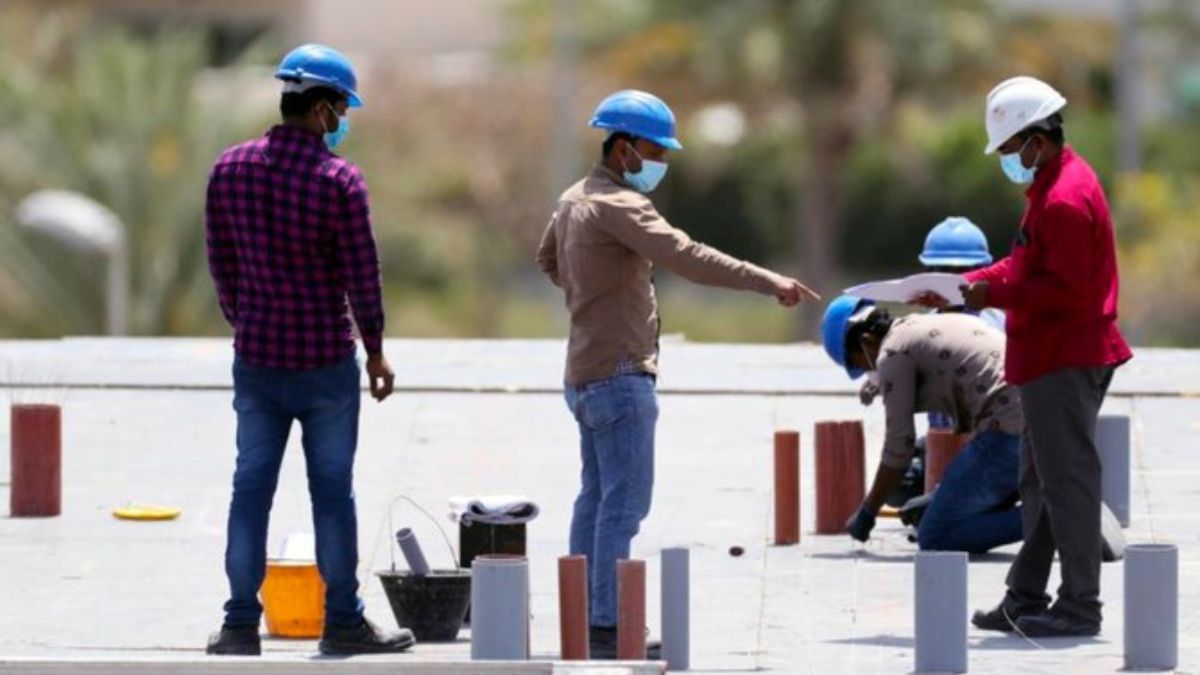
 "The Gulf region is home to half of India's overseas workforce that sends home around $51 billion in remittances annually. (Representational Photo, Credit: Reuters)")
Iran’s continuing attacks across West Asia are hitting India on multiple fronts: disrupting energy supplies, endangering the livelihoods of its 9 million-strong diaspora and $51 billion in remittances, and undermining investments and business activities.
Iranian attacks have also killed at least eight Indian nationals in the region and injured dozens.
An SBI report has flagged the extent of the risk: 38 per cent of all remittances come from West Asia and half of them come from the United Arab Emirates — the country that has faced the largest Iranian bombardment in the ongoing war.
Follow our live coverage of the US-Israeli war on Iran here
Recruiters have flagged that West Asian businesses have halted hiring — and understandably so. While they expect hiring to pick up once the worst of fighting has stopped, there are concerns that some consequences might be long-term.
For example, the damage to infrastructure has been such that many facilities may not be functional for a long time. In Qatar, the gas infrastructure has suffered such damage that analysts say repairs could take three to four years and annual losses could mount to $20 billion . Qatar is also the world’s second-largest gas supplier and depends almost entirely on the Strait of Hormuz that stands blockaded.
West Asia war’s effect on Indian diaspora & remittances
Economists agree that a long-term conflict could cut off remittances by at least 10-30 per cent, according to Economic Times.
The harm could go well beyond loss of money as offshore remittances have been a steady source of support for India’s external balances, offsetting nearly half of the goods trade deficit, Radhika Rao, senior economist at DBS Bank, told ET.
Quick Reads
View All“While in the early stages of the cycle there may be a tendency to front-load remittance transfers to safeguard beneficiaries’ spending capacity, a prolonged conflict could alter these decisions. The Gulf region made up nearly 40 per cent of the total remittance inflows into India, with workers in hospitality, retail and construction likely to be amongst the most vulnerable from an economic slowdown, which consequently will slow inflows by 10-20 per cent,” said Rao.
Assocham Chief Economist SP Sharma told ET that escalation in the war will impact business confidence, which will have a prolonged impact on the overall remittances’ scenario.
“The downside risk could be at least more than 30 per cent in the short to medium term,” said Sharma.
300,000 Indian jobs at stake
The US-Israeli war on Iran has put around 300,000 Indian jobs in the Gulf region at risk , recruiters told Business Standard.
Amit Saxena, Director of recruitment agency Ambe International, told BS, that 100,000-150,000 Indians migrate to the Gulf every month and more than 300,000 recruitments from India could be affected if the movement remains stalled because of the war.
Traditionally, Indians have worked as blue-collar workers in the Gulf in construction, energy, hospitality, and healthcare sectors, but they have also increasingly taken up white-collar roles in sectors like finance, compliance, and artificial intelligence.