

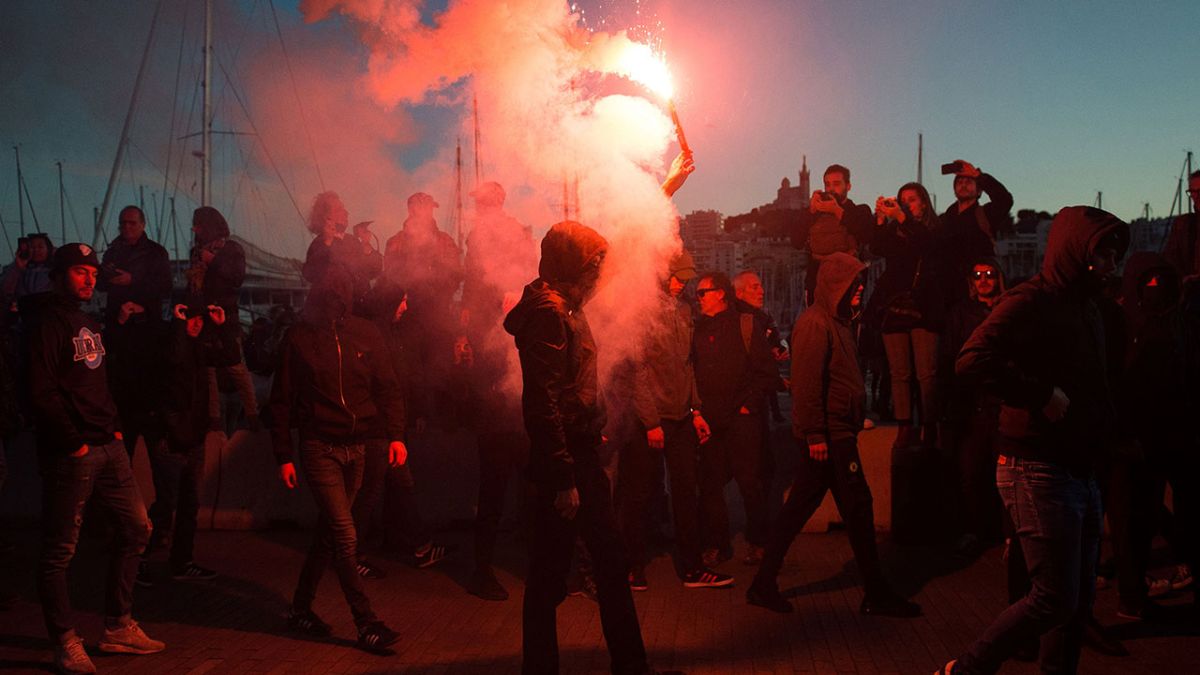
 "France horrified as Marseille’s drug war pulls children into the crossfire")
A surge in drug-related violence in Marseille has thrust one of France’s oldest cities into a harrowing spotlight, with children increasingly caught up in turf wars that were once the exclusive domain of adult gangsters.
The latest accounts from local media and officials describe a volatile streetscape where brutal killings and recruitment of minors by criminal networks have alarmed authorities and ordinary citizens alike.
The grim reality of this escalation was underlined when a group of schoolchildren stumbled upon the charred body of a 15-year-old on a beach, a victim of gang violence so extreme it was filmed and shared online. According to reports, the teenager was shot in the head and set alight, a chilling example of how ordinary landscapes have become stages for public cruelty.
This incident is part of a broader pattern of increasingly brazen violence linked to rival drug factions vying for control of Marseille’s aging port and sprawling estates. Experts and local observers contend that the city’s drug wars have evolved into a near-everyday crisis with social media amplifying their reach and normalising brutality among vulnerable youth, some as young as 13 or 14.
A city in fear
Residents describe an atmosphere of “psychose” collective panic as gang dominance extends beyond marginal neighbourhoods into public spaces once considered safe. Drug networks, under pressure from law enforcement crackdowns are increasingly using social media to recruit teenagers, exploiting poverty, lack of opportunities and social isolation in Marseille’s northern districts.
One local member of a gang told reporters that the old rules no longer apply: violence is random, territorial boundaries are blurred, and young recruits are cheap and expendable. “Nobody respects anything these days,” he said, pointing to scars from bullet wounds sustained in a rival attack.
The scale of youth involvement is staggering. Government estimates indicate that the number of teenagers involved in drug trafficking has increased more than four-fold in recent years, as syndicates deliberately enrol minors who face lighter sentences under French law.
National leadership responds
The spiralling violence has drawn the attention of national leaders. President Emmanuel Macron has called for renewed action, pledging to bolster Marseille’s law enforcement and intelligence capabilities ahead of a planned visit to the city. Interior ministers are reportedly exploring enhanced drug detection systems at ports and airports and deeper judicial cooperation with foreign partners to stem the flow of narcotics into France.
Yet even with such plans in motion, the horrific daily realities remain. Community organisers point out that the rule of law seems subordinate to gang influence in some districts, prompting residents to adopt precautions normally associated with war zones.
Quick Reads
View AllThe cost of chaos
Critics argue that Marseille’s plight underscores a broader failure to address the socio-economic conditions that render young people vulnerable to gang recruitment. With entrenched inequality, limited job prospects and insufficient youth services, deprived neighbourhoods become fertile ground for criminal enterprises seeking expendable foot soldiers.
Parents now fear letting children walk to school alone. Schools report rising anxiety among students. And families torn between protecting loved ones and resisting gang influence face impossible choices.
As Marseille confronts the spectre of its own drug war, France grapples with a harsh reality: a modern urban conflict where the innocent, especially children pay the highest price.

 "What the dramatic US seizure of Venezuela-linked oil tanker tells us")
 "Should Ukraine concede territory to Russia? Zelenskyy wants Ukrainians to vote in referendum")
 "Who is Kilmar Ábrego García, the man ‘mistakenly’ deported by US, now freed?")
 "Trump's new tax guidance could let companies save billions more")
 "What the dramatic US seizure of Venezuela-linked oil tanker tells us")
 "Should Ukraine concede territory to Russia? Zelenskyy wants Ukrainians to vote in referendum")
 "Who is Kilmar Ábrego García, the man ‘mistakenly’ deported by US, now freed?")
 "Trump's new tax guidance could let companies save billions more")



