

 "25 years of Hong Kong handover: A look back at history, friction with Beijing, what happens next")
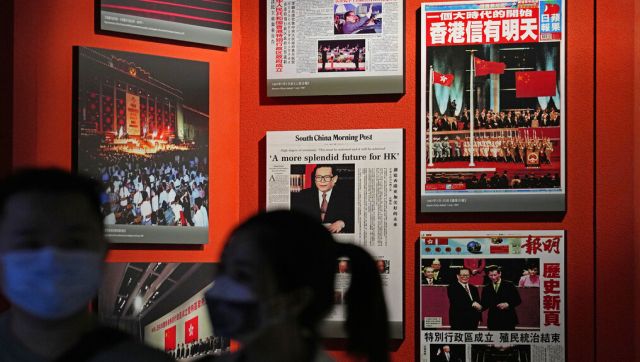
On 30 June, 1997, Britain returned Hong Kong to Chinese control. Today, on the 25th anniversary of the handover and the halfway point of One Country, Two Systems governance model agreed by Britain and China under which the city would keep some autonomy and freedoms, let’s take a look back at handover and what’s happened since. But first a little background on Hong Kong. History of Hong Kong From 1842 to 1997, Hong Kong was a British colony. China ceded it to Britain as part of the Treaty of Nanjing after suffering defeat in the first Opium War. Hong Kong Island and the Kowloon peninsula were signed over in perpetuity, while the larger rural New Territories and outlying islands were added under a 99-year lease in 1898. By 1982, negotiations to return Hong Kong to China had begun. Two years later, the date of 30 June 1997 was agreed upon by both nations. The Sino-British Joint Declaration laid the path to ending more than 150 years of British colonial rule.
But there was a catch.
While mainland China had been under Communist Rule, Hong Kong under the capitalist system had become an economic powerhouse and home to a multicultural, international community. Thus, a compromise was worked out. One Country, Two systems The One Country, Two Systems promised a high degree of autonomy, independent judicial power, and that the city’s leader would be appointed by Beijing on the basis of local elections or consultations. A mini-constitution, the Basic Law, was later drafted, guaranteeing Hong Kong’s capitalist way of life for 50 years as well as a high degree of autonomy, an independent judiciary, and broad freedoms. It also promised full democracy as an ultimate goal. [caption id=“attachment_10807051” align=“alignnone” width=“640”]  Students hold Chinese national flags during a flag raising ceremony to mark the 24th anniversary of Hong Kong handover to China at a school. AFP[/caption] Handover to China Handover day saw the British Union Jack being taken down and the People’s Republic of China flag unfurled.
A regiment of the People’s Liberation Army also moved into barracks in the city.
‘Hong Kong is a Chinese city with British characteristics,’ Chris Patten, the last British governor of the territory, said on the day of the handover, as per Asia Society. For his part, then Chinese leader Jiang Zemin said Beijing ‘will not intervene in matters that ought to be handled by Hong Kong.’ He claimed protection ‘in full’ of rights and freedoms of speech, press, and Assembly. Tensions escalate In the years after the handover, mistrust between Beijing and Hong Kongers only escalated. The pro-democracy camp saw Beijing as ruthless authoritarians set on denying Hong Kongers their promised rights. And the CCP increasingly saw their demands as a challenge to China’s sovereignty. In 2002 and 2003, over half a million people took to the streets against a proposed security law – which was ultimately shelved – that rights groups said threatened basic freedoms. In June 2014, China issued a policy document underscoring China’s sovereignty and ultimate authority over the city. That August, China’s parliament ruled Hong Kong could have a direct vote for its leader in 2017, but only for candidates endorsed by a pro-Beijing vetting committee. Pro-democracy advocates in Hong Kong denounced this as “fake”, and 28 September thousands of protesters thronged key roads, prompting police to fire tear gas. The “Umbrella Revolution” - named after the use of umbrellas to block police weapons - occupied roads in three major districts for 79 days, before being cleared by police. Beijing granted none of the protesters’ demands, including universal suffrage. Tensions finally exploded in the huge, sometimes violent protests of 2019 when millions opposed a bill that would have allowed people accused of certain crimes to be sent to China for trial. Peaceful protests snowballed into a populist movement against Chinese authoritarian rule. On 1 July 2019, protesters forced their way into parliament, tearing portraits down, smashing furniture, with one even raising the old British colonial flag. [caption id=“attachment_8562061” align=“alignnone” width=“640”]  Police officers make an arrest during protests in the Causeway Bay neighbourhood of Hong Kong. By Lam Yik Fei © 2020 The New York Times[/caption] Beijing responded by tightening the screws even more. In 2020, Beijing’s ceremonial legislature imposed the National Security Law (NSL) in 2020 on the city after it determined Hong Kong’s council couldn’t pass the legislation itself because of political opposition. China’s legislature also mandated changes to the makeup of the council to ensure an overwhelming pro-Beijing majority, and required that only those it determines to be “patriots” can hold office. What happens next? Speaking to BBC, a senior Beijing official said the governing principle of “one country, two systems” would not necessarily change come 2047. “There is no need to change after 50 years,” Shen Chunyao said at a legal conference. However, he suggested that “timely improvements” needed to be made, saying that otherwise “its potential cannot be achieved in the long run”. Others take a stronger stance. “As an inalienable part of China, we cannot afford to be a country that undermines the security of China,” said Regina Ip, one of Hong Kong’s most well-known pro-Beijing lawmakers. “If they don’t think the current system is sustainable, the option will be to reintegrate Hong Kong, even before 2047.”
Critics like Patten, the last British governor, accuse the CCP of betraying its promises to Hong Kong.
“China has ripped up the joint declaration and is vengefully and comprehensively trying to remove the freedoms of Hong Kong because it regards them as a threat, not to the security of China but to the ability of the Chinese Communist Party to hang on to power,” Patten said. But former Hong Kong leader Leung Chun-ying said the crackdown over the last three years was “not overkill”. “You can’t say, ‘We want to have a high degree of autonomy and you stand aside’ – that will be de facto independence of Hong Kong,” he said. Leung, whose administration faced down the Umbrella Movement, blamed years of social and political unrest on people being misled by political figures and misunderstanding Hong Kong’s mini-constitution. [caption id=“attachment_10515191” align=“alignnone” width=“640”] 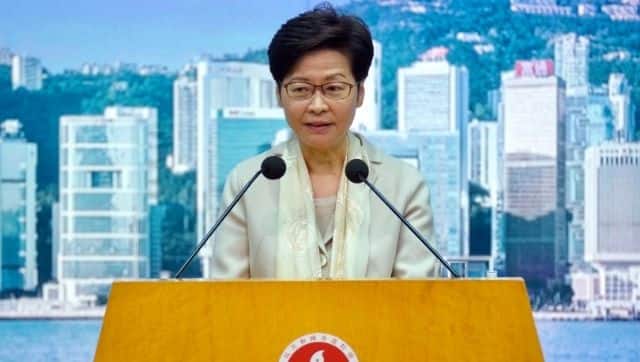 Hong Kong Chief Executive Carrie Lam at a press conference in Hong Kong. AP File[/caption] He also suggested hostile “external forces” were involved, but declined to be specific. Echoing Beijing, Leung described One Country, Two Systems as a success and said the arrangement might continue beyond its 50-year term, calling 1 July, 2047, “a non-event”. But Many Hong Kongers remain unconvinced. Public confidence in One Country, Two Systems hit a historic low in mid-2020, according to polls carried out by the Hong Kong Public Opinion Research Institute since 1994. Some, like Herman Yiu, a young politician born in the year of the handover, have lost all hope of ever being able to make change within the system. “Being born in 1997… it felt like my fate was connected to Hong Kong’s fate,” Yiu said. “I wanted to participate to make Hong Kong better.” As a fresh graduate, Yiu was part of a pro-democracy landslide at one-person-one-vote district council elections in 2019. His career was short-lived, though – in June he became one of the many politicians disqualified from office. “I think now the emphasis of One Country, Two Systems is on ‘one country’,” Yiu said. “I feel helpless, for Hong Kong and myself.” With inputs from agencies Read all the Latest News , Trending News , Cricket News , Bollywood News , India News and Entertainment News here. Follow us on Facebook, Twitter and Instagram.


 "Russian drones over Poland: Trump’s tepid reaction a wake-up call for Nato?")
 "As Russia pushes east, Ukraine faces mounting pressure to defend its heartland")
 "Why Mossad was not on board with Israel’s strike on Hamas in Qatar")
 "Turkey: Erdogan's police arrest opposition mayor Hasan Mutlu, dozens officials in corruption probe")
 "Russian drones over Poland: Trump’s tepid reaction a wake-up call for Nato?")
 "As Russia pushes east, Ukraine faces mounting pressure to defend its heartland")
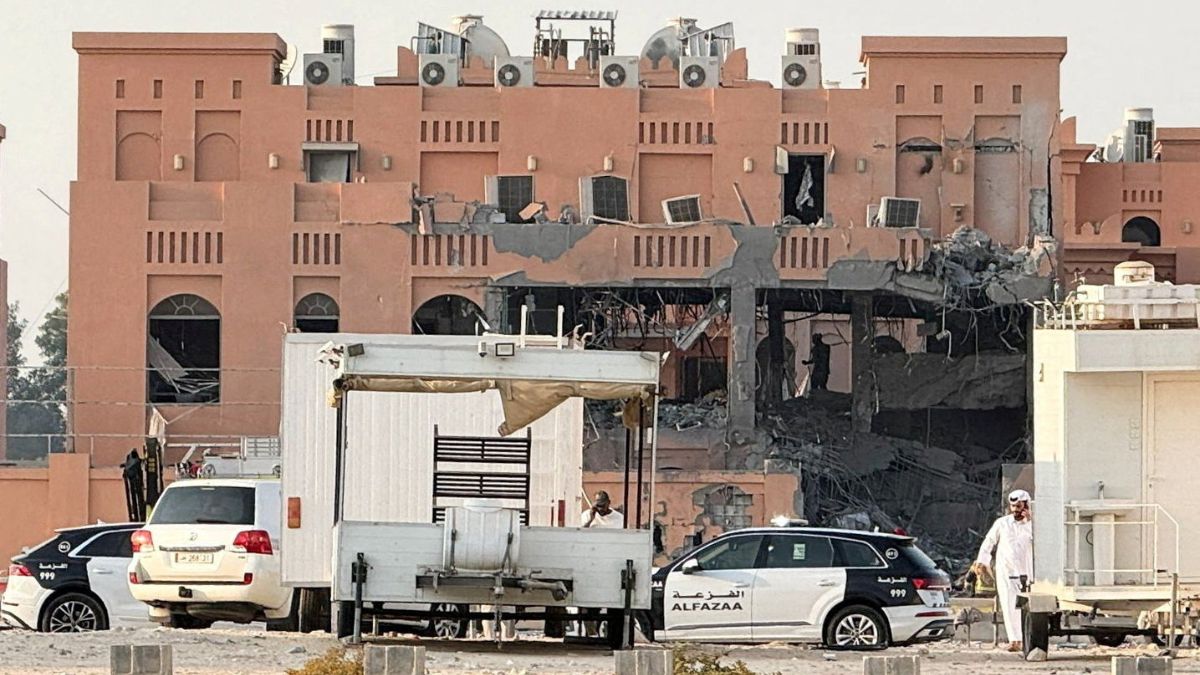 "Why Mossad was not on board with Israel’s strike on Hamas in Qatar")
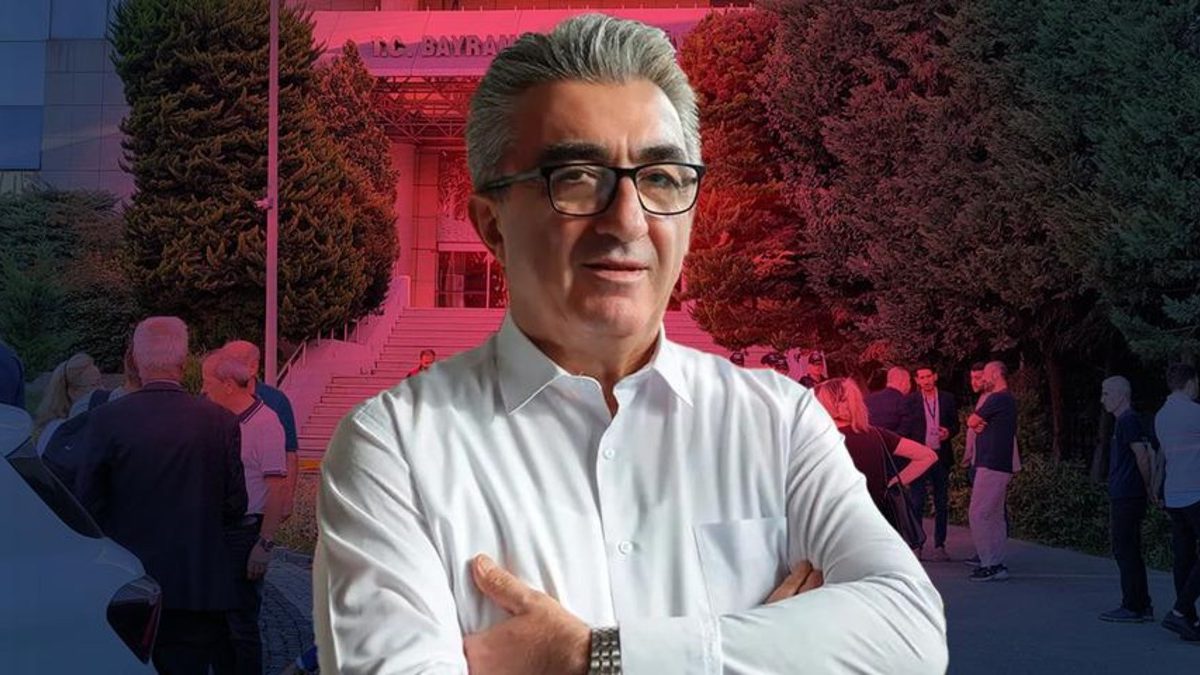 "Turkey: Erdogan's police arrest opposition mayor Hasan Mutlu, dozens officials in corruption probe")



](https://images.firstpost.com/wp-content/uploads/2022/06/hongkong.jpg)
](https://images.firstpost.com/wp-content/uploads/2020/07/HONG-KONG-TRANSFORM-3_opt.jpg)
](https://images.firstpost.com/wp-content/uploads/2022/04/Carrie-Lam-Hong-Kong_edit.jpg)