

 "Did Yunus's stance on North East trigger India's export restriction?")
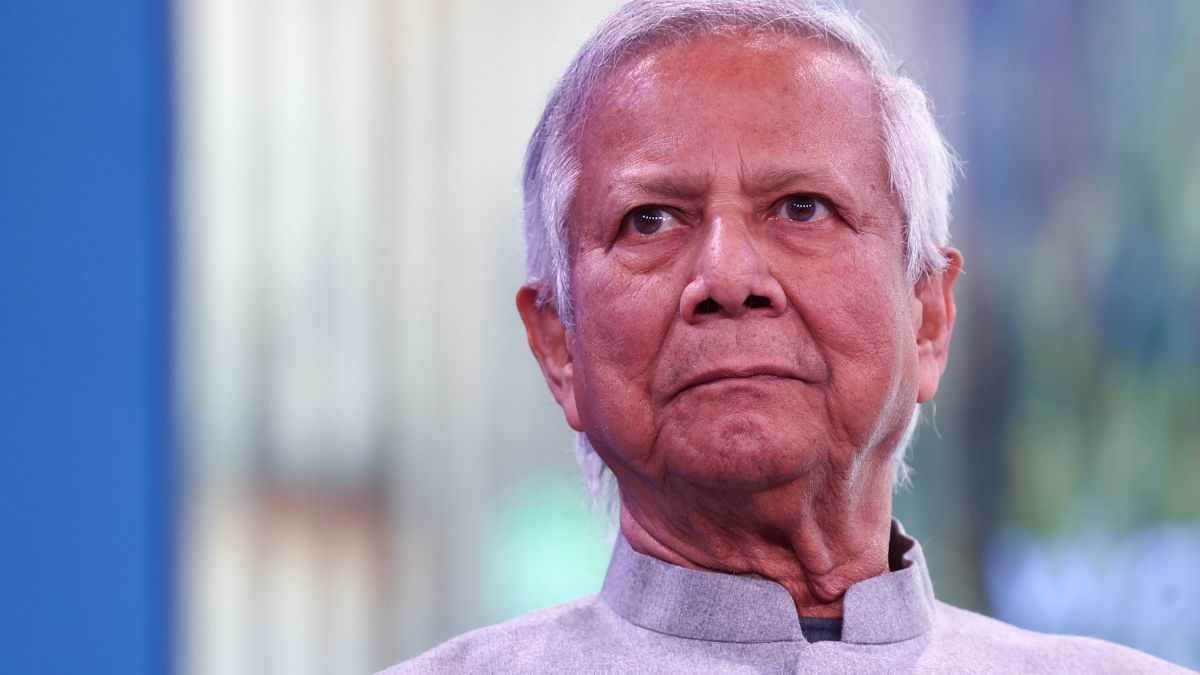
Muhammad Yunus , the Nobel Laureate serving as Bangladesh’s interim chief adviser, has recently taken steps that have sparked concern in the region due to their open hostility toward India. During a four-day diplomatic visit to China in March, Yunus made a controversial statement suggesting China could gain logistical access to India’s seven northeastern states through Bangladeshi territory—effectively offering a strategic route that bypasses India’s control. These remarks were widely regarded as highly unorthodox and appeared to disregard the delicate geopolitical balance in South Asia.
Given that India views any increasing Chinese presence in its immediate vicinity with caution, Yunus’s suggestion was interpreted by many observers as a deliberate move intended to needle New Delhi.
The situation escalated further on April 29 when a former high-ranking Bangladeshi military officer, Maj Gen (retd) ALM Fazlur Rahman—widely regarded as close to Yunus’s caretaker administration—posted inflammatory comments on social media. Referring to the rising hostilities between India and Pakistan following the deadly April 22 attack in Pahalgam, Jammu & Kashmir, in which 25 Indian tourists and one Nepali tourist were killed, Rahman argued that Bangladesh should consider aligning more closely with China militarily. He even floated the idea of seizing Indian territory in the North East in the event of a broader regional conflict.
These developments are unfolding in a time of strained Indo-Bangladesh relations, worsened since the departure of Sheikh Hasina’s government . The region is entering an uncertain period, with Bangladesh’s proximity to India’s narrow Siliguri Corridor—often called the “Chicken’s Neck”—heightening strategic sensitivities. This narrow stretch is India’s critical link to its northeastern states.
Impact Shorts
More ShortsIndia responds with targeted economic countermeasures
India has begun implementing policy measures in response to these provocations. New trade restrictions were recently imposed on goods from Bangladesh destined for India’s northeastern states. These curbs have come against the backdrop of escalating rhetoric from Dhaka—particularly claims that Bangladesh could throttle North East India’s access to maritime trade routes through the Bay of Bengal.
Previously, under former PM Hasina, India and Bangladesh had agreed on arrangements that allowed North-eastern states to use the Chittagong port, creating economic opportunities for both countries. These agreements brought significant revenue to Bangladesh through port royalties and facilitated regional integration.
However, officials now express concerns that the current interim government, influenced by radical factions and supported by elements of the pro-Pakistan Jamaat-e-Islami, is seeking to destabilise India’s North East.
Historically, Bangladesh harboured separatist groups from this region until the Hasina administration cracked down on them in 2009. Since then, bilateral relations improved with Bangladeshi businesses establishing a presence in the North East and India gaining vital transit access through Bangladeshi territory.
More recently, Pakistani cargo was offloaded at Chittagong port for the first time in over five decades—a symbolic gesture raising fears in New Delhi of a rekindling of ISI activity within Bangladesh. This development, paired with increasing Pakistani military outreach to Dhaka, is viewed with growing suspicion by Indian intelligence.
Late Saturday, India’s Directorate General of Foreign Trade announced that specific exports from Bangladesh would face new restrictions at various land borders. This network spans vital corridors across India’s northeastern states—Assam, Meghalaya, Tripura and Mizoram—along with important transit points in North Bengal such as Changrabandha and Fulbari. The move signals New Delhi’s intent to push back against what it sees as a shifting and potentially hostile regional posture from Dhaka’s interim rulers.
A bonanza for India’s textile industry
Reports suggest that India’s ban on imports from Bangladesh through the land ports could generate an additional business of more than Rs1,000 crore for the domestic textile industry, said industry experts. However, certain branded garments may see some supply issues in the winter season, which could raise prices of items like T-shirts and denims two-three per cent.
India’s domestic manufacturers have been urging the government to impose curbs on Bangladeshi textile inflows, alarmed by the sharp surge—exceeding ten percent—in shipments entering tariff-free under current trade terms. Industry leaders also believe the move will curb the back-door import of Chinese fabric, which otherwise attracts 20 per cent import duty, the report said.
Taking advantage of duty-free access, Indian firms have been sourcing both woven and knit garments from Bangladesh.
Sanjay K Jain, chairman of the National Textile Committee under the Indian Chamber of Commerce (ICC) told The Economic Times that India had been importing garments worth Rs6,000 crore annually from Bangladesh, but with the recent developments, it was now anticipated that imports worth Rs1,000–2,000 crore could be substituted by domestically produced goods.
According to industry estimates, India meets up to two per cent of its apparel consumption through imports, while Bangladesh accounts for about 35 per cent of total garment imports in the country. All the leading Indian brands as well as the global brands present in India source between 20 per cent and 60 per cent garments from Bangladesh. In the near future, disruptions are likely to affect the operations of these brands and numerous small and medium-sized enterprises reliant on their supply networks.
Bangladesh already facing brunt of Yunus’s brazenness
Bangladeshi exporters have voiced alarm over India’s recent imposition of port restrictions on major exports like ready-made garments and processed food items. They cautioned that the unexpected policy change could trigger shipment delays, inflate transportation costs and disrupt both bilateral and regional trade flows.
There are concerns that measures that New Delhi has taken over Dhaka’s changing stance might erode Bangladesh’s competitive edge in the Indian market. Despite the rising concern, Bangladesh’s interim administration maintained that the situation would be handled through diplomatic channels and expressed optimism that commercial relations with India would remain steady.
Commerce Adviser SK Bashir Uddin clarified on Sunday that Dhaka had yet to receive an official communication from New Delhi regarding the implementation of these trade restrictions.
Bangladeshi daily The Daily Star reported that India’s action has caught exporters unprepared. Significant losses have been reported and cargo have been found stranded at key land ports such as Benapole, Burimari and Banglabandha. The daily reported that at least 36 trucks carrying apparel were immobilised at Benapole alone by Sunday evening.
In a specific incident at the Banglabandha-Phulbari border point, a truck from the RFL Group carrying plastic doors was reportedly denied entry. The export manager, Shubho Kumar Saha, said Indian officials informed them that the consignment no longer complied with the revised rules, forcing them to recall the vehicle.
Kamruzzaman Kamal, marketing director of the same group, mentioned that the company currently has 17 trucks loaded with processed food worth over $100,000 stuck across different ports.
Energypac Fashions Ltd, another major exporter, revealed that three of its containers filled with formalwear valued at over $300,000 were halted at Benapole. Meanwhile, at Burimari Land Port in Lalmonirhat, around 80 trucks were also unable to proceed.
The new directive, introduced late Saturday without prior notice, mandates that garment exports — which constitute Bangladesh’s leading export category — may now only be routed through sea ports in Kolkata or Nhava Sheva.
Other items affected by the restrictions include soft drinks, processed foods, plastic goods, furniture and textile waste such as cotton and yarn residues. However, the trade of products like liquefied petroleum gas (LPG), fish, edible oils, and crushed stones remains unaffected.
Data from the Export Promotion Bureau shows that Bangladesh’s garment exports to India reached $563.81 million between July and April in the current fiscal year — an increase of nearly 19 per cent from the same period a year ago. Overall exports to India totalled $1.56 billion during FY24, in contrast to approximately $9 billion in imports from India.
It’s not just exporters who stand to lose—hundreds of workers in Bangladesh who depend on freight handling, logistics and related jobs now face serious disruptions to their livelihoods. The situation has placed the onus on the interim administration under Yunus to determine whether brinkmanship is worth the mounting economic and diplomatic costs.


 "Russian drones over Poland: Trump’s tepid reaction a wake-up call for Nato?")
 "As Russia pushes east, Ukraine faces mounting pressure to defend its heartland")
 "Why Mossad was not on board with Israel’s strike on Hamas in Qatar")
 "Turkey: Erdogan's police arrest opposition mayor Hasan Mutlu, dozens officials in corruption probe")
 "Russian drones over Poland: Trump’s tepid reaction a wake-up call for Nato?")
 "As Russia pushes east, Ukraine faces mounting pressure to defend its heartland")
 "Why Mossad was not on board with Israel’s strike on Hamas in Qatar")
 "Turkey: Erdogan's police arrest opposition mayor Hasan Mutlu, dozens officials in corruption probe")



