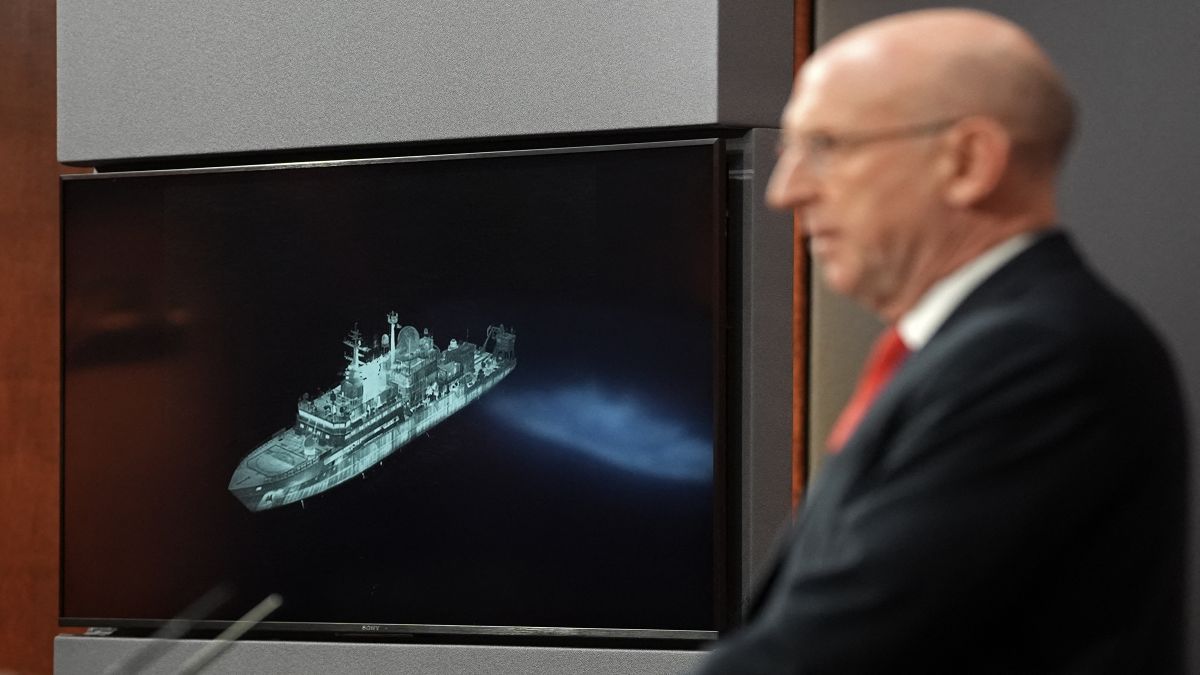
 "Britain's Defence Secretary John Healey said that extra air defence teams and systems would be deployed to Saudi Arabia, Bahrain and Kuwait while the use of Typhoon jets in Qatar will be extended. Photo: File/AFP")
UK will send more troops and deploy advanced air defence systems in West Asia to protect British allies in the Gulf from Iranian attacks, Defence Secretary John Healey announced, while being on a trip to the Gulf nations.
The move is expected to bring the total number of UK personnel involved in the defence of the Gulf to around 1,000.
“Extra air defence teams and systems would be deployed to Saudi Arabia, Bahrain and Kuwait while the use of Typhoon jets in Qatar will be extended,” Healey said. “My message to Gulf partners is: Britain’s best will help you defend your skies.”
Ironically, Healey’s announcement comes just days after the UK PM Keir Starmer said that the ‘war in Iran is not our war,’ and ‘UK will not be dragged into the wider war.’
However, Starmer’s statement came under heavy criticism from US President Donald Trump who asked UK to “build up some delayed courage.”
“You’ll have to start learning how to fight for yourself, the U.S.A. won’t be there to help you anymore, just like you weren’t there for us. Iran has been, essentially, decimated. The hard part is done. Go get your own oil!”, Trump wrote in his post on Truth Social.
UK’s presence in Gulf
The presence of UK military in the Gulf is not new. It has been there even prior to the Iran conflict, that began on February 28 this year.
Earlier in the year, UK sent four additional jets to Qatar following the deployment of the Royal Air Force’s joint UK-Qatari Typhoon squadron in January, according to a report by BBC.
Quick Reads
View AllThe report says that UK’s Lightweight Multirole Missile launcher, a short-range air defence system, has already been deployed to Bahrain along with UK experts who will work to integrate the system into Bahraini defences. Ground-based air defence missile system ‘Rapid Sentry’ has also arrived in Kuwait.
UK is also set to deploy air defence missile system ‘Sky Sabre’ in Saudi Arabia. The system consists of radars, control node, and missile launchers, which could integrate into the wider air defences system of the region.
However, despite having a significant military presence in the region, Britain has remained cautious of its approach in the ongoing Iran war. Initially, it rejected a US request to use its bases for strikes against Tehran, before allowing them to use its military bases for “defensive” strikes on Iranian missile sites.
This cautious approach, however, has attracted scepticism of the Trump administration about UK’s intentions Defending his country’s stand, Healey said, “We’re two nations whose militaries are bound closely together, that work closely together, whose intelligence services share uniquely the recognition of the threats around the world and the action that free nations must take and take together.”