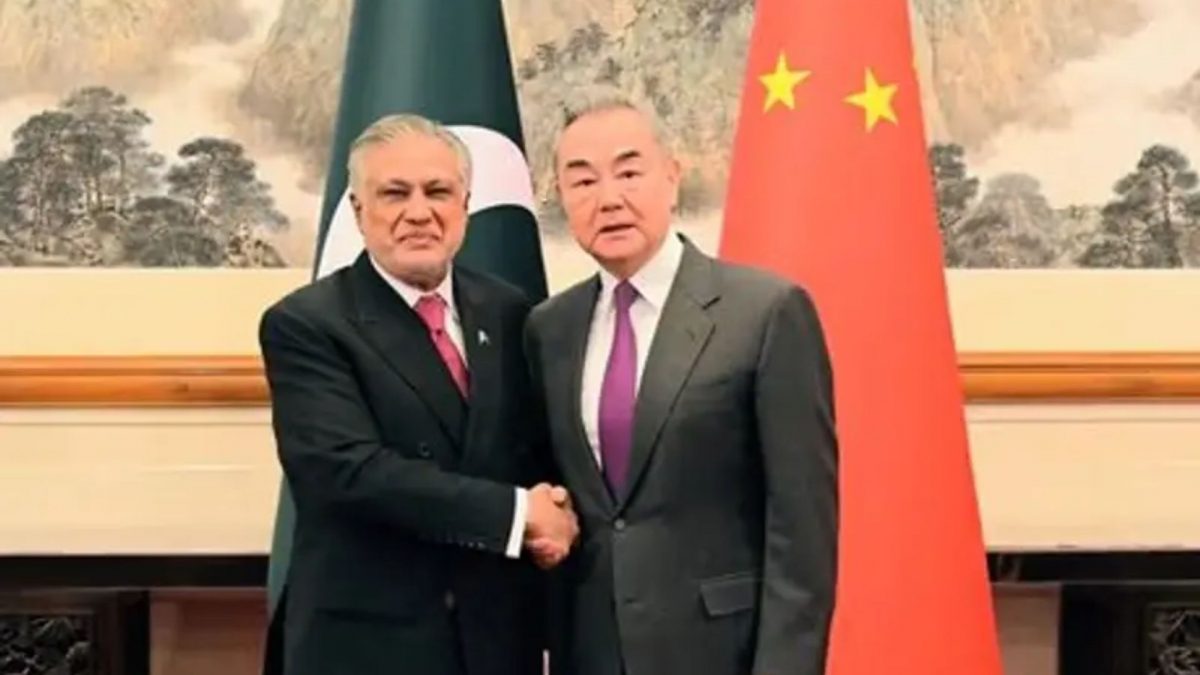
 "China’s FM Wang Yi (right) and his Pakistani counterpart Ishaq Dar have released a 5-point initiative aimed at “restoring peace and stability” in the Gulf and Iran following talks in Beijing. (X)")
China and Pakistan on Tuesday called for an immediate end to the war in West Asia and urged the launch of peace talks at the earliest, as both sides agreed to enhance cooperation on the Iran situation.
The two countries outlined a joint initiative “for restoring peace and stability in the Gulf and West Asia region” following a visit by senior Pakistani officials to Beijing.
Both countries have been seeking to mediate in the region to prevent further escalation, with Islamabad expressing readiness to host “meaningful talks” between the United States and Iran.
During the visit, Pakistani Foreign Minister Ishaq Dar met Chinese Foreign Minister Wang Yi, with both sides agreeing to “strengthen strategic communication and coordination on the Iran situation and … make new efforts towards advocating for peace,” according to Beijing.
Dar’s ministry later said the two countries had agreed on a five-point plan, beginning with the “immediate cessation of hostilities” and the “start of peace talks as soon as possible”.
Quick Reads
View AllAddressing the question of negotiations — which the United States says are ongoing but Iran denies — the two governments stressed that dialogue and diplomacy were “the only viable option to resolve conflicts”.
“China and Pakistan support the relevant parties in initiating talks, with all parties committing to peaceful resolution of disputes, and refraining from the use or the threat of use of force during peace talks,” the statement added.
The proposed plan also calls for an end to attacks on civilians and non-military targets, including energy infrastructure and desalination facilities.
It further emphasises securing vital shipping routes to ensure “the early and safe passage of civilian and commercial ships” through the Strait of Hormuz.
Both countries highlighted that any lasting peace must be based on the UN Charter and international law.
Dar’s visit comes days after he hosted counterparts from Saudi Arabia, Egypt and Turkey for discussions aimed at ending the conflict, which was triggered by US-Israeli strikes on Iran on February 28.
Concerns remain high over the broader impact of the fighting, particularly disruptions to maritime traffic through the Strait of Hormuz.
China, a key partner of Iran, has so far refrained from offering military support, instead consistently calling for a ceasefire.
While Tehran has denied holding official talks with Washington, it has reportedly conveyed a response to US President Donald Trump’s 15-point proposal to end the conflict via Islamabad, according to an unnamed source cited by Iran’s Tasnim news agency.
Pakistan remains one of China’s closest regional partners. At the same time, Beijing has urged “calm and restraint” in Pakistan’s own tensions with Afghanistan, with a Chinese special envoy recently engaging in mediation efforts between the two countries.
With inputs from agencies