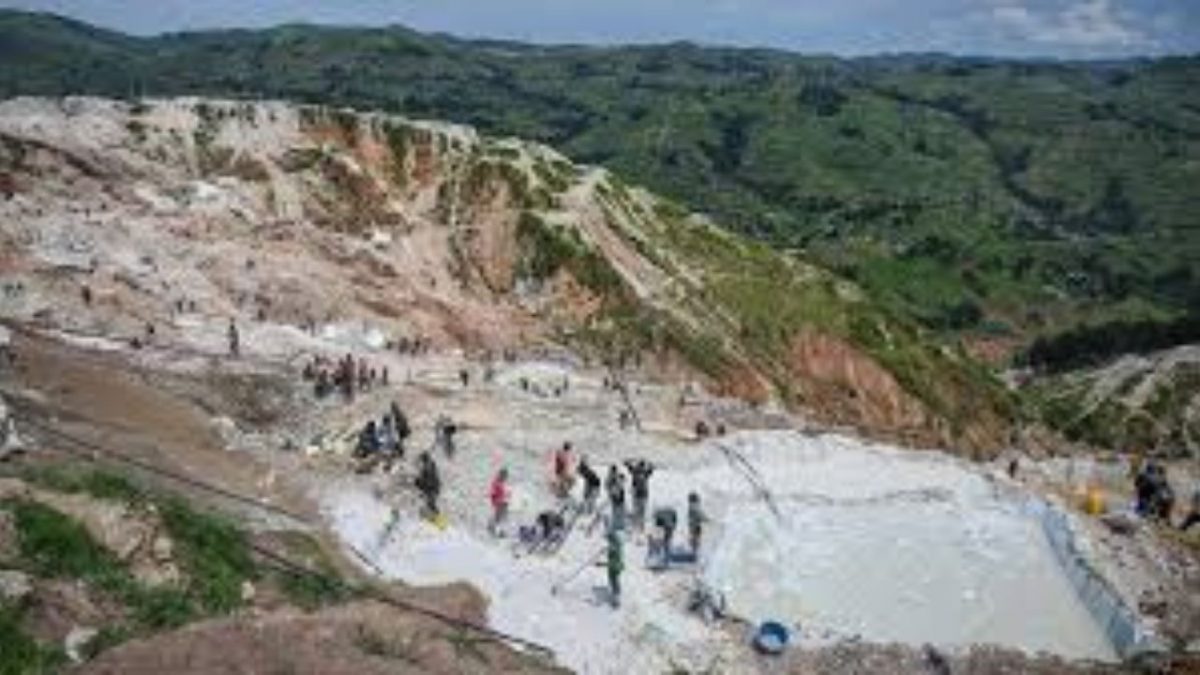
 "Families across eastern Congo mourn coltan mine landslide victims as survivors prepare to risk unstable tunnels again")
In eastern Congo, grief and hardship are unfolding side by side after a deadly landslide at a rebel held coltan mine killed at least two hundred people. As families in Goma and nearby areas mourn loved ones lost at Rubaya, many of the surviving miners say they have little choice but to return to the same unstable tunnels that almost claimed their lives.
Families grieve in Goma
In the Mugunga neighbourhood on the outskirts of Goma, relatives and neighbours have gathered for days at the home of 39 year old miner Bosco Nguvumali Kalabosh. A photograph propped against a wall has become the focal point of quiet prayers and shared memories. His brother, Thimothee Kalabosh Nzanga, recalls that Bosco was due to come home the very day after the collapse.
Mining was in their blood: Bosco had worked at Rubaya for more than a decade, owned pits of his own, and belonged to a family where artisanal mining had long been passed from one generation to the next. He leaves behind his wife and four young children, the eldest only five.
Survivors caught between fear and necessity
Those who made it out alive speak of horror and resignation in equal measure. Survivor Tumaini Munguiko visited the Kalabosh family to offer condolences, describing how painful it is to watch colleagues die in front of him. Yet he admits he will soon go back. For him and many others, the mine is the only source of income in a region marked by poverty and conflict.
Landslides, he says, are almost expected during the rainy season, when sodden clay soils give way. Some miners manage to run, others are buried, and many simply watch helplessly as tunnels collapse.
Quick Reads
View AllDangerous work in hand dug tunnels
Rubaya’s mining complex, around forty kilometres from Goma, is honeycombed with long, narrow tunnels dug by hand with minimal reinforcement. Crowded pits can hold hundreds of workers at once. Former miner Clovis Mafare explains that there is no real oversight or engineering: people dig wherever they can, without proper supports or escape routes. Parallel tunnels mean that a single collapse can trigger a chain reaction, trapping miners across several pits. He notes that the diggers work without insurance, and any financial help after a disaster is small and slow in coming. Families like that of Kalabosh have yet to see meaningful compensation.
Coltan riches and rebel control
The Rubaya deposits produce coltan, the ore that yields tantalum and niobium, metals that power mobile phones, computers, vehicles and advanced military and aerospace equipment. This makes the area strategically important and fiercely contested.
Since early 2024, the mines have been held by M23 rebels backed by Rwanda, after repeated shifts in control between government forces and armed groups. Thousands of artisanal miners from across eastern Congo flock to the site in search of steady earnings, despite the constant threat of violence and accidents.
Isolation deepens the trauma
In the aftermath of the landslide, Rubaya has been largely cut off from the outside world. Poor roads, fighting and weak infrastructure mean there is no reliable mobile or internet coverage. Residents rely on a privately operated Starlink link, paying a significant sum for brief access to communicate with relatives or seek help. Meanwhile, the political blame game has intensified.
The Congolese government has accused M23 and Rwanda of unsafe and illegal exploitation of resources, while the rebels point to fatal collapses at mines controlled by state forces and denounce what they call political opportunism. Amid these disputes, bereaved families and anxious survivors remain trapped between grief, danger and economic desperation.