 "CIA targeting China’s military ranks? US releases video aimed at PLA insiders; Beijing hits back")
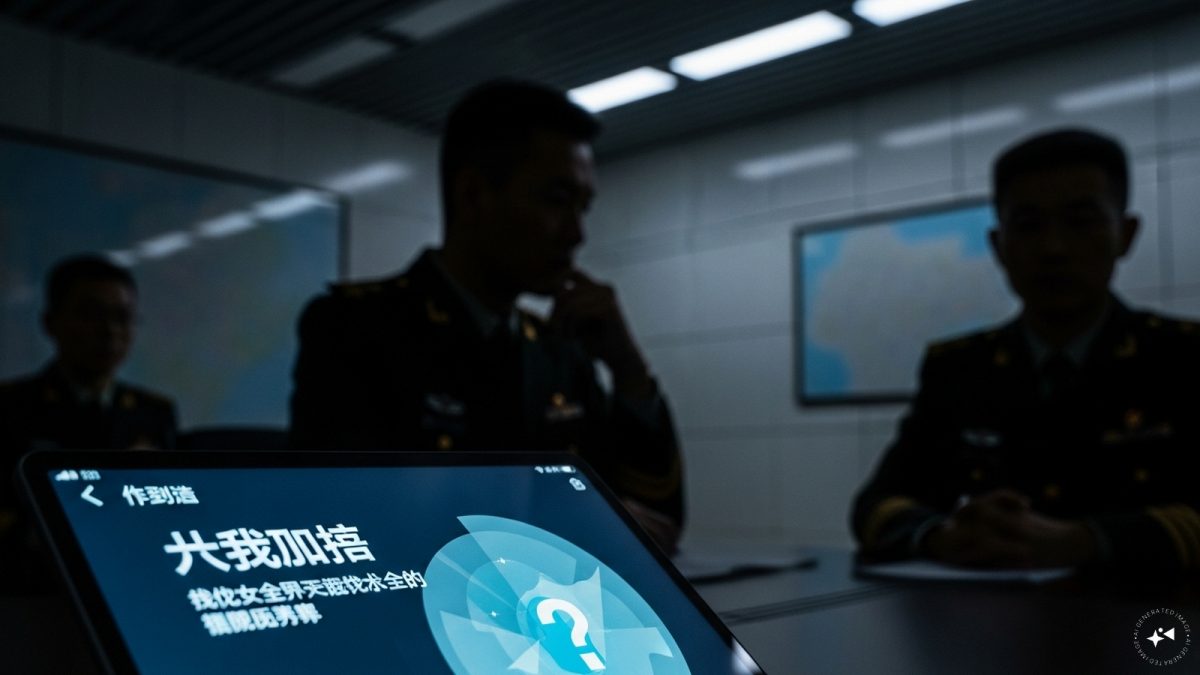
In a move that mirrors the high-stakes intrigue of a Cold War thriller, the Central Intelligence Agency (CIA) has launched a bold public campaign to infiltrate the heart of the People’s Liberation Army (PLA). The United States’ CIA has publicly launched a new effort to recruit sources inside China’s armed forces, releasing a Chinese-language video that directly appeals to disillusioned officers within the PLA.
The move has triggered a sharp rebuke from Beijing, which accused Washington of infiltration and pledged to safeguard national security.
The video, uploaded to the CIA’s official YouTube channel, portrays a fictional mid-ranking PLA officer reflecting on alleged corruption among senior commanders. Speaking in Mandarin, the character questions the motives of party leaders and expresses concern about his daughter’s future, ultimately deciding to share information with US intelligence as what he describes as an act of loyalty to his country.
The release comes at a time when President Xi Jinping is overseeing a sweeping anti-corruption drive within the Chinese military. Several senior officers, including figures connected to the Central Military Commission have been removed from their posts in recent months over what authorities describe as “grave violations of discipline and the law.” US officials, cited in American media reports, believe the turmoil could create openings for intelligence recruitment, especially among officers unsettled by internal power shifts.
CIA Director John Ratcliffe defended the outreach campaign, stating that earlier Mandarin-language messaging had attracted attention from Chinese citizens. He added that the agency would continue offering officials and civilians a channel to communicate securely. The CIA has also published guidance for potential informants on how to use encrypted tools, including the Tor network and virtual private networks to bypass China’s internet restrictions.
Quick Reads
View AllBeijing sees red: A vow of “all necessary measures”
China’s foreign ministry reacted swiftly. Spokesperson Lin Jian said Beijing would take “all necessary measures” to counter what he described as infiltration and sabotage by foreign forces. He did not detail what steps China might take, but officials have previously framed similar US initiatives as hostile attempts to destabilize the country.
The exchange highlights the growing intelligence rivalry between Washington and Beijing, which has intensified alongside trade disputes, technology restrictions and military tensions in the Indo-Pacific region.
For US intelligence agencies, rebuilding networks inside China has been a priority after major setbacks more than a decade ago. Between 2010 and 2012, more than a dozen CIA sources in China were reportedly killed or imprisoned after communications systems were compromised. Since then, US officials have acknowledged the difficulty of operating inside one of the world’s most tightly controlled security environments.
China, for its part, has strengthened counter-espionage laws, expanded surveillance powers and tightened internet controls. State media frequently accuse the United States of attempting to infiltrate Chinese institutions and recruit insiders.
Exploiting the purge: Why now?
The timing of the CIA’s release is no coincidence. It arrives in the wake of an unprecedented “annihilation” of the Chinese military’s upper echelons. Xi’s military reshuffle has removed top generals and officials, prompting speculation among analysts about whether the campaign is aimed solely at tackling corruption or also at consolidating political loyalty within the armed forces.
American officials quoted in US media say corruption has slowed aspects of China’s military modernisation, potentially creating frustration among officers whose careers have been affected by investigations or shifting alliances. Targeting such sentiment forms a core theme of the CIA’s new recruitment messaging.
By portraying a fictional officer driven by concern for his family and disillusionment with leadership, the agency appears to be testing whether internal dissatisfaction can be leveraged through digital outreach rather than traditional clandestine contacts.
Yet the public nature of the campaign also carries risks. Openly broadcasting recruitment appeals may harden Beijing’s stance and further restrict foreign engagement with Chinese nationals. It could also complicate diplomatic efforts at a time when both governments are attempting to stabilize aspects of their broader relationship.
The episode reflects how espionage efforts increasingly play out not only in shadow networks but also in public messaging campaigns, where symbolism and signalling are as important as operational gain. Whether the CIA’s outreach yields actionable intelligence remains unclear, but Beijing’s swift response suggests it views the attempt as more than routine spy craft.