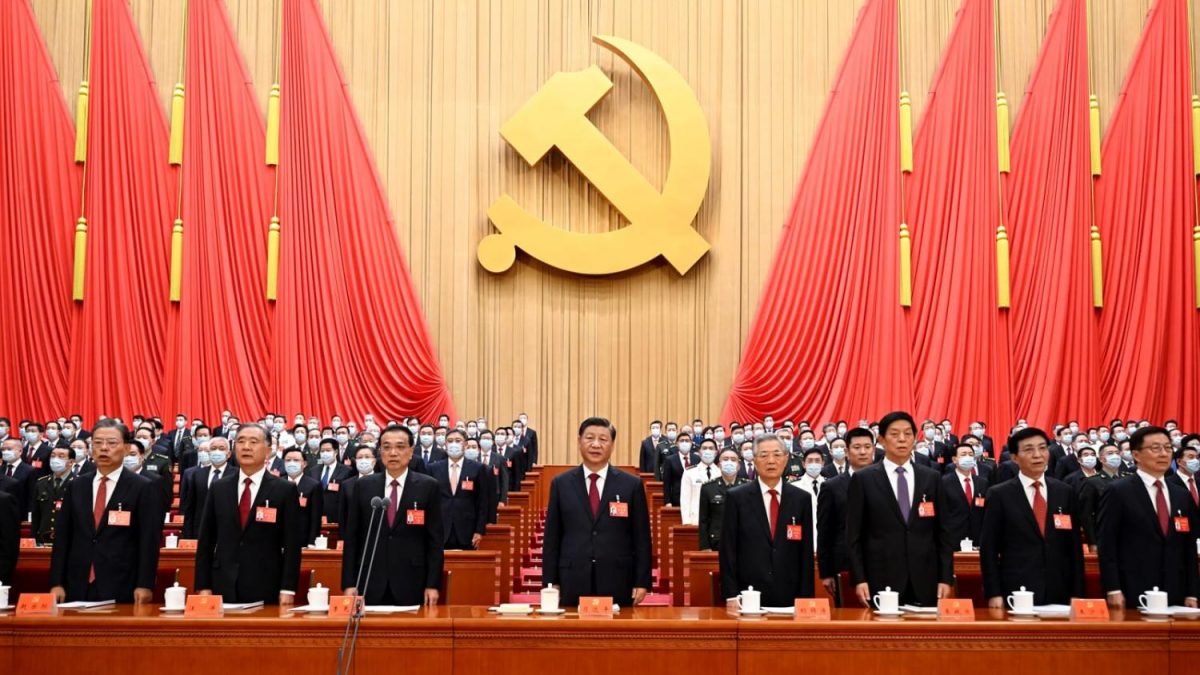
 "Chinese Communist Party wraps us 'Two Sessions' with ambitious economic targets amid Trump pressure. Image: X")
China concluded its biggest political event of the year on Tuesday, but one key question remains: How much will it do to boost economic growth in 2025?
China has wrapped up its most significant political gathering of the year, the “Two Sessions,” setting ambitious economic targets amid growing global challenges.
With an economic growth goal of around 5 per cent, the leadership has pledged to boost domestic demand and strengthen key industries. However, as tensions with the United States escalate, particularly due to new tariffs imposed by President Donald Trump, uncertainty looms over China’s economic trajectory.
Throughout the week-long meeting of the nearly 3,000-member National People’s Congress, leaders emphasised the need to boost investment and consumer spending.
However, how much of this will turn into real action remains to be seen, as the ruling Communist Party balances its priorities. The ongoing trade war with the United States has added uncertainty to China’s economic outlook.
The meeting concluded on Tuesday without Zhao Leji, the top political leader and chairman of the Standing Committee of the National People’s Congress. He was expected to host the closing ceremony but was absent due to a respiratory infection, according to Vice Chairman Li Hongzhong.
Li chaired the closing session in Zhao’s absence.
China’s parliament, known for approving government decisions without much opposition, passed the work report with 2,882 votes in favour, one against, and one abstention. It also gave near-unanimous approval to the budget, the Supreme Court report, and changes to a law on congress deputies.
Impact Shorts
More ShortsChina’s economic future is uncertain. As the world’s second-largest economy and a key market for global companies like Apple and Volkswagen, it faces serious challenges. A prolonged property crisis has weakened consumer and business confidence, while a tariff war started by US President Donald Trump is making things even harder.