

 "China Premier Li Qiang to visit Australia in June, live lobster import ban likely to be lifted")
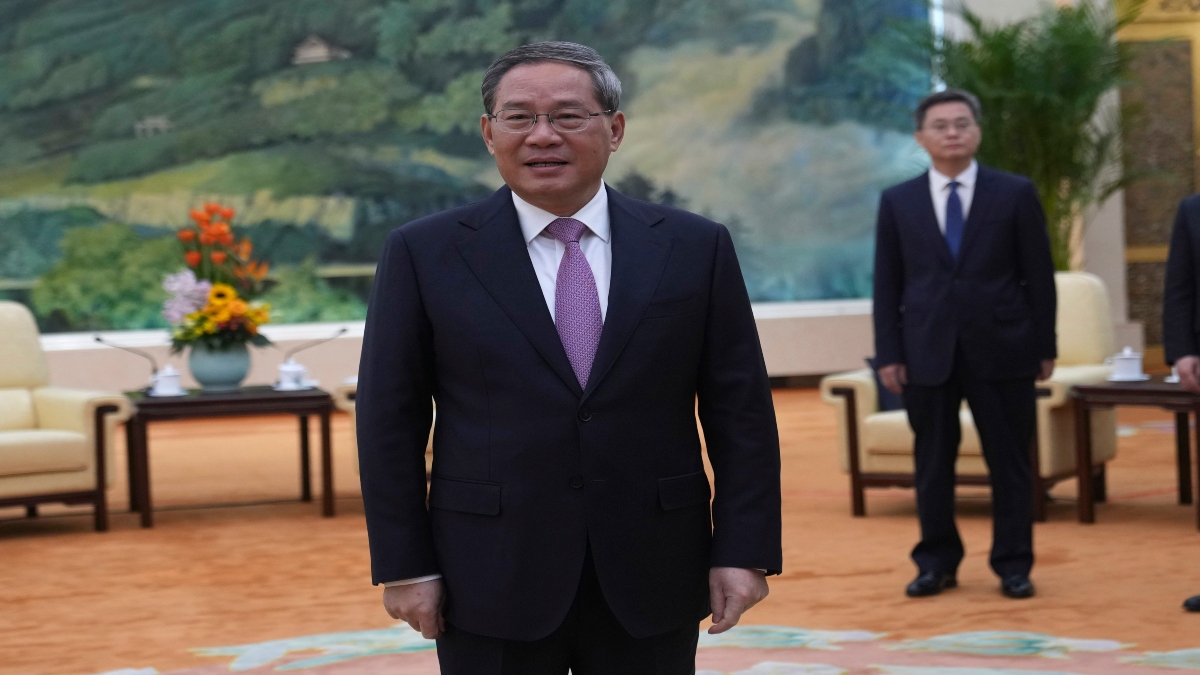
After last month’s trip by Foreign Minister Wang Yi, Chinese Premier Li Qiang will now be visiting Australia in a move set to consolidate improving economic relations between Beijing and Canberra.
According to a South China Morning Post report, citing two sources with knowledge of the issue, Li is scheduled to visit Australia in the third week of June, his first since he was sworn in as premier in March 2023. It is also being viewed as a reciprocal visit following Prime Minister Anthony Albanese’s trip to China in November, which was the first by an Australian leader in seven years.
Though major topics of the visit remain unknown, the unofficial ban on Australian live lobsters, which have been in place for more than three years, is likely to be lifted during his visit.
“It is also expected that the unofficial ban on Australian live lobsters will be lifted as a signal of resuming a normal and friendly trade relationship for both sides,” the report quoted one of the sources as saying.
Australia’s Department of Foreign Affairs and Trade in a statement said that Australian government has consistently advocated for the full and timely removal of all trade impediments, including those affecting exports of live rock lobster to China.
“The Australian government has consistently advocated – including during the recent visit of Chinese Foreign Minister Wang Yi – for the full and timely removal of all trade impediments, including those affecting exports of live rock lobster to China. The Department of Agriculture, Fisheries and Forestry is engaged in discussions with counterparts in the Chinese Government to resolve these issues,” South China Morning Post report quoted Australia’s Department of Foreign Affairs and Trade as saying in a statement.
Impact Shorts
More ShortsChina’s Ministry of Foreign Affairs did not respond to requests for comments about the trip, while the Department of the Prime Minister and Cabinet did not comment on the visit, added the report.
In March, during Wang’s visit, Foreign Minister Penny Wong mentioned Australia’s readiness for an upcoming visit by China’s premier, who holds sway over economic and financial matters crucial to policies impacting Australian imports like iron ore, wine, and aquatic products.
Wong expressed anticipation for “welcoming Premier Li to Australia,” echoing an invitation extended by Albanese during his visit to Beijing late last year.
Last month, Wang and Australian counterpart Wong explored the possibility of signing a new science and technology agreement in exchange for Canberra’s proposal to lift trade sanctions.
“But Wong did not really respond [to the pitch],” another source told the Post.
Instead, the pair exchanged views and some fundamental differences over Taiwan, the South China Sea, the Xinjiang Uygur autonomous region, Tibet, Hong Kong and the Israel-Gaza war.
Australian coal, barley, cotton, beef and dairy products have all gradually returned to the Chinese market from last year having been under various official and unofficial bans since then-Australian prime minister Scott Morrison called for an independent investigation into the origins of the coronavirus in 2020.
China remains Australia’s largest trading partner, accounting for 26 per cent of its goods and services trade in the 2022 and 2023 financial years, according to Australia’s Department of Foreign Affairs and Trade.
China’s customs data, meanwhile, showed bilateral trade grew by 4.1 per cent from a year earlier to US$229.2 billion in 2023.


 "Russian drones over Poland: Trump’s tepid reaction a wake-up call for Nato?")
 "As Russia pushes east, Ukraine faces mounting pressure to defend its heartland")
 "Why Mossad was not on board with Israel’s strike on Hamas in Qatar")
 "Turkey: Erdogan's police arrest opposition mayor Hasan Mutlu, dozens officials in corruption probe")
 "Russian drones over Poland: Trump’s tepid reaction a wake-up call for Nato?")
 "As Russia pushes east, Ukraine faces mounting pressure to defend its heartland")
 "Why Mossad was not on board with Israel’s strike on Hamas in Qatar")
 "Turkey: Erdogan's police arrest opposition mayor Hasan Mutlu, dozens officials in corruption probe")



