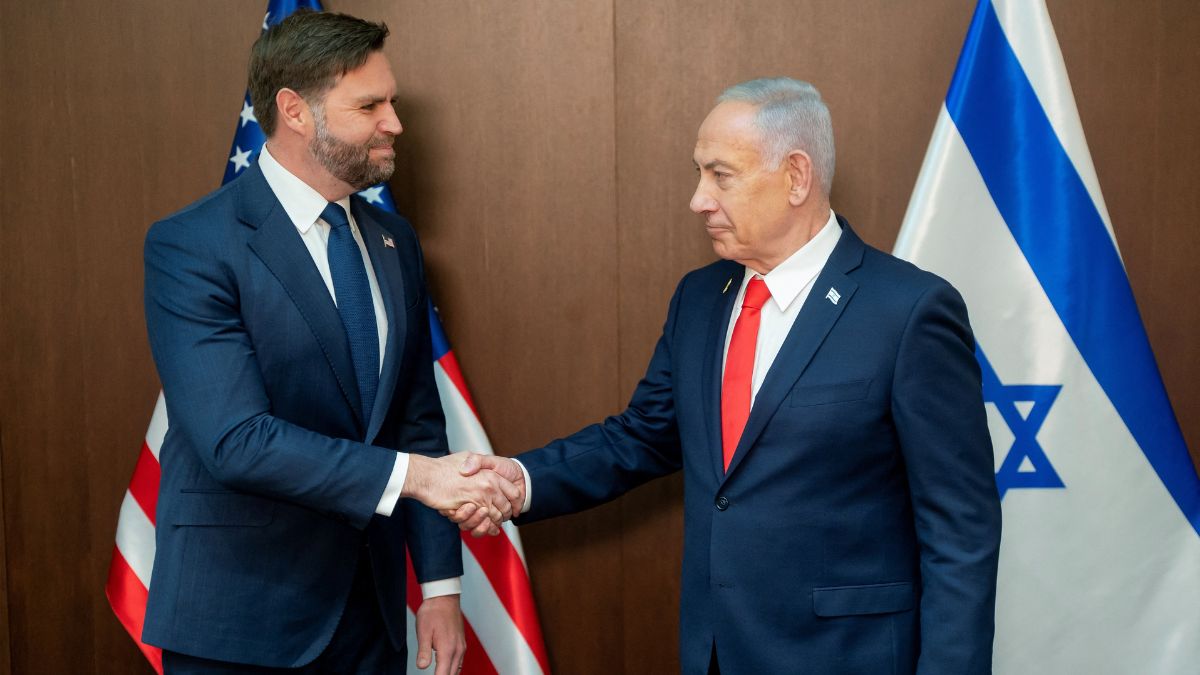
 "US Vice President JD Vance shakes hands with Israel's Prime Minister Benjamin Netanyahu during a meeting at the Prime Minister's Office in Jerusalem on October 22, 2025. Reuters file")
US Vice President JD Vance confronted Israeli Prime Minister Benjamin Netanyahu in a tense phone call this week, questioning what he saw as overly optimistic assessments of the war in Iran. According to Axios, the exchange highlighted growing unease within the Trump administration over how the conflict was initially presented and how it is now unfolding.
The call comes at a crucial moment, with Vance emerging as a key figure in Washington’s diplomatic push to end the war. US officials say he has taken on a more active role in backchannel communications and is likely to lead any potential negotiations with Tehran, reflecting both his seniority and his long-standing scepticism of prolonged military entanglements.
“Before the war, Bibi really sold it to the president as being easy,” a US official told Axios, referring to Donald Trump. “Regime change being a lot likelier than it was. And the VP was clear-eyed about some of those statements.”
Weeks into the conflict, those expectations have not materialised, with Iran’s leadership still firmly in control despite sustained military pressure. During the call, Vance reportedly pointed to the widening gap between initial projections and the current reality, particularly the assumption that internal unrest in Iran could quickly lead to regime change.
Vance as key negotiator
Vance is now stepping into a central role in efforts to end the war—one he had initially been cautious about entering.
According to Axios, he has held multiple calls with Netanyahu, engaged with Gulf allies, and participated in indirect communications with Iran. He is expected to serve as Washington’s lead negotiator if formal talks begin.
Quick Reads
View AllUS President Donald Trump has said the US is “in negotiations right now”, naming special envoy Steve Witkoff, Jared Kushner, Secretary of State Marco Rubio and Vance among those involved.
A senior administration official underscored Vance’s importance, saying: “If the Iranians can’t strike a deal with Vance, they don’t get a deal.”
Tensions behind closed doors
The friction between Washington and Tel Aviv reportedly surfaced during the call, where Vance challenged Israeli projections—particularly claims that the conflict could swiftly trigger regime change in Tehran.
US and Israeli sources cited by Axios said those expectations have yet to materialise, with the war now likely to continue for several more weeks.
Vance’s approach draws attention within diplomatic circles
Vance’s approach has drawn attention within diplomatic circles. His advisers believe some in Israel may be trying to sideline him, viewing his stance as less hawkish, though Israeli officials have denied such claims.
There have also been disagreements over media reports suggesting tensions between the two leaders, with both sides pushing back against accounts of a heated exchange.
Diplomatic push amid uncertainty
Even as diplomatic channels remain active—with mediators from Pakistan, Egypt and Turkey attempting to facilitate talks—the US is also weighing the possibility of military escalation if negotiations fail.
Iranian officials have indicated they are awaiting approval from top leadership before engaging directly.
As one source close to Vance told Axios, his role remains aligned with the US President’s direction: “He has his own views, but he is going to work according to Trump instructions.”